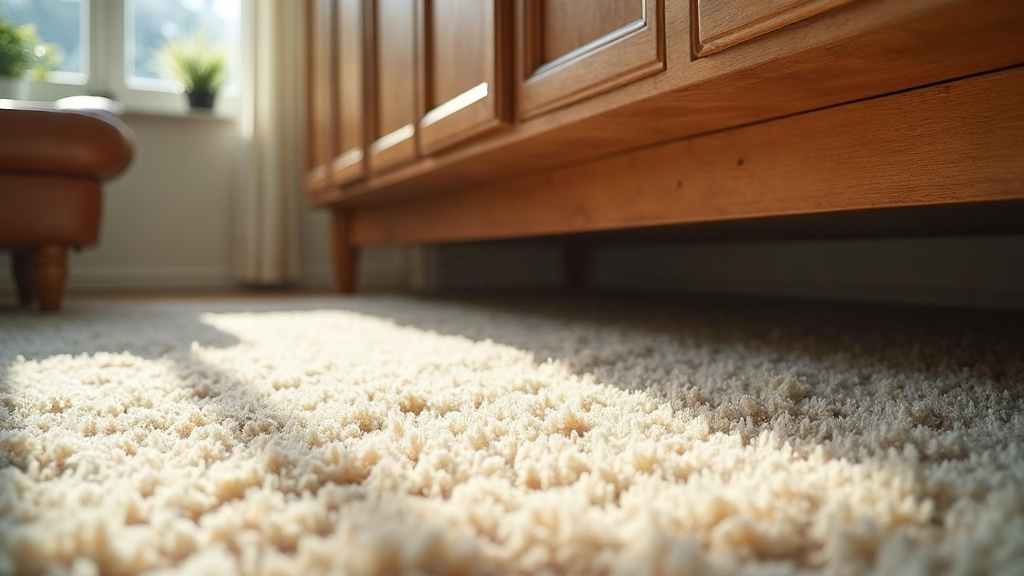
You can clean a rug you can’t move without rolling it up or hiring movers. The method is section-by-section wet extraction, not a full soak. You isolate the furniture legs first, work in small overlapping squares, pull the moisture back out with a wet-dry vacuum instead of letting it sit, and check for trapped dampness before anything goes back on top. Skip any one of those steps and you risk rust rings on the pile, dye bleeding into the backing, or mold growing quietly under furniture for weeks.
Why You Can’t Just Pour Water On It
A sofa, a dining table, or a built-in bookcase pins a rug in place. Lifting it means moving furniture you may not be able to lift alone, or disturbing a layout that took real effort to set. So the instinct is to clean around the obstacles with whatever is at hand. That instinct causes most of the damage.
Hand-knotted rugs are built on a cotton or wool foundation that reacts badly to standing water. Saturate it and the foundation can shrink unevenly, which buckles the rug permanently once it dries. Metal furniture feet left in contact with a wet rug can also leave rust marks that no amount of cleaning will lift back out. None of this is reversible. That’s the real argument for a controlled, section-by-section approach instead of a bucket and a sponge.

The In-Place Cleaning Procedure, Step by Step
This sequence is built around two goals: never letting water sit long enough to reach the foundation, and never letting furniture legs sit on a damp patch. It works for wool and most synthetic pile rugs. It is not appropriate for silk, and it is not a substitute for professional cleaning on anything hand-knotted or valuable — more on that distinction below.
- Vacuum first, without the beater bar. Use suction only. A rotating brush head catches in fringe and loosens knotted pile, which is a separate problem covered in more detail in the cleaning and stains archive.
- Isolate every leg you can’t move. Slide a small square of aluminum foil or waxed paper under each furniture foot that touches the rug, folding the edges up slightly like a shallow tray. This stops two things at once: rust transfer from metal feet, and color transfer from stained or finished wood legs into wet wool.
- Test in a hidden corner. Dab a small amount of your chosen cleaning solution on a spot under a chair or near a wall, let it sit two minutes, then blot with a white cloth. If any color lifts onto the cloth, stop. That’s a sign of dye migration, and wetting the rest of the rug will spread it.
- Work in 2×2 foot quadrants. Mentally grid the accessible rug into roughly two-foot squares. Treat one square at a time, moving to the next only once the first is extracted and no longer wet to the touch. This keeps any single area from sitting damp for more than a few minutes, which is what prevents the dye bleed and felting that come from prolonged saturation.
- Apply, agitate gently, then extract immediately. Mist the square with a wool-safe, low-pH cleaner diluted per the label, work it in lightly with a soft brush, then go over the same square with a wet-dry shop vacuum to pull the moisture back out. Don’t pour the solution on and let it sit — the vacuum step should follow within a minute or two.
- Overlap each pass slightly. Run the next quadrant with about an inch of overlap into the one you just finished, so you don’t leave a dry seam of un-cleaned pile between sections.
- Press-test for hidden moisture. At the edges you couldn’t reach — the strip right under a sofa skirt or a cabinet base — fold a paper towel into quarters and press it into the pile for about ten seconds. If it comes away damp, that section needs more extraction time or open airflow before furniture goes back.
- Leave furniture off the rug until it’s fully dry. Depending on pile height and airflow in the room, that’s often 12 to 24 hours for a wet-dry vac method, longer in a humid room. Prop furniture on blocks or foil squares in the meantime rather than setting it straight back down.
The wet-dry vacuum is doing the real work here. It’s what lets you clean in place at all, because it replaces a soak-and-rinse cycle with a wet-then-pull cycle that never lets the foundation get fully saturated. Standard cleaning and extraction equipment used by professional cleaners works on exactly this principle, and the Institute of Inspection, Cleaning and Restoration Certification sets the extraction standards that trade professionals train to.
Fiber by Fiber: What’s Safe to Wet in Place
Not every rug tolerates this method, even in careful two-foot sections. Fiber and construction decide what’s safe.
| Fiber / construction | In-place wet cleaning | Why |
|---|---|---|
| Wool, machine-made or hand-tufted | Generally safe with a cool, low-pH wool-safe cleaner | Durable pile, synthetic backing tolerates moderate moisture if extracted promptly |
| Wool, hand-knotted | Caution — test first, professional recommended for anything valuable | Cotton foundation can shrink unevenly if any section stays wet too long |
| Silk or silk-blend | Do not attempt at home | Fiber weakens when wet and most detergents strip its luster permanently |
| Synthetic (nylon, polypropylene) | Safe with mild detergent, dries fast | Fibers don’t absorb water, low risk of shrinkage |
| Jute or sisal | Avoid wet cleaning entirely | Plant fibers swell, discolor and can mildew; see the guide to cleaning jute and sisal safely |
| Viscose | Avoid — dry methods only | Crushes and yellows with almost any moisture contact |
If you aren’t certain which category your rug falls into, treat it as the cautious case. Chlorine bleach and ammonia-based cleaners should never enter the conversation at all — bleach destroys wool and silk outright, and mixing ammonia with other household cleaners can produce fumes that are dangerous in an enclosed room. Stick to a cleaner labeled safe for the fiber you’ve identified, nothing improvised.

Protecting Furniture Legs and Checking for Trapped Moisture
The foil-square step is easy to skip and expensive to regret. Wet wood finish against damp wool pile can leave a dark stain that telegraphs right through the fiber. Unfinished or old metal feet do the same thing through rust, sometimes within hours. A folded square of foil or waxed paper under each leg, replaced if it gets wet through, is cheap insurance against both.
Trapped moisture is the quieter risk. A rug that feels dry on top can still be damp an inch down, especially under a dense sofa or a rug pad that blocks airflow. Moisture held against a cotton or jute foundation for days is exactly the condition that lets mold and mildew take hold, something the U.S. Environmental Protection Agency flags as a general risk anywhere damp material sits without ventilation. The paper-towel press test in the procedure above takes ten seconds and tells you what your fingertips often can’t.
If a section stays damp after extraction, open a window, point a fan at it, or run a dehumidifier in the room rather than placing furniture back down. Patience here costs you a day. Rushing it can cost you a rug.
When to Stop and Call a Professional
This in-place method is meant for routine maintenance cleaning, not deep restoration. A few situations call for a professional rug cleaner or textile conservator instead of a shop vac and a Saturday afternoon:
- The rug is hand-knotted, antique, or you’re not sure which it is — construction details like knot type and foundation material aren’t always obvious without close examination, something covered in more depth in the rug craft hub.
- It contains silk, either fully or as highlight threads in the pattern.
- A stain has already set, spread widely, or has an unknown origin.
- You see any sign of previous dye bleed, color running, or a rug that’s valuable enough that a mistake would be expensive to live with.
- The rug covers more square footage of problem than two or three people can reasonably clean in an afternoon.
Wool felts and shrinks when it meets hot water or a high-pH cleaner, a reaction documented by groups like The Woolmark Company that work directly with the fiber. That’s one more reason to keep water cool and cleaners mild even when the rug stays in place. For anything that falls outside routine maintenance, the distinction between what a rug cleaner does and what a trained conservator does is worth understanding before you call anyone — it’s laid out in detail on the page about what a rug conservator does that a cleaner doesn’t. For spills that just happened, the first-response steps are different from a full clean and are covered separately in what to do immediately after a spill on a rug. And if wetting the rug at all feels too risky given its age or value, dry compound methods are worth reading about first in the piece on dry rug cleaning methods and when they’re appropriate.
Frequently asked questions about cleaning a rug you can’t move
Can I clean a rug under a couch without moving it at all?
Yes, within reach of a vacuum nozzle and a shop vac hose. Isolate any leg with foil first, work in small sections, and extract promptly. Deep pile fully hidden under a low sofa skirt is hard to reach properly, so check it with a flashlight before assuming it’s clean.
Will a wet-dry vacuum damage a hand-knotted rug?
Used on suction only, without a beater bar, a wet-dry vac is generally safer than a full soak because it pulls moisture out fast. But hand-knotted wool and antique pieces still warrant a test spot and, ideally, a professional opinion before any at-home wet cleaning.
How long does a rug take to dry after spot cleaning in place?
Often 12 to 24 hours with good airflow and prompt extraction, longer in humid rooms or under furniture that blocks air movement. The paper-towel press test is a quick way to confirm dryness before you put anything back down.
What happens if I leave furniture legs on a wet rug?
Metal feet can leave rust spots and wood finishes can bleed color into damp wool pile, sometimes within hours. Both are usually permanent. A simple square of foil or waxed paper under each leg prevents this during cleaning.
Is it safe to use baking soda on a rug I can’t lift to shake out?
Baking soda works as a dry deodorizer brushed in and vacuumed back out, which makes it workable in place, but it doesn’t remove set-in stains the way people sometimes assume. The specifics are covered in the article on what baking soda does and doesn’t do on rugs.
Rug Academy publishes general information about rugs and is not a dealer, appraiser, or cleaning service. Cleaning and repair methods depend entirely on fibre, dye and construction — test any treatment on a hidden corner first, and consult a professional rug cleaner or conservator before treating a hand-knotted, antique, silk, or valuable rug, as damage from cleaning is usually permanent. Any prices mentioned are illustrative examples only, and nothing here is an appraisal, an authentication, or a guarantee of a rug’s origin or value.