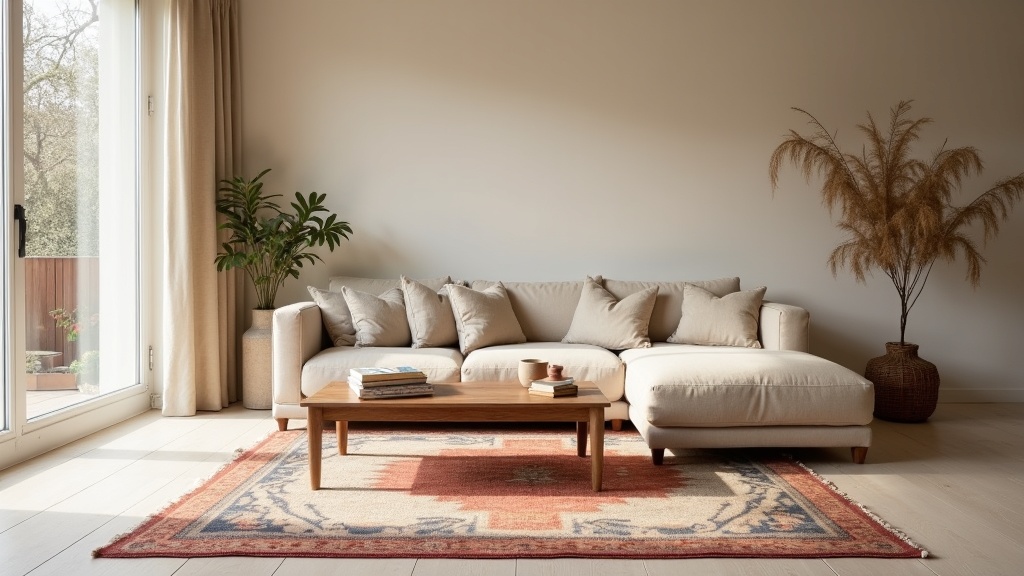
How a rug is built: warp, weft and what sits on top
Every handmade rug starts as parallel threads stretched tight on a loom. The lengthwise threads are the warp, the threads passed across them are the weft, and in a pile rug the soft surface is made of short lengths of yarn anchored around the warps. Warp, weft and pile are the vocabulary for everything else here. Once you can name them, most claims about a rug become checkable: turn it over, and the construction usually shows on the back.
Knotted, tufted and machine-made pile
In a hand-knotted rug the weaver ties each tuft of yarn around one or two warps, row after row, packing every row down against the weft. The knots are the structure, which is why a well-made knotted rug can last for generations and why hand-knotted rugs take so long to make. The back shows the pattern knot by knot, slightly irregular, and the fringe is normally the warp itself running out of the weave.
A hand-tufted rug can look similar from the front but is built another way: yarn is punched through a pre-made canvas with a hand-held tool, then locked in place with latex adhesive and a cloth backing. The difference between hand-knotted and hand-tufted rugs is the most useful distinction a buyer can learn, because that adhesive dries out and crumbles with age, which is the lifespan problem with latex backing. Power-loomed rugs are woven entirely by machine.
Flatweaves
A flatweave has no pile. The design is formed by the colored weft threads themselves, so the rug is thin, light and often reversible. The kilim is the most familiar flatweave, with each block of color turning back at its edge. Choosing between flatweave and pile rugs is mostly a question of the room: flatweaves suit dining areas and anywhere chairs slide, while pile adds warmth, cushion and quiet.
Fiber decides how a rug wears and how it can be cleaned
Fiber matters twice: once for how a rug feels and wears, and again every time it needs cleaning, because each fiber reacts differently to water, heat and chemicals. The main rug fibers compared side by side is the place to start.
Wool is the traditional pile fiber because it is resilient, resists some soiling through its natural lanolin, and takes dye well. Those qualities explain why wool rugs cost more, and why wool and synthetic rugs compared over their lifespan usually favors wool in a busy room. Silk gives a sheen and fineness no other natural fiber matches, but it is weak when wet and more fragile than most buyers expect. Viscose, sometimes sold as “art silk,” imitates that sheen for less, but it crushes, yellows and water-marks, which is why viscose rugs age badly.
Plant fibers such as jute, sisal and seagrass are tough and textural but stain readily and dislike moisture, so sisal and seagrass carry real drawbacks alongside their durability. Synthetics such as polypropylene and nylon shrug off many stains and suit homes with pets, though they can flatten and hold oily soil. Cotton serves mostly as foundation and in flatweaves.
Weaving traditions and the names on the label
A rug name usually points to a region, town or group of weavers, but many are now also style labels used for rugs made anywhere. “Oriental” is a broad umbrella for hand-knotted rugs from a wide belt of Asia; “Persian” is narrower, and what Persian and Oriental actually mean is worth settling first. A guide to Persian rug regions then maps the main weaving centers.
Neighboring traditions differ in knot, structure and design logic. Turkish and Persian rugs are traditionally associated with different knots, symmetrical in much of Anatolia and asymmetrical in much of Iran, though both are tied in both places. Caucasian weavers leaned on bold geometry and saturated color. Further east, Chinese and Tibetan rugs follow traditions of their own, while Indian and Pakistani workshops produce original designs as well as close reproductions of Persian patterns. Village work such as Moroccan pile rugs follows another logic: freer drawing, local wool, designs carried in memory. Across all of them, motifs like the medallion, boteh and herati recur and travel. For documented examples, The George Washington University Museum and The Textile Museum in Washington holds a major public collection of rugs and textiles.
Judging quality and value without guessing
No article can tell you what a particular rug is, how old it is or what it is worth; that takes an examination in person. What you can learn is what an examiner looks at. The first check is construction, and telling a handmade rug from a machine-made one starts on the back: hand knotting shows small irregularities, machine work an even grid, and a glued cloth backing signals tufting.
Knot density is the figure most often quoted and most often misread. It limits how fine the drawing can be, but a coarse village rug is not a poor version of a fine city rug, and a higher knot count is not automatically better. Natural and synthetic dyes age differently, and gentle bands of shifting color, called abrash, often reflect small dye batches rather than a fault. Surface treatments can mislead, so learn the signs of chemical washing or painting.
Age alone settles nothing: an old rug is not automatically an antique, and condition and past repairs weigh as heavily. Price follows construction, fiber, size, condition and demand together, which is why two similar-looking rugs can differ so much. Where real money is at stake, an in-person appraisal by a qualified appraiser is the only reliable answer, and what to expect from an appraisal explains how one works.
Living with a rug: size, placement and care
Size and placement
Most rugs bought in the wrong size are too small. A rug should gather the furniture that belongs together into one zone, so a living room rug usually sits under at least the front legs of the sofa and chairs; sizing a living room rug works through the common layouts. Under a table, chairs should stay on the rug when pulled out, as sizing a rug for a dining table shows, and in a bedroom the question is how much rug should show around the bed.
Everyday protection
Most wear comes from grit, sun, damp and insects rather than spills. A good pad stops slipping and reduces abrasion from below, though whether you need a rug pad depends on the floor. Turning a rug now and then evens out traffic, and protecting a rug from sun fading matters because dyes fade gradually in direct light. Clothes moths feed on wool in dark, undisturbed spots, so preventing moth infestations is largely about regular disturbance and cleaning.
Cleaning without causing damage
Cleaning damage is usually permanent, so know the fiber and construction before anything touches a rug, and test any treatment on a hidden area first, because natural and some early synthetic dyes bleed when wet. On wool pile, vacuum with the beater bar off, since a rotating brush tears fringe and pulls loose pile. After a spill on a wool rug, blot with cool water rather than rubbing, as what to do right after a spill describes. Hot water and alkaline cleaners, ammonia included, make wool felt, shrink and yellow, and chlorine bleach destroys wool and silk. Never mix cleaning chemicals; some combinations release toxic fumes. Cleaning a wool rug safely and cleaning a jute or sisal rug follow different rules, because plant fibers brown and weaken when soaked, and silk should go to a professional. Machine washing or steam cleaning can shrink a hand-knotted foundation and buckle it permanently, which is why a washing machine is almost always a mistake and steam cleaning carries real risks.
When a professional should take over
For any rug that is hand-knotted, antique, silk, valuable or of uncertain construction, a professional rug cleaner should be the first call, not the last resort. Damage is a separate job: a conservator does work a cleaner doesn’t, and whether a damaged rug is worth repairing turns on its construction and condition. The American Institute for Conservation keeps a public directory of conservators searchable by specialty, textiles included.
The 30-second size answer
A starting point for most rooms — your layout decides the rest. Then read why →
Everything we cover, in three places
Start with whichever question you actually arrived with — the three cross-reference each other throughout.
Rug Buying Guides
What size, what fibre, what construction — the decisions you make once and live with for years.
Rug Care & Cleaning
Cleaning, stains, repair and storage — always naming the fibre a method is safe for, because the damage is usually permanent.
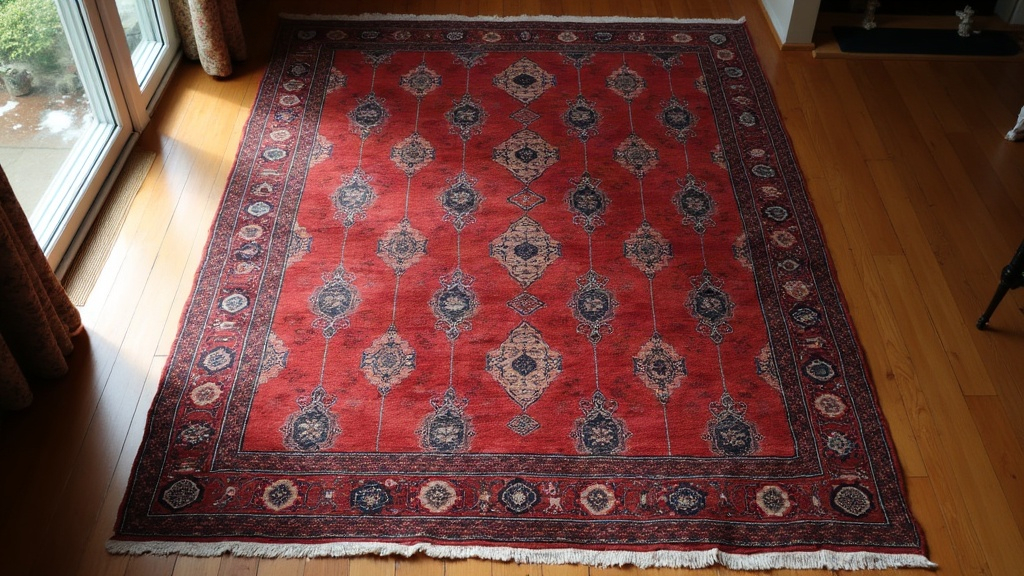
Rug Craft & Origins
How rugs are actually made, where the regional traditions come from, and what really determines value.
Recently published
New guides as they go up. Every one explains the reasoning, not just the step.
Turkmen Rugs and the Gul Motif: How to Read One
How to tell Tekke, Salor, and Yomut guls apart by lobe count, hooking, and ground color — and spot a commercial copy.
Buying Rugs at Auction: What to Watch For
What to inspect, ask, and budget for before bidding on a rug at auction — condition cues, fees, and authentication basics explained.
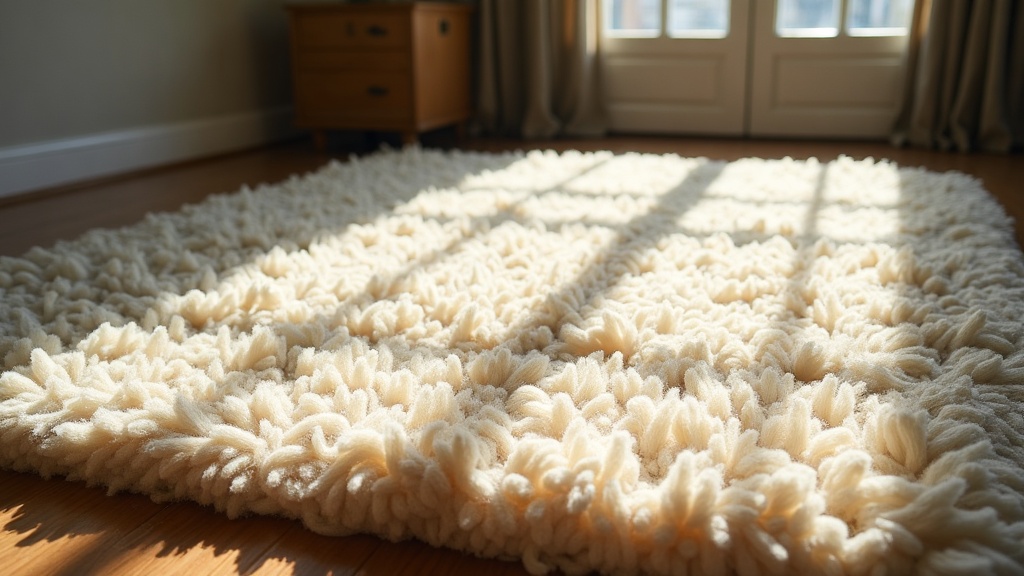
Pile Height: What It Changes in Daily Use
How pile height affects comfort, cleaning, doors, furniture and durability — and what to consider before buying high or low pile.
Choosing a Rug for a Dark Room
How to pick a rug that brightens a dark room, with guidance on tone, texture, pattern and testing colour under real light.
Are Recycled-Fibre Rugs Any Good?
Recycled-fibre rugs vary widely in durability and feel. Here's what they're made from, where they excel, and where they fall short.

Choosing a Rug for a Long Narrow Living Room
How to size and place a rug in a long, narrow living room, plus when one rug beats two.
Four questions we get constantly
Answered in a sentence, with the full reasoning a click away.
Can I put a wool rug in the washing machine?
No. Agitation and heat felt wool permanently — it comes out smaller, stiffer and paler, and it cannot be reversed. Read more →
Does all the furniture have to sit on the rug?
No. Front legs on is a perfectly good layout. What matters is that the rug reads as one zone rather than floating in the middle of the floor. Read more →
Is fringe proof a rug is hand-knotted?
Not on its own — fringe is often sewn on afterwards. Turn the rug over and look at the back instead; that is where the answer is. Read more →
Why is my new wool rug shedding?
Cut pile releases short fibres for the first few months, which is normal. Shedding that never settles down points to construction quality instead. Read more →