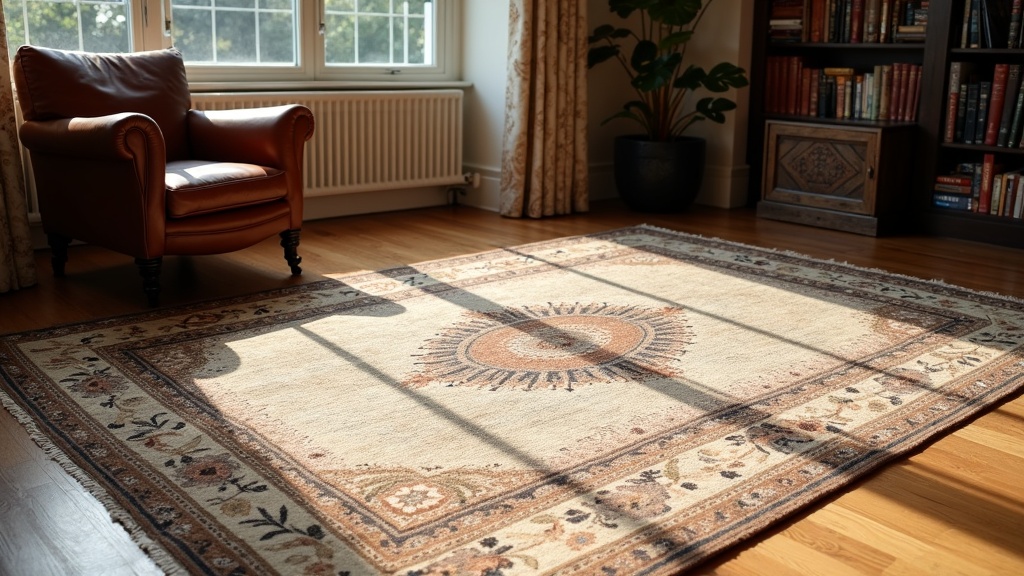
No. An old rug is not automatically an antique — age is only one factor, and by itself it tells you very little. In the trade, “antique” usually refers to a rug that is roughly 80 to 100 years old and shows the construction, dye, and design characteristics of hand craftsmanship from its region and period. A rug can be genuinely old and still be a mid-century commercial piece worth modest money, while a rarer, well-preserved weaving from the same decade might carry real collector value. The date alone doesn’t decide it.
Old, vintage, antique: three different claims
These words get used loosely by sellers, and that looseness is exactly where confusion (and overpaying) happens. Roughly speaking:
| Term | Rough age | What it actually claims |
|---|---|---|
| Old | Any age past new | Nothing about quality, origin, or craftsmanship |
| Vintage | Roughly 20–80 years | Made in a past era, but not old enough to be “antique” |
| Antique | Generally 80–100+ years | Age plus, typically, hand construction and period-appropriate materials |
None of these labels is legally enforced the way, say, “sterling silver” is. A dealer can print “antique” on a tag for a rug that is forty years old and machine-made, and unless a buyer knows what to check, they have no way to challenge it in the moment.
Why age alone isn’t the test
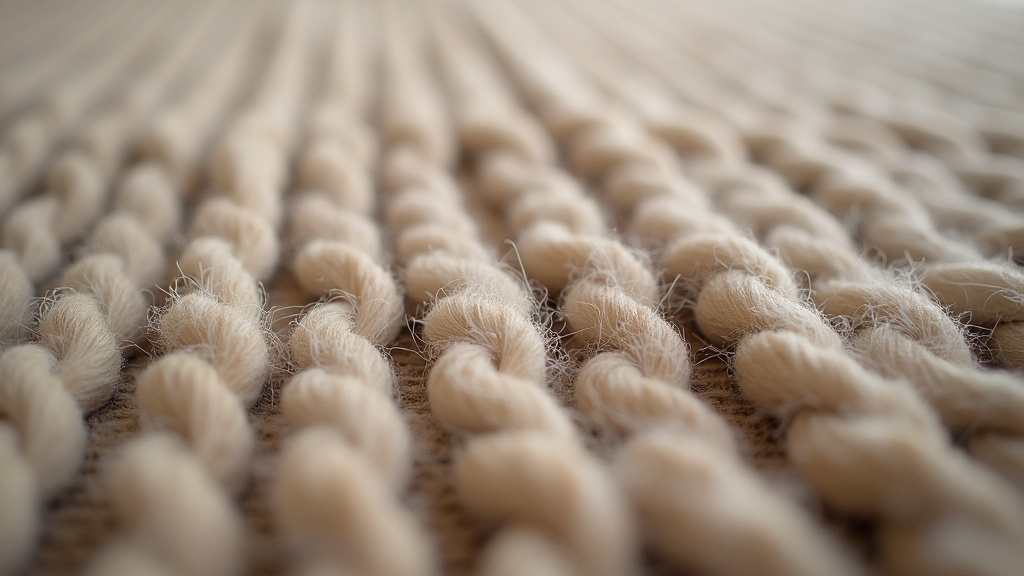
Age matters because certain dyes, wools, and weaving practices genuinely disappeared or changed over the decades — so an antique rug often does carry construction traits a modern piece can’t easily replicate. But a rug’s age doesn’t tell you whether it was hand-knotted or machine-made, whether it was made with any skill, or whether it has survived in a condition that preserves its value. A worn-out, moth-damaged, heavily repaired rug from the 1920s can be worth less than a well-made, well-kept piece from the 1970s. Condition and quality of work sit alongside age, not behind it.
This is also why two rugs that look similar side by side can carry very different price tags — the difference usually lives in details invisible from a photograph, which is covered in more depth on why two similar-looking rugs can differ hugely in price.
What an appraiser actually looks at
Because “how old is it” and “what is it worth” are really two separate questions, a qualified appraiser doesn’t start by guessing a date. They work through physical evidence:
- Knot type and density. Hand-knotted rugs show individual knots on the back, tied by hand around warp threads — a structure explained in more detail in Warp, Weft and Pile: Rug Anatomy Explained. Density and consistency (or lack of it) point toward region, era, and skill level.
- Foundation material. Cotton, wool, or silk foundations were used at different times and places; synthetic foundation threads generally rule out anything genuinely antique.
- Dye characteristics. Natural dyes fade and abrade unevenly across a pile in ways synthetic dyes usually don’t; some early synthetic dyes have their own tells. See Natural vs Synthetic Dyes: How to Spot the Difference for what appraisers look for under magnification and raking light.
- Wear pattern. Genuine age wear tends to be uneven — heavier in traffic paths, lighter under furniture — and consistent with the pile’s structure. Uniform, all-over thinning can suggest a different story.
- Selvedge and fringe finishing. How the edges are wrapped and how the fringe is finished (knotted continuation of the foundation versus a sewn-on strip) is one of the more reliable construction clues, and one reason damage here is treated so carefully — see Fixing a Curling or Damaged Rug Selvedge.
Put together, these details tell a specialist far more than a visual guess at age ever could. This is the kind of examination laid out step by step in Getting a Rug Appraised: What to Expect, and it’s worth reading before you book one so you know what to bring and what questions to ask.
Signs that point toward machine-made or reproduction
Not every clue requires a lab. A few things a careful look at home can suggest, though none of them is proof on its own:
- A back that shows a printed or embossed pattern rather than visible individual knots, or a mesh-like uniform grid — typical of machine-made construction.
- Fringe that is clearly sewn on as a separate strip rather than emerging from the rug’s own foundation threads.
- Colour that is perfectly flat and uniform across the whole field, with no gradual variation (“abrash”) that hand-dyed wool tends to show batch to batch.
- A synthetic, oddly glossy sheen across the whole pile, sometimes paired with an unusually low price for the claimed age and origin.
Some of these traits also show up on rugs that have been deliberately aged in finishing — a practice worth understanding on its own terms in Antique-Wash and Distressed Rugs: What You’re Buying, and one that can be hard to distinguish from genuine wear without training; Signs a Rug Has Been Chemically Washed or Painted goes through the tells in more detail. None of this list is a substitute for a professional opinion where real money is involved — it’s simply what to notice before you decide whether that opinion is worth paying for.
Why this distinction matters for how you clean and store it
Whether a rug turns out to be genuinely antique, honestly vintage, or a well-made reproduction, its age and construction should shape how you treat it day to day — because the risks of cleaning are not symmetrical. A hand-knotted wool rug can typically tolerate a gentle, cool-water, wool-safe detergent spot test on an inconspicuous corner; a rug with a silk pile, or one you suspect is genuinely old and fragile, generally should not be treated with water or detergent at home at all, since silk is easily damaged by both and by most household cleaners. Natural dyes and some early synthetic dyes can bleed or migrate the moment they get wet, turning a small spill into a permanent stain across the field. Hot water and high-pH or alkaline cleaners cause wool to felt, shrink, and yellow — damage that does not reverse. Never reach for chlorine bleach or ammonia on a wool or silk rug, and never mix cleaning products together in the hope of a stronger result; the combination is a household hazard, not a shortcut, and it will not save a stain that professional cleaning could have handled safely.
If a rug is hand-knotted, old, silk, of uncertain construction, or simply one you’d be upset to lose, the safest move is a professional rug cleaner or conservator rather than a DIY attempt — the difference between the two is explained in What a Rug Conservator Does That a Cleaner Doesn’t. For the broader landscape of what’s safe and what isn’t, the rug care hub and the Value & Authentication archive are good starting points before you touch a bottle of anything.
Frequently asked questions about old rugs and antique status
How old does a rug have to be to be called antique?
Most dealers and appraisers use roughly 80 to 100 years as a rough threshold, with “vintage” covering pieces made more recently than that. There’s no single enforced legal standard, so the label alone isn’t proof — construction and condition matter just as much as the number of years.
Can a machine-made rug ever be antique?
Mechanically produced carpets have existed since the 1800s, so a machine-made rug can technically be old enough to qualify by age. In practice, though, collector value in “antique rugs” almost always centres on hand-knotted or hand-woven pieces, since that’s where rarity and craftsmanship concentrate.
How can I tell if my old rug is hand-knotted or machine-made?
Check the back: hand-knotted rugs show individual, slightly irregular knots and the pattern is often visible in reverse; machine-made rugs usually show a uniform woven or printed backing. This is a starting clue only — a professional look settles it with certainty.
Does a musty smell mean my rug is genuinely old?
No — musty smell usually points to moisture, storage conditions, or mildew rather than age itself, and it can affect a rug of any era. If you’re dealing with this, see the dedicated guide on how to deal with a rug that smells musty rather than treating it as a sign of authenticity.
Should I get an old rug appraised before cleaning it?
If there’s any chance the rug is hand-knotted, antique, silk, or otherwise valuable, yes — an appraisal or at least a professional opinion first is the safer order of operations, since improper cleaning can permanently reduce or destroy value that an appraisal would otherwise have confirmed.
Rug Academy publishes general information about rugs and is not a dealer, appraiser, or cleaning service. Cleaning and repair methods depend entirely on fibre, dye and construction — test any treatment on a hidden corner first, and consult a professional rug cleaner or conservator before treating a hand-knotted, antique, silk, or valuable rug, as damage from cleaning is usually permanent. Any prices mentioned are illustrative examples only, and nothing here is an appraisal, an authentication, or a guarantee of a rug’s origin or value.