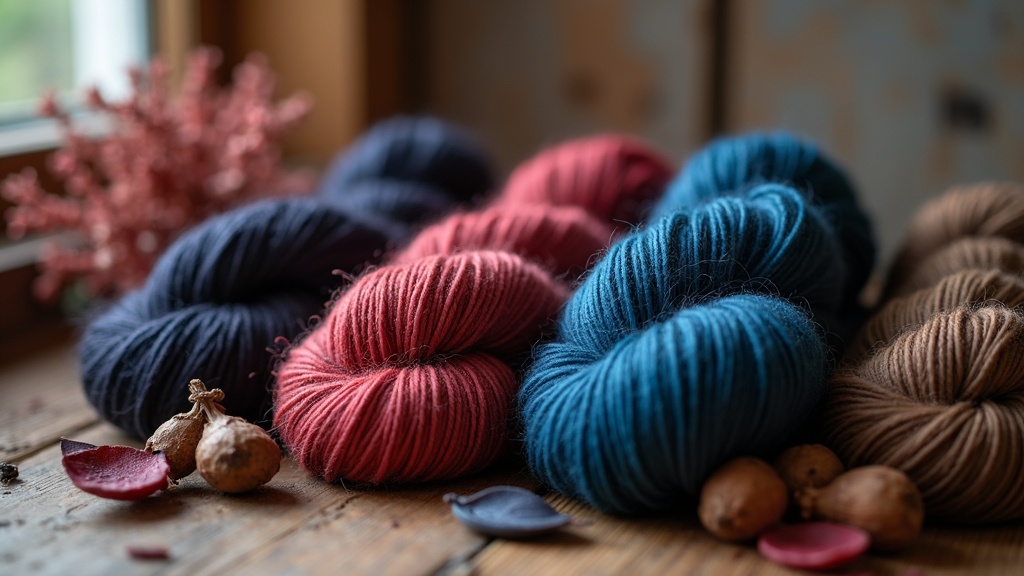
You can often tell natural from synthetic dye by looking for abrash (subtle streaks of lighter and darker tone within the same color, common in natural dyes), checking whether color has faded unevenly toward warmer or cooler casts, and doing a careful, professional-grade colorfastness check rather than a home dye test. No visual test is conclusive on its own — dye chemistry is genuinely difficult to pin down by eye, and even experienced appraisers use magnification and sometimes lab analysis (like microscopy or chromatography) to be certain. What follows will get you most of the way there and tell you what to do — and not do — with what you find.
Why the difference actually matters
Dye type affects three things a rug owner cares about: authenticity signals, long-term appearance, and how safe the rug is to clean. Natural dyes — derived from plants, insects, and minerals like madder root, indigo, walnut husk, and cochineal — were the standard before roughly the mid-1800s and remain in use among some contemporary weavers who work in traditional regional styles. Synthetic (aniline and later chrome) dyes arrived commercially in the second half of the 19th century and now dominate production, including in machine-made rugs. Neither is inherently “better” quality-wise — modern synthetic dyes are generally more colorfast and consistent than early synthetic dyes were — but the presence and behavior of dye is one of several clues an appraiser weighs when discussing a rug’s likely origin and age, alongside knot type, foundation material, and wear pattern. For a fuller picture of how those clues fit together, the rug craft hub and the value and authentication archive cover the rest of that puzzle.
Visual clues to look for
Abrash
Abrash is the gentle banding of tone you see across a field of one color, caused by natural dye lots varying slightly from batch to batch as a weaver used up one dye pot and mixed another. It shows up as soft horizontal or diagonal shifts rather than sharp lines. Synthetic dyes, especially modern ones, are formulated for batch consistency, so a perfectly uniform field of color — no streaking at all under raking light — leans toward synthetic dye, though it is not proof by itself.
Fading behavior
Natural dyes tend to fade toward softer, warmer, or more muted versions of their original hue as they age and are exposed to light — a faded natural red often drifts toward a dusty rose or apricot. Some early synthetic dyes (particularly certain anilines from the late 1800s) fade or “run” toward harsh, almost fluorescent tones, or shift unevenly in a way that looks patchy rather than graceful. Even sun exposure alone can distort this comparison over time, which is one reason to keep a rug out of direct light where possible — see our guide on how to protect a rug from sun fading for practical steps.
Color on the back versus the front
Turn the rug over. Natural dyes penetrate wool fiber unevenly at a microscopic level and often show slightly more color variation on the reverse than a flat, machine-consistent synthetic dye job. This isn’t a hard rule, but combined with abrash and fading pattern, it adds to the overall picture.
Wear and pile crush patterns
Dye alone won’t tell you if a rug is hand-knotted or machine-made, but wear pattern often will. Hand-knotted rugs typically show pile crush and color changes concentrated in high-traffic areas with organic, irregular boundaries; many machine-made rugs show dye printed or applied in a way that’s uniform regardless of foundation wear. If you’re trying to work out construction more broadly, our piece on how to tell whether a rug is handmade or machine-made walks through the knot, fringe, and backing checks that go alongside dye observation.
The crocking (rub) test — and its limits
A simple, low-risk way to check colorfastness is a dry crocking test: rub a clean, plain white cotton cloth firmly but briefly over a small hidden area of the rug’s pile. If color transfers heavily onto the cloth, that dye is not stable, and you now know to treat any future spill or cleaning with extra caution regardless of whether the dye is natural or synthetic — plenty of both types bleed. This test tells you about colorfastness, not chemistry; it cannot tell you whether a dye is natural or synthetic, only whether it is loose. Never follow this with a wet rub-test using water or detergent across a visible area of a valuable or antique rug — if you want to check wet colorfastness, do it on a truly hidden corner (like a fold under the fringe) with plain cool water only, and stop immediately if any color lifts.
Natural vs synthetic dye: quick comparison
| Characteristic | Natural dye (typical) | Synthetic dye (typical) |
|---|---|---|
| Color consistency across field | Some abrash, soft banding | Very uniform, especially modern synthetics |
| Fading direction over decades | Softens toward warmer, muted tones | Modern: fades slowly and evenly; early aniline: can shift harshly or unevenly |
| Wet colorfastness | Can bleed, especially older or improperly fixed dyes | Varies widely; modern chrome/acid dyes are usually more stable |
| Common era | Pre-1860s dominant; still used by some traditional weavers | Widespread from late 1800s onward; standard in machine-made rugs today |
Why this matters for cleaning
Whatever the dye source, treat any unknown or older rug as a potential bleeder until proven otherwise. That means: always test in a hidden corner first, using cool water only or a small amount of a wool-safe, pH-neutral detergent diluted in water — this is appropriate for sturdy, colorfast wool pile rugs. It is not appropriate for silk, which is damaged by water and most detergents and should go to a professional, as covered in our guide to silk rugs. Never use chlorine bleach on wool or silk — it destroys the protein fibers and will discolor or disintegrate them. Avoid hot water and high-pH or alkaline cleaners on wool, since heat and alkalinity cause wool to felt, shrink, and yellow. Never mix cleaning chemicals — combining products like bleach and ammonia-based cleaners creates dangerous fumes and offers no cleaning benefit that a proper wool-safe detergent doesn’t already provide. If the rug is hand-knotted, antique, silk, or of uncertain construction, or if you simply aren’t sure what you’re looking at, the safest move is a professional rug cleaner or conservator rather than home experimentation — our overview on how to clean a wool rug safely covers the boundaries of what’s reasonable to try at home, and how to judge if a rug needs expert help sooner.
What this does — and doesn’t — tell you about value
Dye character is one input into how a rug is assessed, not a verdict in itself. An appraiser looking at dye evidence will also examine knot type and density, foundation material (cotton, wool, or silk warp and weft), selvedge and fringe finishing, and overall wear pattern before forming any opinion about origin or age — and even then, definitive answers about specific origin or period usually require handling the piece in person, sometimes with magnification or dye testing in a lab setting. Reproductions and later commercial pieces sometimes use synthetic dyes formulated and even artificially treated to mimic the look of aged natural dye, so a soft, “antique-looking” palette is not proof of age by itself. If you want to understand the fuller set of criteria appraisers weigh, our guide on what determines antique rug value lays out that process in more depth. For anything with real money at stake — a possible inheritance piece, an estate rug, or a purchase you’re unsure about — an in-person appraisal by a qualified, independent appraiser is the only reliable way to get answers about origin, age, and worth. No article, photograph, or online description can substitute for that.
Frequently asked questions about natural vs synthetic rug dyes
How can I tell if my rug’s dye is natural without a lab test?
Look for abrash (soft color streaking), check whether faded areas have drifted toward warm, muted tones, and compare color intensity on the front versus back. These are strong clues but not certainties — an in-person appraisal is needed for a definitive answer.
Does natural dye mean my rug is more valuable?
Not automatically. Dye type is one of several factors — alongside knot density, foundation, and wear — that an appraiser considers together. A synthetic-dye rug can still be well made and desirable, and a natural-dye rug isn’t automatically old or rare.
Will natural dyes bleed more than synthetic ones when I clean my rug?
Not necessarily — some early synthetic dyes bleed badly, while many properly mordanted natural dyes are quite stable. Colorfastness depends on the specific dye and how it was fixed, which is why a hidden-area test with cool water is essential before any wet cleaning.
Can I use a home dye test kit to check my rug?
Home fiber-and-dye test kits are designed for identifying fiber content, not for reliably distinguishing natural from synthetic dye, and household chemical tests risk damaging or discoloring the pile. A conservator with proper equipment is the safer route for anything valuable.
Why do some old rugs look faded but still beautiful while others look ruined?
Natural dyes tend to fade gracefully into softer, complementary tones, which is part of why aged natural-dye rugs are often prized aesthetically. Early synthetic dyes can fade unevenly or harshly, which is one reason some antique dealers historically avoided rugs known to use them.
Rug Academy publishes general information about rugs and is not a dealer, appraiser, or cleaning service. Cleaning and repair methods depend entirely on fibre, dye and construction — test any treatment on a hidden corner first, and consult a professional rug cleaner or conservator before treating a hand-knotted, antique, silk, or valuable rug, as damage from cleaning is usually permanent. Any prices mentioned are illustrative examples only, and nothing here is an appraisal, an authentication, or a guarantee of a rug’s origin or value.