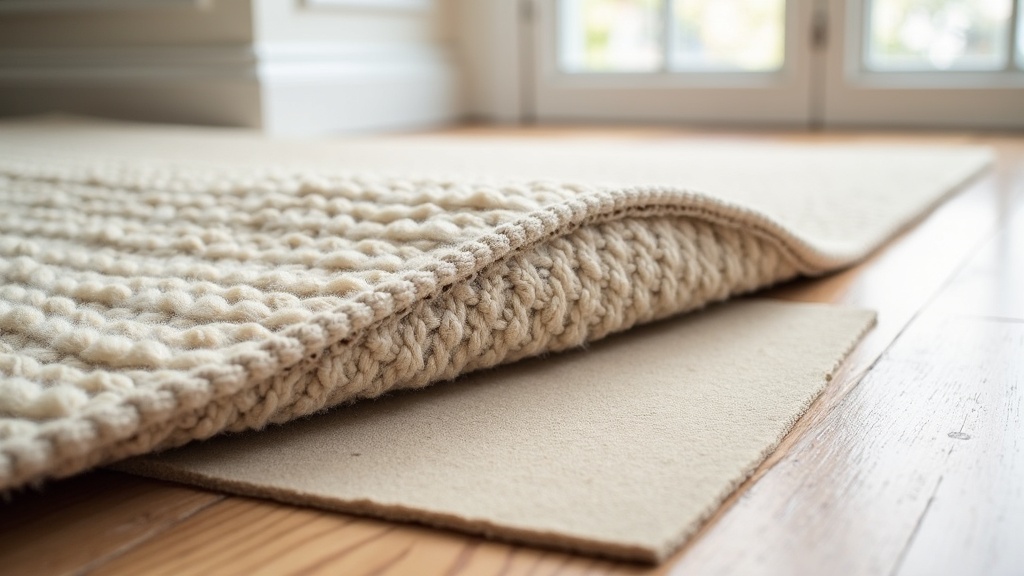
The right rug pad depends less on the rug and more on the floor underneath it. Hardwood needs a pad that won’t trap moisture or leave a residue when lifted; tile and stone need extra grip since both surfaces are hard and slick; and carpet needs a low-profile pad that stops the rug from creeping and bunching over a soft, uneven surface. Choosing by floor type first, then by rug weight and use, is the surest way to protect both the flooring and the rug itself.
Why the floor matters as much as the rug
A rug pad has three jobs: keeping the rug in place, cushioning the pile so it wears more evenly, and protecting the floor from friction and colour transfer. Different flooring materials fail in different ways when the wrong pad is used. A pad that’s perfect for a plush carpet can trap humidity against a hardwood floor and dull the finish. A pad with strong rubberised grip that’s ideal on tile can, over years, bond to certain vinyl or engineered-wood finishes. None of this is really about the rug’s fibre — it’s about what sits between the rug and the subfloor, so it pays to think of pad choice as a flooring decision first.
Hardwood and engineered wood floors
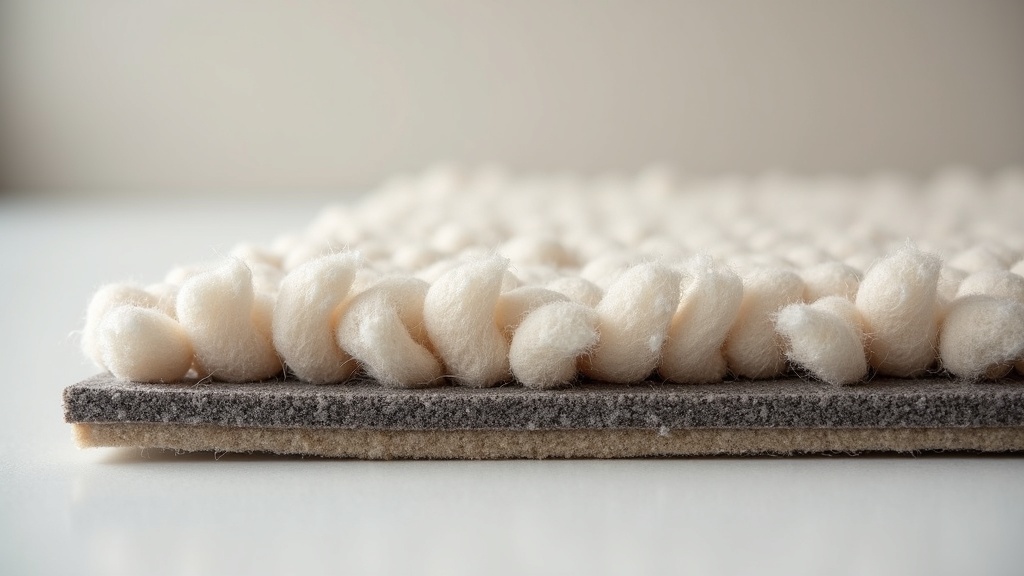
Hardwood’s main enemies are moisture, slipping, and finish damage from certain rubber compounds. The safest pads for hardwood are made from natural felt, or a felt layer combined with a breathable rubber (usually natural or synthetic rubber, not PVC or adhesive-backed vinyl). Look for pads labelled safe for hardwood and finished floors specifically, since some budget rubber pads use plasticisers that can leach into a wood finish over time, leaving a yellowed or tacky footprint when the rug is eventually moved.
- Felt pads add cushioning and reduce noise but offer minimal grip on their own — better under furniture-anchored rugs than in high-traffic walkways.
- Felt-rubber hybrids (felt on top, a natural rubber grid on the bottom) are the common middle ground: enough grip to stop sliding, breathable enough not to trap moisture underneath.
- Avoid PVC-only pads and anything described as “adhesive” or permanently tacky on hardwood — they can strip finish or leave marks when removed.
If you’re weighing whether a pad is worth the extra cost at all, it’s worth reading the trade-offs on wear and cushioning; the physics are the same whether you’re protecting an antique piece or a wool-blend rug in a family room.
Ventilation matters more than people expect
Hardwood floors need to breathe, and so does the rug sitting on them. A pad that seals moisture against the boards — even a small amount from humidity or a spilled glass of water — can encourage mould, mildew, or a musty smell in the rug itself. If a rug has developed an odour after time on hardwood, the cause is often trapped moisture under a non-breathable pad rather than the rug’s fibre; it’s a separate problem from cleaning the rug and worth ruling out before assuming the worst.
Tile, stone and concrete floors
Hard, smooth, non-porous surfaces like ceramic tile, polished stone, and sealed concrete present the opposite problem from wood: grip is the priority, and moisture retention is less of a concern because these surfaces don’t absorb it. A rubber-heavy pad, either natural or synthetic rubber, generally performs best here, since it grips both the rug backing and the tile surface without needing an adhesive.
- Choose a pad with a textured or waffle-grid rubber surface rather than a flat sheet — more surface contact means better grip on smooth tile.
- On uneven or textured stone (slate, travertine, hand-set tile), a slightly thicker felt-rubber combination pad helps the rug sit flat instead of rippling over grout lines.
- Test any new pad on a small hidden section of grout or a spare tile if the manufacturer doesn’t explicitly confirm it’s safe for natural stone sealants, since some rubber formulations can interact with certain stone sealers over years of contact.
Grip is also the main defence against rippling on tile, since hard floors offer no friction of their own to hold a rug in place. If a rug is already rippling or buckling at the edges, the cause is sometimes underlayment rather than the rug’s weave, and it’s worth separating those two problems before assuming repair is needed.
Carpet and carpeted floors
Placing a rug over carpet is common in layered looks and in rentals where the base carpet can’t be removed, but it comes with its own pad logic. The goal on carpet is not grip in the usual sense — a heavy rubber pad will simply grip the top of the carpet fibres and slide the rug and pad together — but a thin, low-profile pad with a grippy waffle texture on both sides that locks into the carpet pile itself.
- Low-pile, breathable pads made for carpet-on-carpet use are thinner than hardwood pads and rely on friction against carpet fibres rather than suction against a hard surface.
- Double-sided grip pads (grip texture facing both up and down) work best when a rug needs to stay anchored over a plush or mid-pile carpet.
- Avoid stacking a thick cushioned pad over thick carpet — the combined height creates an unstable, spongy feel underfoot and increases tripping risk at the rug’s edge.
Carpet-on-carpet setups also make it harder to vacuum properly, since a beater bar can catch on a rug’s fringe or loose pile at the seam between the two surfaces. Vacuuming without the beater bar, or using the bare suction setting, protects both the rug’s edge and the pad underneath it.
Matching pad choice to rug construction
The floor sets the baseline, but the rug’s own construction changes what’s safe to place under it. A hand-knotted wool rug with natural fibres and no backing benefits from breathable felt or felt-rubber pads in almost any room. A tufted rug, on the other hand, already has a manufactured latex backing bonded to the pile, and stacking another adhesive or rubber pad against that backing can accelerate the breakdown of the latex, which is already the shorter-lived part of a tufted construction. If you own a tufted rug, it’s worth understanding how that latex layer ages before deciding what, if anything, needs to go underneath it.
Rug pads should never be treated as a substitute for cleaning care. If a rug develops stains, odours, or a musty smell after sitting on a pad for a long period, always identify the fibre and construction before treating it — wool responds very differently to a spill than silk or a cotton-foundation piece, and a pad issue should never be masked with a harsh cleaning shortcut. When a rug is hand-knotted, antique, silk, or of uncertain origin, a professional rug cleaner or conservator is the safer route regardless of what caused the problem underneath it.
A quick comparison
| Floor type | Best pad type | What to avoid |
|---|---|---|
| Hardwood / engineered wood | Felt or felt-rubber hybrid, breathable | PVC-only or adhesive pads; non-breathable rubber |
| Tile / stone / concrete | Textured rubber or rubber-felt combination | Flat, low-grip pads; untested rubber on sealed stone |
| Carpet | Thin, low-profile, double-sided grip pad | Thick cushioned pads stacked over plush carpet |
Frequently asked questions about rug pads by floor type
Do I need a different rug pad for every room?
Generally yes, because the floor surface — not the room’s use — determines the safest pad material. A pad chosen for hardwood in a living room won’t perform the same way on a tiled kitchen floor, so match the pad to the floor type in each space rather than reusing one pad type throughout the home.
Can a rug pad damage hardwood floors?
Some can, particularly PVC or adhesive-backed pads that trap moisture or contain plasticisers that migrate into the wood finish over months or years. Felt and felt-rubber hybrids labelled safe for hardwood are the lower-risk choice, but it’s still wise to check occasionally that no discolouration is developing underneath.
Why does my rug slide on tile even with a pad?
Usually the pad is too thin, too smooth, or worn down, since tile offers no natural friction of its own. A textured rubber-grid pad with good surface contact on both the tile and the rug backing solves most sliding issues on hard, non-porous floors.
Is a rug pad necessary over carpet?
It helps even though carpet already has some grip. A thin, low-profile pad keeps the rug from bunching or creeping over time and prevents the rug’s edges from curling where two different pile heights meet.
Can a rug pad cause a musty smell?
Yes, if it’s non-breathable and traps moisture against the rug or floor for long periods, especially in humid climates. If a rug smells musty after time on a pad, check the pad’s ventilation before assuming the rug’s fibre itself is at fault.
Rug Academy publishes general information about rugs and is not a dealer, appraiser, or cleaning service. Cleaning and repair methods depend entirely on fibre, dye and construction — test any treatment on a hidden corner first, and consult a professional rug cleaner or conservator before treating a hand-knotted, antique, silk, or valuable rug, as damage from cleaning is usually permanent. Any prices mentioned are illustrative examples only, and nothing here is an appraisal, an authentication, or a guarantee of a rug’s origin or value.
Related reading
weaving and techniques, regional and antique rugs, value and authentication, cleaning and stains, repair and restoration, protection and storage, sizes and placement, materials and construction, styles and patterns, Tufted Rugs and Latex Backing: The Lifespan Problem.