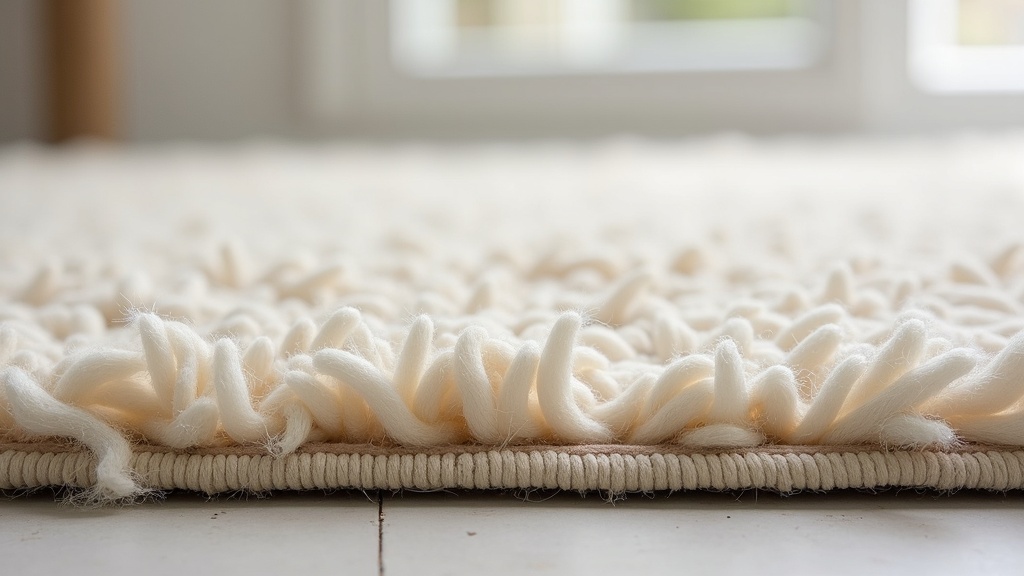
Tufted rugs have a built-in expiration date that hand-knotted and flatwoven rugs don’t share: the latex adhesive holding the pile to the backing fabric. Latex is a rubber compound, and rubber oxidizes, dries out, and loses elasticity over time — typically somewhere in the range of five to fifteen years depending on climate, foot traffic, and how the rug is cleaned. Once the latex cracks or powders, tufts pull loose, the backing separates from the pile (delamination), and no amount of vacuuming or professional cleaning restores the bond. This isn’t a manufacturing flaw in any individual rug; it’s a structural limit of the construction method itself.
What “tufted” actually means, structurally
A hand-tufted rug is made by punching yarn through a stretched fabric backing using a tufting gun, following a printed pattern. Unlike a hand-knotted rug, where each strand is individually tied around warp threads and the knot itself holds the pile in place, a tufted rug has no mechanical knot at all. The only thing preventing every tuft from pulling straight back out is a coat of liquid latex applied to the back of the primary fabric, often followed by a second fabric layer glued on top to hide the mess and give the rug some rigidity. If you want the full anatomy of warp, weft and pile in woven rugs for comparison, that’s covered in Warp, Weft and Pile: Rug Anatomy Explained, and the construction difference between tufted and knotted rugs is laid out in more detail in our guide to hand-knotted versus hand-tufted rugs.
This is why tufted rugs are almost always significantly cheaper than hand-knotted rugs of comparable size and material — a wool-tufted area rug in a standard living room size might sit in the low-to-mid hundreds as an illustrative example, where a hand-knotted wool rug of similar dimensions can run many times that, because construction and labor, not just materials, drive the price gap enormously.
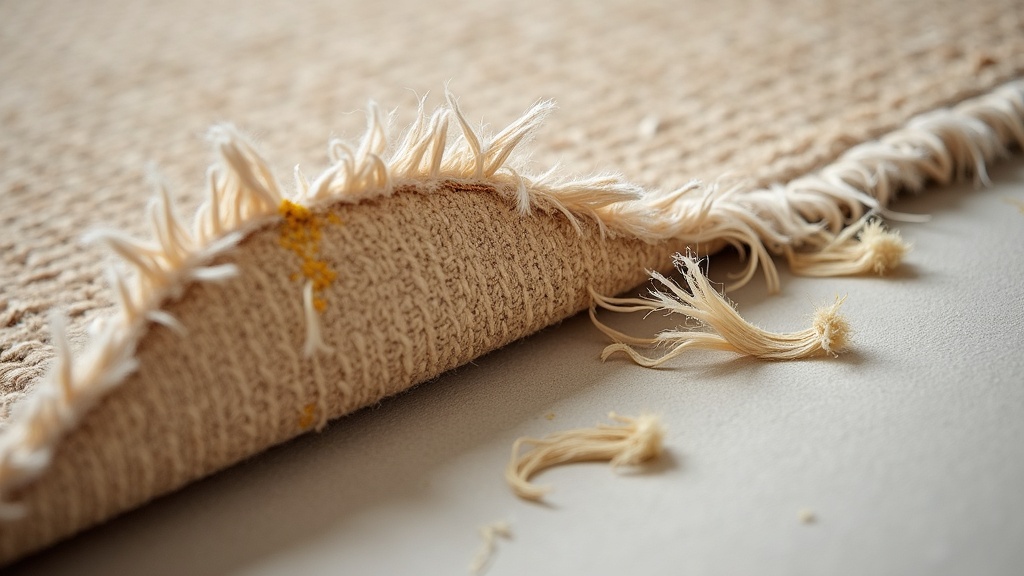
Why the latex breaks down
Latex degrades through a handful of predictable mechanisms:
- Oxidation and UV exposure — sunlight and air slowly break the polymer chains, making the rubber brittle rather than pliable.
- Moisture cycling — repeated wetting and drying, especially from steam cleaning or over-wetting during washing, softens latex temporarily and accelerates its breakdown over repeated exposures.
- Heat — underfloor heating, direct sun through a window, or hot-water extraction machines can soften latex enough that fibers shift, and repeated heat exposure shortens its working life.
- Flexing — rugs that get rolled, folded, or walked on heavily flex the backing constantly, and rubber that flexes under stress fatigues faster than rubber that sits flat.
None of this is unique to a bad batch or a cheap import; it’s the chemistry of vulcanized or synthetic latex compounds generally. Some manufacturers use higher-grade adhesives that last longer, but every latex-backed rug is on the same downward curve, just at different speeds.
What degradation actually looks like
The early signs are subtle: a slightly stiffer or crunchier feel underfoot, a faint rubbery smell (especially in humid rooms — if that’s paired with a musty odor rather than a rubber one, see how to deal with a rug that smells musty), and small dusty flakes of backing material appearing after vacuuming. As it progresses, you’ll see:
- Tufts pulling out cleanly in small clumps, especially along traffic lanes
- Visible cracks or a chalky white residue on the underside when you fold back a corner
- Bald patches where the backing shows through, distinct from moth damage, which leaves ragged rather than clean-edged loss (compare with moth damage in wool rugs and what can be saved)
- The rug feeling less flat, with edges that lift or a general stiffness that makes it sit unevenly on the floor
Cleaning risks specific to latex-backed rugs
This is the point where the fibre-safety rules that apply to every rug in this house matter even more, because latex adds a second material that can be damaged independently of the pile fibre.
For light spills on a wool-tufted rug, blot promptly with a clean white cloth and cool water; if a stain persists, a small amount of wool-safe, pH-neutral detergent diluted in cool water can be worked in gently and then rinsed by blotting with plain water, always testing on a hidden corner of the pile first. For a synthetic-fibre tufted rug (nylon, polypropylene, or polyester face yarn), the fibre itself tolerates a wider range of cleaners, but the latex backing does not care what the face yarn is made of — it still degrades from heat and saturation.
What to avoid on any latex-backed rug, regardless of fibre:
- Steam cleaning or hot-water extraction at high temperature, which can soften the latex and cause tufts to shift or the two backing layers to separate. See can you steam clean a rug for when steam helps and when it ruins a rug.
- Saturating the rug or running it through a washing machine. Water trapped between the pile and the latex takes a long time to dry, and prolonged dampness both weakens the adhesive and encourages mold in the backing. Machine washing is covered in more depth at can you wash a rug in a washing machine, and the short answer for anything with a glued backing is generally no.
- Chlorine bleach or ammonia-based cleaners, and never mixing the two or combining either with other household chemicals — bleach breaks down wool and silk fibre and can also attack latex and dyes, and mixing cleaning chemicals can produce dangerous fumes for no cleaning benefit.
- Beater-bar vacuums run aggressively over a rug with already-loosening tufts, which pulls out pile that a suction-only or bare-floor setting would leave alone; the right technique is described in vacuuming a rug correctly.
If a tufted rug is stained badly, heavily soiled, or has started to delaminate, this is a genuine case for a professional rug cleaner rather than home treatment — not because the rug is necessarily valuable, but because a professional can assess whether the backing will survive a wet clean at all before committing the rug to one. General guidance on cleaning frequency lives in the rug care hub, alongside stain-specific advice in the cleaning and stains archive.
Can a delaminating rug be repaired?
Once latex has cracked extensively, re-gluing is a stopgap at best — it doesn’t restore the original bond strength and often doesn’t hold in high-traffic areas. Small, localized delamination near an edge can sometimes be re-secured by a repair specialist using fresh adhesive, which is a different process from the reweaving or patching done on hand-knotted rugs; that distinction is explained in reweaving vs patching: how professionals repair holes. For widespread shedding across the whole rug, most repair professionals will tell you the rug has reached the end of its practical life, and the more useful question becomes whether replacement makes more sense than repair — a decision covered generally in when a damaged rug is worth repairing.
Reducing the problem, not solving it
Because latex breakdown is inevitable, the goal is slowing it rather than preventing it:
- Use a proper rug pad — it reduces flexing and friction on the backing every time someone walks across the rug, and a felt or rubber-free pad is generally the safer long-term choice under a latex-backed rug. See do you need a rug pad.
- Keep the rug out of direct, sustained sunlight, which accelerates both dye fading and latex oxidation; see how to protect a rug from sun fading.
- Vacuum on suction settings rather than beater-bar settings once the rug is a few years old.
- Avoid rolling a tufted rug tightly for long-term storage, since sharp folds crack aged latex; unrolled, flat storage is preferable where space allows, as discussed in how to store a rug long term without damaging it.
For readers weighing a tufted purchase against other constructions with a longer working life, the broader tradeoffs between synthetic and wool constructions are covered in wool vs synthetic rugs: lifespan compared, and material basics generally live in the rug buying guides hub and the materials and construction archive.
On the appraisal side: a tufted rug’s construction — glued rather than knotted, a visible fabric backing rather than a woven foundation, machine-uniform pile height — is one of the first things an appraiser checks when distinguishing hand-tufted work from hand-knotted or flatwoven pieces, and it’s a major factor in how the rug is valued relative to knotted rugs, alongside the criteria covered in how wear and repairs affect a rug’s value. If you have a specific rug and money is genuinely at stake, an in-person appraisal from a qualified appraiser is the only reliable way to know what you have, as we outline in getting a rug appraised: what to expect.
Frequently asked questions about tufted rugs and latex backing
How long do hand-tufted rugs actually last?
Most hand-tufted rugs remain serviceable for roughly five to fifteen years before the latex backing becomes brittle enough to cause noticeable shedding or delamination, though heavy traffic, sun exposure, and frequent wet cleaning can shorten that considerably.
Why is my tufted rug shedding so much?
Some shedding is normal in the first few months as loose fibre from cutting works free, but ongoing or worsening shedding, especially with clumps of tufts pulling out, usually signals that the latex adhesive underneath is cracking and no longer holding the pile firmly to the backing.
Can you re-glue a tufted rug’s backing?
Small areas of localized delamination can sometimes be re-secured by a rug repair specialist, but this is a patch fix rather than a restoration, and rugs with widespread latex cracking generally cannot be practically or economically restored to their original condition.
Is it safe to steam clean a tufted rug?
Steam and hot-water extraction can soften an already-aging latex backing and speed up cracking and delamination, so cooler, lower-moisture cleaning methods are generally safer for latex-backed rugs, and a professional cleaner can assess the backing’s condition before recommending a method.
Are tufted rugs worth buying if they don’t last as long?
They’re a reasonable choice for lower cost, a wide range of patterns, and a shorter design commitment, but buyers should go in understanding they’re purchasing a rug with a working lifespan measured in years rather than generations, unlike a hand-knotted equivalent.
Rug Academy publishes general information about rugs and is not a dealer, appraiser, or cleaning service. Cleaning and repair methods depend entirely on fibre, dye and construction — test any treatment on a hidden corner first, and consult a professional rug cleaner or conservator before treating a hand-knotted, antique, silk, or valuable rug, as damage from cleaning is usually permanent. Any prices mentioned are illustrative examples only, and nothing here is an appraisal, an authentication, or a guarantee of a rug’s origin or value.