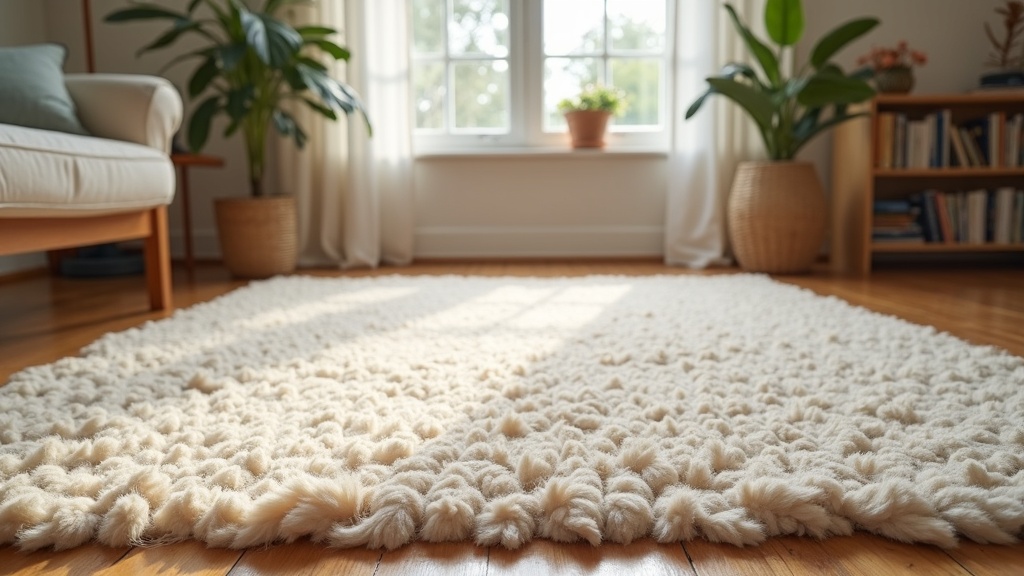
Under normal household conditions, a well-made wool rug will generally outlast a synthetic rug by a wide margin — often decades versus five to fifteen years — because wool fibre has natural resilience and crush recovery that manufactured fibres struggle to match. But that answer comes with real caveats: a poorly constructed wool rug can wear out fast, a well-made nylon rug can outlast a cheap wool one, and how you clean and care for either will do as much to determine lifespan as the fibre itself.
What “lasting longer” actually means
Longevity in a rug isn’t one property. It’s a combination of how well the pile bounces back after furniture and foot traffic compress it, how the fibre handles soil and sunlight without breaking down, and how the foundation (the structure the pile is woven or tufted into) holds up to years of flexing and cleaning. A rug can “fail” in any of these ways independently — matted pile, faded color, or a crumbling backing — long before the fibre itself wears through.
Wool’s durability profile
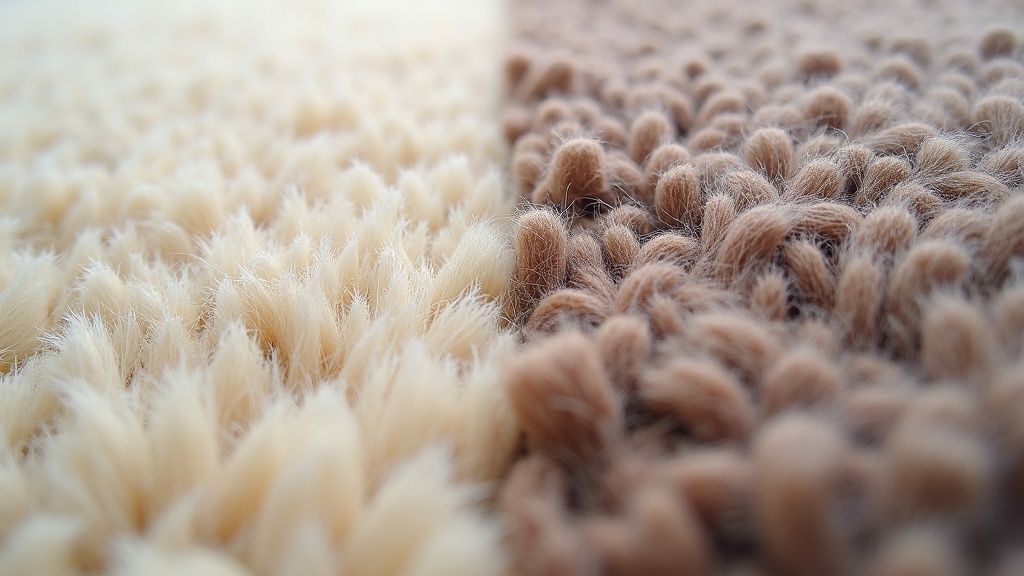
Wool is a protein fibre with a natural crimp and an outer scale structure that lets it compress under weight and spring back when the weight is removed. This is why a good wool rug can take decades of foot traffic in a hallway or living room and still look full, while synthetic pile in the same spot goes flat and stays flat. Wool also resists soiling reasonably well because dirt sits on the fibre surface rather than penetrating it, and it’s naturally somewhat flame-resistant and slow to show static.
Wool’s weaknesses are moisture-related. It absorbs water readily, and hot water combined with agitation or high-pH cleaners causes the scales on the fibre to lock together — a process called felting — which shrinks and stiffens the rug permanently. Wool can also yellow if bleached. None of this makes wool fragile; it makes wool sensitive to specific cleaning conditions that are easy to avoid once you know them.
Synthetic fibres: nylon, polyester, and polypropylene
“Synthetic” covers several different fibres with quite different behavior, and lumping them together is where a lot of buying confusion starts.
- Nylon is the most durable synthetic fibre commonly used in rugs. It has good resilience and abrasion resistance, which is why it’s the fibre of choice for many commercial carpets. A well-made nylon rug can hold up respectably to heavy traffic, though it doesn’t match wool’s long-term crush recovery.
- Polyester is soft, colorfast, and resists staining well, which makes it popular for budget and mid-range rugs. Its weakness is crush recovery — polyester pile tends to flatten under sustained weight (like a sofa leg or a traffic lane) and doesn’t spring back the way wool or nylon does.
- Polypropylene (olefin) is inexpensive, resists moisture and staining well, and is common in indoor-outdoor and flat-weave rugs. It has the weakest resilience of the common synthetics and can also degrade with prolonged sun exposure, becoming brittle over time.
Synthetic fibres share one practical advantage: they’re generally more forgiving of moisture and everyday spills than wool, which is part of why they dominate the budget and family-friendly end of the rug market.
A side-by-side comparison
| Property | Wool | Nylon | Polyester | Polypropylene |
|---|---|---|---|---|
| Crush recovery | Excellent | Good | Fair | Poor to fair |
| Stain resistance | Good | Good | Very good | Very good |
| Moisture sensitivity | High | Low | Low | Very low |
| Sunlight tolerance | Good | Good | Fair | Poor over years |
| Typical lifespan, moderate traffic | Decades with care | 10–20 years | 5–15 years | 5–10 years |
These are general tendencies, not guarantees for any specific product — pile density, twist, and backing quality shift these numbers considerably in both directions.
Construction matters as much as fibre
Fibre is only half the story. A hand-knotted wool rug, where each knot is tied individually around a woven foundation, distributes wear across thousands of knots and can be re-piled or repaired at the edges for generations. A machine-tufted wool rug, by contrast, relies on a layer of latex adhesive to hold the pile in place, and that adhesive typically degrades within a couple of decades regardless of how good the wool itself is. The same logic applies to synthetics: a densely woven, low-pile nylon commercial rug will usually outlast a loosely tufted, high-pile polyester shag, even though both are “synthetic.” If you’re weighing a purchase, it’s worth reading about knotting and weaving techniques on the site’s rug craft hub before assuming fibre alone tells you what you’re getting.
Price is a rough but imperfect proxy for construction quality. A machine-made wool-blend rug in a standard living room size might sit somewhere in the low hundreds, while a densely hand-knotted wool rug of similar size could run considerably higher — construction, knot count, and where it was made drive this enormously, and the price gap reflects labor and structure, not fibre cost alone.
Cleaning and care: the real determinant of lifespan
More rugs are shortened in life by cleaning mistakes than by ordinary wear. The right approach depends entirely on fibre and construction, so treat any generic “just clean it with soap and water” advice with suspicion.
- For wool rugs, routine care means vacuuming without a beater bar (which can pull and abrade the pile and fringe), and blotting spills promptly with cool water and a wool-safe, pH-neutral detergent rather than hot water or alkaline cleaners, which can felt, shrink, or yellow the fibre.
- For synthetic rugs, most fibres tolerate more moisture and stronger detergents than wool, but dyes — especially in older or budget rugs — can still bleed or migrate when saturated, so blot rather than soak and always test any cleaner on a hidden corner first.
- Never reach for chlorine bleach on wool or silk; it breaks down the protein fibre and can cause irreversible yellowing or degradation. Avoid mixing cleaning products, particularly bleach and ammonia, which produces hazardous fumes and offers no cleaning benefit that justifies the risk.
- Hand-knotted, antique, silk, or otherwise valuable rugs — of any fibre — should go to a professional rug cleaner or textile conservator rather than through a home wash or steam cleaning, since saturating or machine-washing a hand-knotted foundation can shrink and permanently buckle it.
The site’s rug care hub covers cleaning, stain response, and storage in more depth, including how to handle specific spill types without guessing.
Buying for longevity
If lifespan is the priority, the most useful questions to ask before buying aren’t just “wool or synthetic,” but: How is the pile attached to the backing? How dense is the weave or tuft? Is the rug intended for high traffic or light use? The rug buying guides hub walks through materials and construction side by side, and if you’re sizing a rug for a specific room, the sizes and placement archive and the dedicated living room rug size guide are useful starting points, since an undersized rug in a high-traffic path wears out faster regardless of fibre.
A note on value and authentication
Fibre and age both affect what a rug is worth, but neither one is something to guess at from a description or a photo. Appraisers look at knot type and density, the foundation material, dye characteristics under magnification, wear patterns, and how the selvedge and fringe are finished to distinguish hand-knotted work from machine-made or reproduction pieces. If you own or are considering a rug where real money is at stake — an inherited piece, an estate sale find, a rug represented as antique — an in-person appraisal from a qualified appraiser is the only reliable way to confirm origin, age, or value; no article, including this one, can substitute for that.
Frequently asked questions about wool vs synthetic rug lifespan
Does wool or synthetic hold up better with pets and kids?
Synthetic fibres, especially polyester and polypropylene, tend to resist stains and moisture better day-to-day, which helps with spills and accidents. Wool recovers better from crushing and matting over years. Neither is fully stain-proof or crush-proof, so cleaning habits still matter more than fibre choice alone.
Is a wool rug worth the extra cost over synthetic?
If you want a rug that looks good for decades and can be repaired or re-piled, wool’s resilience usually justifies the higher price. If the rug is for a short-term rental, a high-spill area, or a tight budget, a durable synthetic like nylon may deliver better value for the money spent.
Can you steam clean a wool rug?
Generally no — steam and hot water can felt and shrink wool permanently, especially on hand-knotted rugs with natural fibre foundations. Cool water with a wool-safe detergent, applied sparingly and tested on a hidden corner first, is the safer home approach; anything beyond light spot cleaning should go to a professional.
Why does my synthetic rug look flat after a few years?
Most synthetics, particularly polyester and polypropylene, have weaker crush recovery than wool, so pile under furniture legs or in walkways compresses and doesn’t spring back. This is a structural fibre limitation rather than a sign of a defective rug.
How do I know if my rug is hand-knotted wool or machine-made synthetic?
Check the back: hand-knotted rugs show the pattern mirrored in the knots and slight irregularities row to row, while machine-made rugs usually have a uniform mesh backing and perfectly repeating pattern. Fringe that’s sewn on separately, rather than woven from the foundation, is another common sign of machine construction.
Rug Academy publishes general information about rugs and is not a dealer, appraiser, or cleaning service. Cleaning and repair methods depend entirely on fibre, dye and construction — test any treatment on a hidden corner first, and consult a professional rug cleaner or conservator before treating a hand-knotted, antique, silk, or valuable rug, as damage from cleaning is usually permanent. Any prices mentioned are illustrative examples only, and nothing here is an appraisal, an authentication, or a guarantee of a rug’s origin or value.