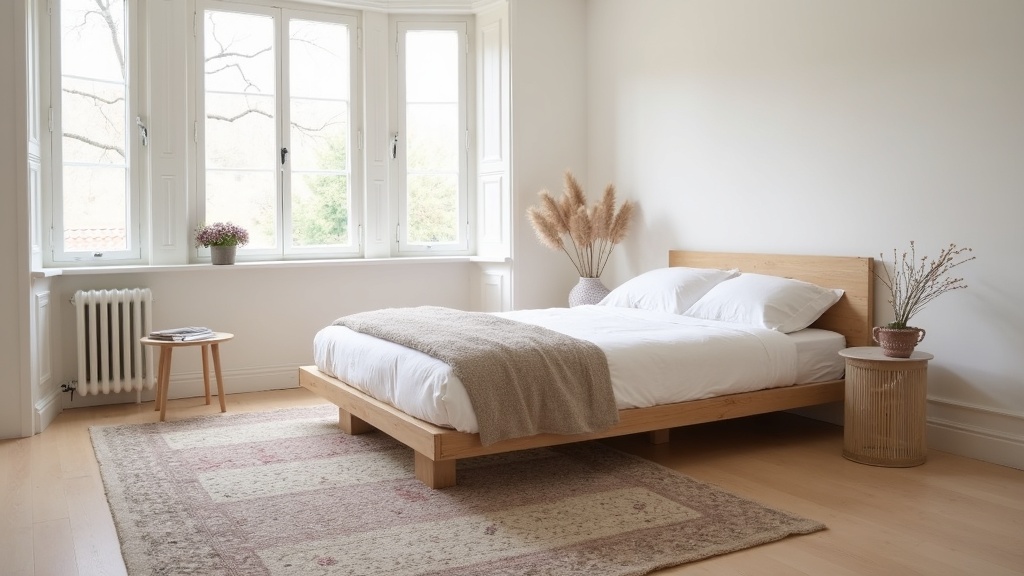
In most small bedrooms, the best fit is a rug that extends at least 18-24 inches beyond the sides and foot of the bed, which usually means a 6×9 or 8×10 for a queen bed, or a 5×8 for a full or double. If the room is too tight for that, a runner along one or both sides of the bed, or a smaller rug positioned just under the foot of the bed, often works better than forcing an undersized area rug into the whole floor.
Bedroom rug sizing is really a math problem dressed up as a design question: how much floor is left once the bed, nightstands, and walkways are accounted for, and how much of that remaining floor actually needs to be covered for the room to feel finished. Small bedrooms don’t have room for error, so getting the proportions right matters more here than in almost any other room in the house.
Start with the bed, not the room
The single biggest factor in bedroom rug sizing is the bed itself, because it’s the visual anchor of the room and the rug’s job is to frame it. As a general rule:
- Twin or single bed: a 5×7 or 4×6 rug, positioned so it runs the length of the bed and extends past the foot.
- Full or double bed: a 5×8 or 6×9 rug in a small room, or 8×10 if the floor allows it.
- Queen bed: 6×9 is the practical minimum for a small room; 8×10 or 9×12 is more generous if space permits.
- King bed: in a genuinely small bedroom, a king bed rarely leaves room for a full-coverage rug, which is exactly when runners or a foot-of-bed placement become the better solution.
These are starting points, not fixed rules — the right call depends on the specific footprint of your room. For a broader look at how these ratios play out across furniture types, the rug buying guides hub is a useful place to cross-check sizing logic against other rooms, and the sizes and placement archive has room-by-room breakdowns if the bedroom isn’t your only sizing puzzle.
How much rug should actually show
A common mistake in small bedrooms is buying a rug that just barely fits under the bed frame, so almost none of it is visible. This tends to make the room feel smaller, not larger, because the eye reads the small visible strip as the whole rug rather than as part of a larger, room-anchoring shape. A better target is 18 to 24 inches of rug showing on at least two sides of the bed — usually the two long sides, or the foot and one side if the room is narrow. The exact numbers, along with diagrams for different bed and room combinations, are covered in more depth in How Much Rug Should Show Around a Bed?
In a genuinely tight room, you may not be able to get 18-24 inches on both long sides. When that happens, it’s usually better to prioritize showing rug at the foot of the bed and along the side you actually walk on, rather than splitting the difference and showing a token strip on every edge.
Should the rug go under the bed or just beside it?
This is one of the most common questions in small-bedroom rug shopping, and the honest answer is that both are legitimate, depending on furniture and floor space. A rug that runs partly under the bed anchors the whole layout and reads as more intentional, but it requires enough floor to extend well past the bed on the sides you actually see. A rug placed only beside or at the foot of the bed — sometimes two runners flanking the bed like bedside mats — uses less floor and is often the more practical choice once nightstands, a dresser, or a door swing eat into the available space. The trade-offs, along with which furniture arrangements favor each approach, are laid out in Should a Rug Go Under the Bed or Beside It?
When a runner is the better answer
Runners aren’t just for hallways. In a small bedroom, a single runner along the side of the bed you get in and out of, or a pair flanking both sides, can solve the coverage problem without needing to fit a large rectangle into a cramped floor plan. The same proportion logic that governs hallway runners — enough length to matter, enough width to feel substantial underfoot rather than like a bath mat — applies here too, and Runner Rug Sizes: Getting Hallway Proportions Right covers the sizing math in detail even though it’s written with hallways in mind.
Measuring your room before you shop
Before choosing a size, measure the actual open floor space rather than the room’s total square footage. Steps that help avoid an expensive mis-measure:
- Measure wall to wall in both directions, then subtract for baseboard heaters, radiators, or built-ins that eat into usable floor.
- Mark out the bed’s footprint on the floor with painter’s tape, including nightstands if they sit flush against the bed.
- Leave at least 18 inches of clear walkway on any side you actually use to get in and out of bed or to a closet or door.
- Tape out the candidate rug size and live with it for a day or two before ordering — it’s the cheapest way to catch a sizing mistake.
Material matters more in small rooms
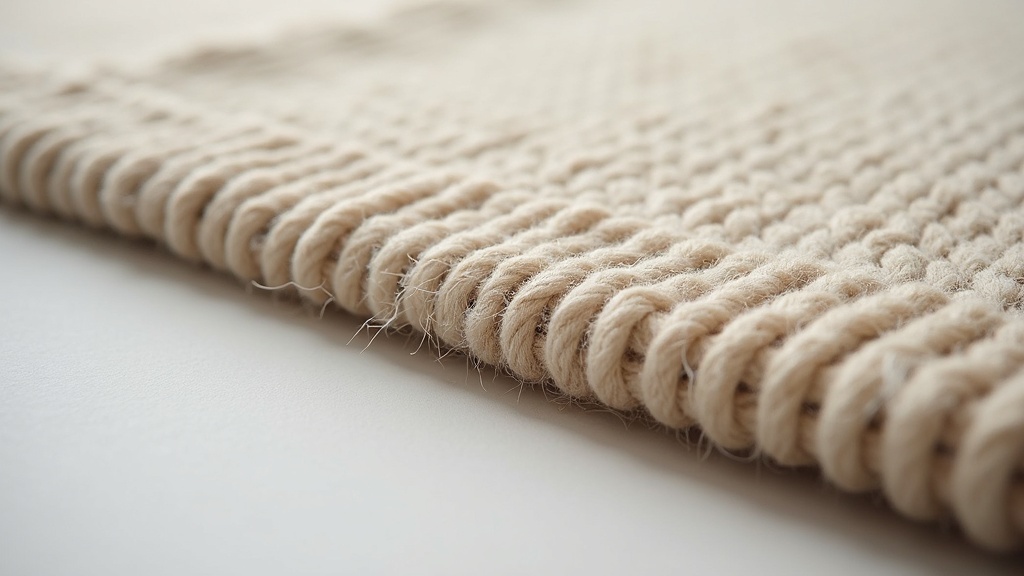
In a small bedroom, the rug is a larger proportion of what you see and touch, so construction and fiber choices carry more weight than they would in a larger, more furniture-filled room. A dense wool pile feels substantial underfoot on a cold morning, while a flatweave sits lower and can make a tight room feel less visually heavy. The trade-offs between those two constructions — durability, texture, how they read in a small space — are covered in Flatweave vs Pile Rugs: Which Suits Your Room? Whatever material you choose, a rug pad underneath is worth the small added cost: it stops a smaller rug from sliding or bunching on a hard floor, which matters more in a tight bedroom where the rug’s edges are often near a walking path. The reasoning is laid out in Do You Really Need a Rug Pad?
Illustrative price ranges
Rug prices vary enormously by material, construction, and origin, so any figure here is only a rough illustration, not a quote. A machine-made synthetic or wool-blend rug in a 5×8 or 6×9 size aimed at a bedroom might sit somewhere in the low hundreds. Hand-tufted wool rugs in the same sizes often run higher, and a hand-knotted wool rug of comparable size can run into four figures or more, depending heavily on knot density, origin, and age. None of these numbers should be read as a current market rate — construction and size drive the real cost far more than the room they end up in.
Caring for a bedroom rug safely
Bedrooms bring specific hazards: makeup, skincare oils, spilled coffee from a bedside table, and pet accidents if animals sleep in the room. For a wool rug, the safe approach to a fresh spill is to blot — never rub — with a clean cloth and, if needed, a small amount of cool water and a wool-safe detergent, working from the outside of the stain inward so it doesn’t spread. Hot water and high-pH or alkaline cleaners are not safe on wool: they can cause the fibers to felt, shrink, and yellow. Chlorine bleach should never be used on wool or silk rugs, and ammonia or bleach should never be combined with any other cleaning product — the fumes from mixing chemicals like these are dangerous, and the pairing offers no cleaning benefit. If the rug is silk, hand-knotted, antique, or you’re not certain of its construction, don’t treat it yourself at all; take it to a professional rug cleaner or conservator, since damage from an at-home attempt is usually permanent. Always test any product on a hidden corner first. For pet-related accidents specifically, How to Remove Pet Stains and Odour From a Rug covers the fiber-specific steps in more detail, and the cleaning and stains archive has guidance for other common bedroom spills.
Frequently asked questions about bedroom rug sizing
What size rug do I need for a queen bed in a small room?
A 6×9 rug is usually the practical minimum for a queen bed in a small room, positioned so it extends 18-24 inches past the sides and foot of the bed. If the room can’t fit that, a runner on each side of the bed is a workable alternative.
Should a rug go under the whole bed or just at the foot?
Either works. A rug extending under most of the bed anchors the room more strongly, but if space is tight, placing a smaller rug or runner just at the foot and along the side you walk on is often the more practical choice.
Is it OK to use two runners instead of one rug in a bedroom?
Yes — a matching pair of runners along each side of the bed is a common solution in small bedrooms, especially with a king or queen bed, since it covers the areas you actually stand on without needing enough floor for one large rectangle.
What size rug fits a full or double bed?
A 5×8 rug is a common choice for a full or double bed in a smaller room, with 6×9 or 8×10 as options if more floor space is available. The goal is still 18-24 inches of visible rug beyond the bed’s edges where possible.
Does rug material make a difference in a small bedroom?
Yes — a low-pile flatweave tends to make a tight room feel less visually heavy, while a plush wool pile adds warmth underfoot but occupies more visual space. In a small room, this trade-off is worth weighing alongside size.
Rug Academy publishes general information about rugs and is not a dealer, appraiser, or cleaning service. Cleaning and repair methods depend entirely on fibre, dye and construction — test any treatment on a hidden corner first, and consult a professional rug cleaner or conservator before treating a hand-knotted, antique, silk, or valuable rug, as damage from cleaning is usually permanent. Any prices mentioned are illustrative examples only, and nothing here is an appraisal, an authentication, or a guarantee of a rug’s origin or value.