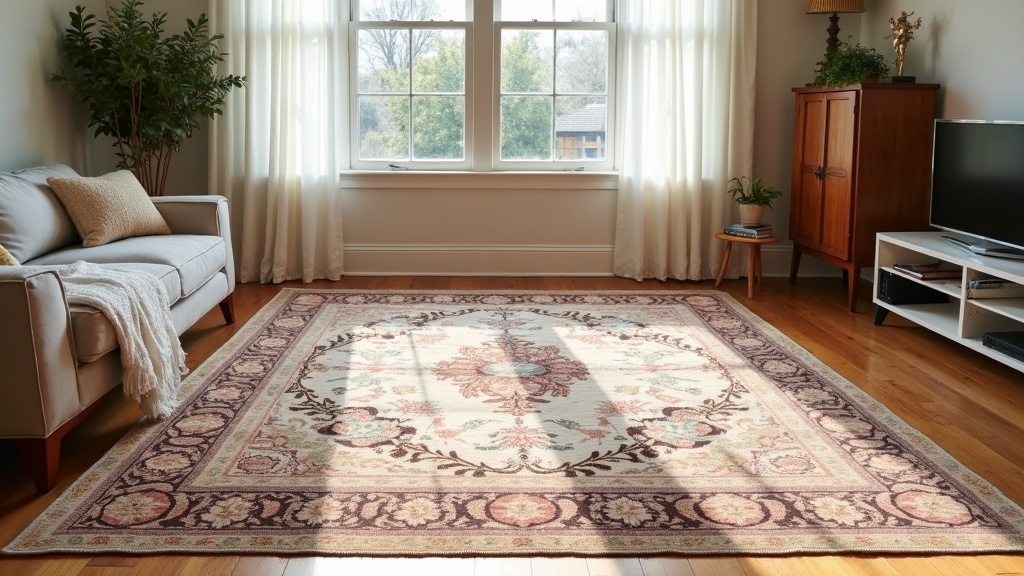
Indian and Pakistani rugs sit at the center of the modern hand-knotted market: both countries produce enormous volumes of rugs woven in classic Persian, Turkish, and Caucasian designs, alongside their own regional traditions. “Reproduction” simply means a rug woven today in an older design vocabulary rather than an antique original, and it is not inherently a lesser rug — quality depends on materials, knotting, and finishing, not on where the design came from. Understanding the difference between a well-made reproduction and a lower-grade commercial piece takes more than reading a label; it takes looking at the weave itself.
Two traditions, two starting points
India’s carpet-weaving industry as it exists today largely dates to the colonial and post-independence periods, when workshops around Agra, Jaipur, and Bhadohi began weaving Persian-style florals and medallions for export, often to British and later American markets. Indian weavers became known for fine wool and silk-highlight pieces, oversized room rugs, and a willingness to reproduce almost any historical design a buyer requested — from Tabriz medallions to Aubusson-style florals adapted for pile weaving.
Pakistan’s tradition grew differently. After Partition in 1947, many weavers with roots in Central Asian and Turkmen weaving families settled in areas around Lahore and Karachi, and the country became known for “Bokhara” designs — the repeating gul (octagon) motifs associated with Turkmen tribal weaving — as well as fine reproductions of Persian classics. Pakistani workshops are particularly associated with tightly woven wool pieces on cotton foundations, often in a narrower, more restrained palette than their Indian counterparts.
Both countries also produce flatweaves and kilims, though pile carpets dominate export production. If you want the mechanics of flatweave construction as background, what a kilim is and how it’s made is a useful primer before comparing it to pile weaving.
What “reproduction” actually means
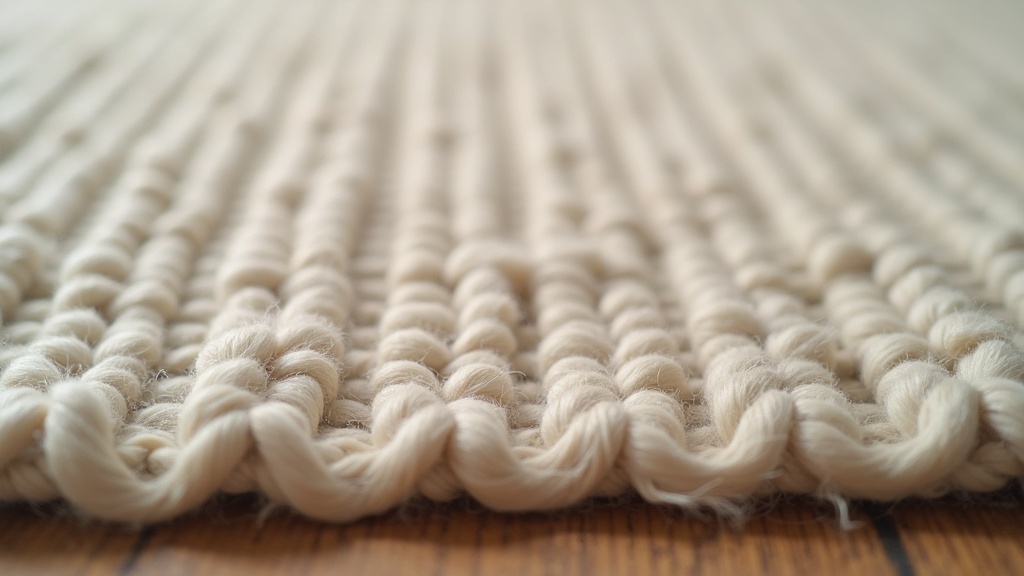
A reproduction rug copies the pattern, color scheme, or general style of a historical weaving tradition — say, a Heriz medallion or a Caucasian geometric design — without claiming to be from that original region or era. This is standard practice and has been for well over a century; it is not the same as a fake, which would falsely claim an origin or age it doesn’t have. The confusion usually starts because Indian and Pakistani weavers execute these designs so competently that, at a glance, a reproduction can resemble the original tradition it borrows from. Understanding common rug motifs like medallions, boteh, and herati patterns helps explain why so many different regional traditions share visual vocabulary — these motifs migrated across trade routes for centuries before any modern workshop touched them.
The background hub on rug craft, weaving techniques, and regional traditions is a good next stop if you want the deeper history behind specific patterns and where they originated.
Construction: what actually differs
Indian and Pakistani rugs are almost always hand-knotted on a loom with a cotton warp and weft, though wool and silk foundations appear in finer pieces. The knot itself is typically the asymmetrical (Persian, or “senneh”) knot, which allows for tighter curves in floral motifs — a contrast with the symmetrical (“Turkish,” or “ghiordes”) knot more associated with Anatolian and some Caucasian weaving. For a full breakdown of how these elements fit together, warp, weft, and pile: rug anatomy explained covers the terminology in more detail.
Knot density is often used as a marketing figure — “250,000 knots per square meter” and so on — but density alone does not determine quality or value. A coarser knot executed with well-spun wool and clean color can outlast a very fine knot woven with poor wool or unstable dye. Knot count myths and why higher isn’t always better goes into why this number gets overstated in retail descriptions.
Wool quality varies significantly by region and workshop — some Indian and Pakistani wool is blended with other fibers to reduce cost, which changes both the hand-feel and the long-term wear of the rug. If you’re comparing options, what a wool-blend rug is and whether it’s worth it lays out the trade-offs plainly.
Dyes: natural, synthetic, and everything between
Older and higher-end reproductions increasingly use natural or carefully controlled synthetic dyes to achieve the soft, slightly uneven coloration associated with antique rugs — sometimes marketed as “vegetable dye” pieces. Lower-cost production more commonly uses modern synthetic dyes, which are generally more colorfast but can look flatter or more uniform. Learning to spot the difference matters both for care and for understanding what you’re buying; natural vs synthetic dyes: how to spot the difference walks through the visual and practical cues.
Some reproductions are deliberately chemically washed or “antiqued” to mimic decades of fading and softening. This is a legitimate finishing technique, not a defect, but it does affect the rug’s long-term wear characteristics and its resale expectations. Antique-wash and distressed rugs: what you’re buying explains what that finish actually does to the fiber.
Telling a reproduction from an older original
Only a qualified appraiser working in person can tell you conclusively what a specific rug is, how old it is, or what it’s worth — no article, and no photograph, can substitute for that. What an appraiser actually examines includes the knot type and density, the foundation material (cotton, wool, or silk), the character and consistency of the dyes, the wear pattern across the pile, and the finishing at the selvedge and fringe, since machine-made pieces and later reproductions often show construction shortcuts in exactly those spots — a straight, machine-overcast edge instead of a hand-wrapped selvedge, for instance, or fringe that is sewn on rather than being the continuous warp ends of the rug itself. If you’re considering a formal appraisal, getting a rug appraised: what to expect explains the process and what documentation to bring.
Wear and repair history also factor into both authenticity assessment and value, since a rug’s condition tells its own story about age and use. None of this can be settled from a description or a listing photo, which is exactly why in-person appraisal exists as a profession.
Caring for Indian and Pakistani wool rugs
Most Indian and Pakistani production is wool pile on a cotton foundation, and that combination has specific care needs. Routine dust removal should use a vacuum without a rotating beater bar, or with the bar disengaged, run in the direction of the pile — beater bars catch and pull loose fringe and pile fibers over time. For small fresh spills, blot promptly with a clean white cloth and, if needed, a small amount of cool water and a wool-safe, pH-neutral detergent, working from the outside of the spill inward; never scrub, which distorts the pile and can push the stain deeper into the foundation.
Avoid hot water and any alkaline or high-pH cleaning products on wool — heat and alkalinity cause wool fiber to felt, shrink, and yellow, and the damage does not reverse. Never use chlorine bleach on a wool rug: it breaks down the protein structure of the fiber outright. Never mix cleaning chemicals, and be cautious with ammonia-based products for the same reason — combining common household chemicals can produce harmful fumes and rarely improves cleaning results. If a rug has silk highlights, a silk foundation, or you are unsure what it’s made of, treat it as a job for a professional rather than a home project, since silk is damaged by water and by most detergents. Full machine washing or steam cleaning a hand-knotted rug risks shrinking the cotton foundation unevenly relative to the wool pile, which is a common cause of permanent buckling; see the buying guides hub and the site’s materials and construction coverage for more on how different fibers behave.
Before treating any stain or using any product on a rug you value, test it on a hidden corner first — a corner of the underside or an area under furniture is ideal — and if the rug is hand-knotted, antique, silk, or simply of uncertain construction, take it to a professional rug cleaner or conservator rather than risk it at home.
Buying considerations
Price ranges for Indian and Pakistani rugs vary enormously by size, material, and knot density, and any figure quoted here is illustrative only, not a market rate. As a rough sense of scale: a machine-made wool-blend rug in a standard living-room size might sit somewhere in the low hundreds, while a hand-knotted wool piece in the same size, depending on quality and origin claims, could run from several hundred dollars into the low thousands, and fine wool-and-silk reproductions considerably higher still. Construction, not country of origin alone, drives most of that spread.
Frequently asked questions about Indian and Pakistani rugs
What’s the difference between an Indian rug and a Pakistani rug?
Broadly, Indian production leans toward Persian floral and medallion reproductions with a wide range of qualities, while Pakistani weaving is strongly associated with tight, fine wool pieces and Turkmen-derived “Bokhara” gul patterns, though both countries produce many other styles today.
Are Indian and Pakistani rugs real hand-knotted rugs?
Many are genuinely hand-knotted on a loom, though both countries also produce machine-made and hand-tufted rugs marketed alongside hand-knotted lines, so construction should be confirmed rather than assumed from country of origin alone.
Is a reproduction rug worth less than an antique original?
Generally reproductions cost less than genuine antiques of comparable quality, but value depends on materials, weaving skill, and condition rather than the design’s origin alone; only an in-person appraisal can give a reliable value assessment.
How do I know if my Indian or Pakistani rug is hand-knotted or machine-made?
Check the back: hand-knotted rugs show slightly irregular knots and a visible pattern matching the front, while machine-made rugs have a uniform, mechanical backing texture; fringe that is sewn on rather than woven through is another common machine-made indicator.
Can I clean an Indian or Pakistani wool rug at home?
Light dusting and blotting fresh spills with cool water and a wool-safe detergent is generally fine, but full washing, steam cleaning, or hot water should be avoided, and hand-knotted, silk, or valuable pieces are best handled by a professional cleaner.
Rug Academy publishes general information about rugs and is not a dealer, appraiser, or cleaning service. Cleaning and repair methods depend entirely on fibre, dye and construction — test any treatment on a hidden corner first, and consult a professional rug cleaner or conservator before treating a hand-knotted, antique, silk, or valuable rug, as damage from cleaning is usually permanent. Any prices mentioned are illustrative examples only, and nothing here is an appraisal, an authentication, or a guarantee of a rug’s origin or value.