Buying a rug at auction can mean real savings, but it comes with real risk: what you see in the preview room is what you get, condition problems are often disclosed in vague catalogue language, and a buyer’s premium and taxes can add a fifth or more to the hammer price. The safest approach is to inspect the rug in person before the sale, understand exactly what fees stack on top of your winning bid, and know the difference between a condition issue that’s cosmetic and one that undermines the rug’s structure or value. If you can’t attend the preview or get a detailed condition report, treat that gap as a reason for caution rather than optimism.
Why Auctions Work Differently From Retail
A rug shop or online retailer typically stands behind the item — return policies, warranties, sometimes a cleaning or repair included. At auction, sales are almost always final. The house is selling on behalf of a consignor, and its job is to describe the lot accurately enough to avoid liability, not to sell you on it. That means catalogue descriptions can be technically correct and still leave out things that matter to you: a repaired corner, a colour that’s shifted from sun exposure, a smell that suggests long-term storage in damp conditions. None of this makes auctions a bad way to buy — some of the more interesting antique and regional pieces move through salerooms precisely because they don’t fit a retail model — but it does mean the inspection burden sits with you.
Before You Bid: What to Inspect
If a preview is offered, use it. Bring a small flashlight, and if allowed, turn the rug over — the back tells you more than the front in most cases.
Construction and wear
Look at knot density and regularity on the back, and check whether the pattern is as clear on the reverse as the front (a strong sign of hand-knotting) or whether you can see a mesh-like backing material, which usually indicates a machine-made or tufted rug rather than a hand-knotted one. Run a hand lightly over the pile to feel for thin patches, and hold the rug up to light to check for uneven wear or old moth damage. These are the same fundamentals covered in more depth in our guide to questions to ask before buying an antique rug, and they apply just as much in a saleroom as in a dealer’s shop.
Selvedge, fringe and edges
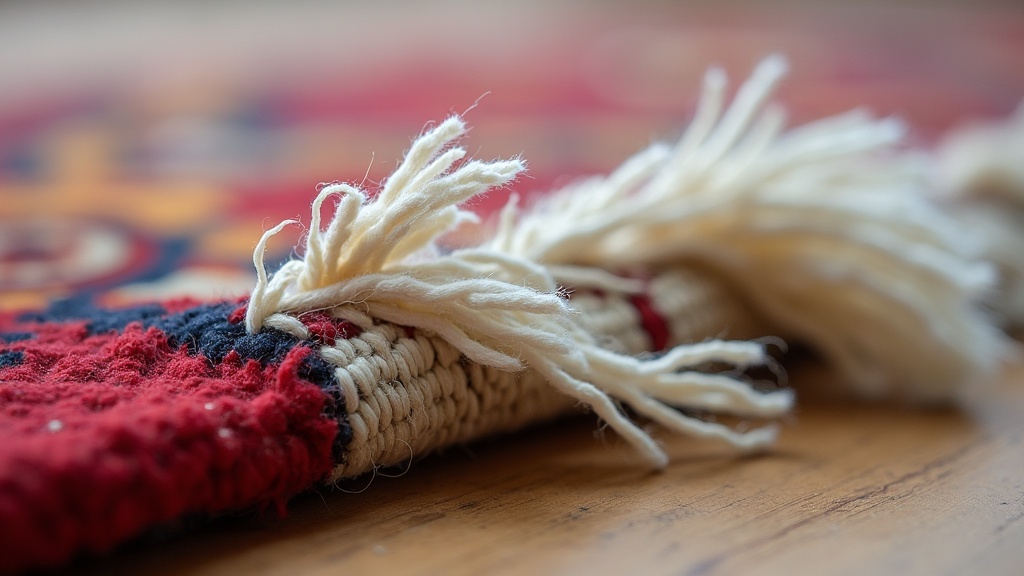
The wrapped edge (selvedge) and the fringe are where hand-knotted rugs show their age and their repair history most honestly. Overcast edges that look newer or a different colour than the rest of the rug usually mean restoration work has been done — not necessarily a problem, but something to factor into your offer. Fringe that’s been reattached rather than woven as part of the foundation is common on older pieces and isn’t automatically a red flag, but excessive, uniform-looking fringe can sometimes be a later addition meant to disguise trimmed edges.
Dye and colour
Dampen a white cloth slightly and press it — gently — against an inconspicuous colour to see if dye transfers, which can indicate unstable or non-colourfast dye. Be cautious doing this in a preview room without permission; ask staff first. Uneven fading, colour that looks unnaturally uniform, or a slightly stiff, papery feel to the pile can all be signs of chemical washing or artificial “antiquing,” a topic covered in detail in our piece on signs a rug has been chemically washed or painted.
Smell and storage condition
A musty, mildew, or heavy chemical smell is worth taking seriously — it can point to water damage, mould, or an aggressive cleaning attempt to mask a stain. None of these are necessarily deal-breakers, but they should affect what you’re willing to pay and whether you budget for professional cleaning afterward.
Condition Issues That Cost More Than They Look
Some flaws are minor and largely cosmetic; others quietly reduce a rug’s long-term value and usability far more than a quick glance suggests.
- Dry rot or brittle foundation — often invisible until the rug is flexed, and can mean a rug that looks intact will tear under normal use.
- Old moth damage — check for irregular bald patches in the pile and a slightly grainy foundation feel; active infestation is a separate and more urgent concern.
- Water staining or tide lines — visible as faint discoloured bands, often a sign the rug was stored somewhere damp for a period.
- Foundation splits or holes — these are structural, not surface-level, and repair costs can rival or exceed the purchase price depending on size and complexity.
None of these automatically make a rug a bad buy — many are repairable, and a knowledgeable buyer can price that into a bid. What matters is knowing before you raise your paddle, not after.
Buyer’s Premiums, Fees and the Real Price
The hammer price is not the final price. Most auction houses add a buyer’s premium — a percentage on top of the winning bid — plus applicable sales tax, and sometimes shipping, storage, or handling fees if you don’t collect the lot promptly. It’s common for total costs to run noticeably higher than the hammer price alone, so work out your absolute ceiling including all fees before bidding starts, not while you’re caught up in the moment. Illustrative example only: a lot that hammers at $400 with a 25% buyer’s premium and local tax could easily land closer to $530–$560 once fees are added — the exact figures vary enormously by house and jurisdiction, so check the specific terms of sale.
Reading the Catalogue Description Correctly
Auction catalogue language is often carefully hedged. Terms like “in the style of,” “attributed to,” or a regional name without a period (“Persian design” rather than “Persian”) are usually signalling uncertainty about origin, not confirming it. A confident-sounding description isn’t the same as an appraisal. If the sale matters financially, an in-person appraisal by a qualified, independent appraiser — someone with no financial interest in the sale outcome — is the only reliable way to confirm age, origin, or value; a catalogue entry or a seller’s opinion is not a substitute. Our rug craft hub and the value and authentication archive go into the criteria appraisers actually look at — knot type, foundation material, dye characteristics, and wear pattern — if you want to understand the process before you rely on someone else’s judgement.
After the Hammer: Getting the Rug Home Safely
Once you’ve won a lot, resist the urge to clean it yourself right away, especially if it’s hand-knotted, antique, silk, or of uncertain construction. Vacuum gently with a suction-only attachment if the piece seems stable — a beater-bar vacuum can tear at loose fringe and pile and should be avoided. Do not attempt to wash, steam clean, or spot-treat a rug you’re unsure about; hot water and high-pH cleaners cause wool to felt, shrink and yellow, chlorine bleach will damage both wool and silk, and silk in particular is vulnerable to water and most detergents and is best left to a specialist. Natural and some early synthetic dyes can bleed when wet, which is one more reason a hidden-corner test and a professional opinion come before any cleaning decision. If the rug smells musty or shows signs of past water exposure, a conservator can assess it properly — our explainer on what a rug conservator does that a cleaner doesn’t is a useful starting point, and the broader rug care hub covers safe first steps for storage and handling in the meantime.
A Quick Pre-Bid Checklist
| Check | What it tells you |
|---|---|
| Back of the rug | Knot regularity, hand-knotted vs. machine-made construction |
| Selvedge and fringe | History of repair, possible edge trimming |
| Colour fastness (with staff permission) | Dye stability, risk of bleeding when cleaned |
| Pile for bald patches | Wear pattern, old moth damage |
| Smell and stiffness | Mould, water damage, or chemical washing |
| Terms of sale | Buyer’s premium, tax, and total cost ceiling |
Frequently asked questions about buying rugs at auction
Is it safe to buy a rug at auction without seeing it in person?
It’s riskier. Photos and catalogue notes can miss dry rot, odour, or subtle repairs that only show up on close inspection. If you can’t attend the preview, ask the house for a detailed condition report and close-up images of the back, edges, and fringe before bidding.
How do I know if an auction rug is hand-knotted or machine-made?
Check the back: a hand-knotted rug shows the pattern nearly as clearly on the reverse as the front, with individual knots visible. A mesh-like backing material or a pattern that’s blurry underneath usually points to machine-made or tufted construction.
What fees should I expect on top of the hammer price?
Most houses charge a buyer’s premium — a percentage of the hammer price — plus sales tax and sometimes handling or storage fees. Always check the specific terms of sale, since premium percentages vary by auction house and can meaningfully change your total cost.
Can I clean an auction rug myself once I get it home?
Only cautiously. Gentle suction vacuuming without a beater bar is generally fine once the rug seems stable, but washing, steaming, or spot-treating should wait until you know the fibre and construction, since mistakes on wool or silk are usually permanent.
Should I get an auction rug appraised after buying it?
If the price paid or the rug’s apparent age suggests real value, yes. A qualified independent appraiser can assess knot density, dyes, and wear in person — something no catalogue description or online opinion can reliably substitute for.
Rug Academy publishes general information about rugs and is not a dealer, appraiser, or cleaning service. Cleaning and repair methods depend entirely on fibre, dye and construction — test any treatment on a hidden corner first, and consult a professional rug cleaner or conservator before treating a hand-knotted, antique, silk, or valuable rug, as damage from cleaning is usually permanent. Any prices mentioned are illustrative examples only, and nothing here is an appraisal, an authentication, or a guarantee of a rug’s origin or value.