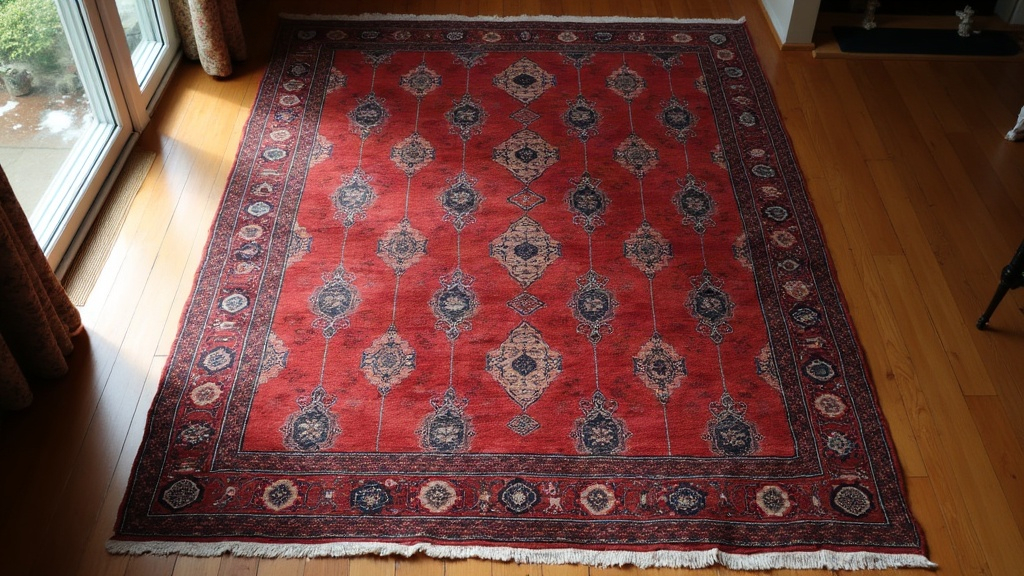
The gul is the repeating octagonal or diamond medallion that fills the field of a Turkmen rug, and different Turkmen groups wove distinct versions of it as a kind of tribal signature. A Tekke gul is typically quartered and tightly serrated; a Salor gul runs larger and more angular with bold hooked lozenges; a Yomut gul is smaller and packed more densely across the field. Once production shifted to commercial workshops in Pakistan and Afghanistan, many of those distinctions softened or disappeared entirely. Learning to spot the difference is the actual skill behind identifying one of these rugs, and it goes well beyond memorizing tribal names.
What a Gul Actually Is
Gul means “flower” in Persian, though the shape itself is geometric rather than floral. It is usually an octagon or a stretched diamond, quartered by internal lines and filled with small stepped or hooked forms. Weavers repeated it across the entire field of the rug, row after row, sometimes for years on a single loom. The pattern was not decorative in a loose sense. It functioned closer to a clan mark, passed down within a weaving group and reproduced with enough consistency that specialists can still trace it back to a tribe today.
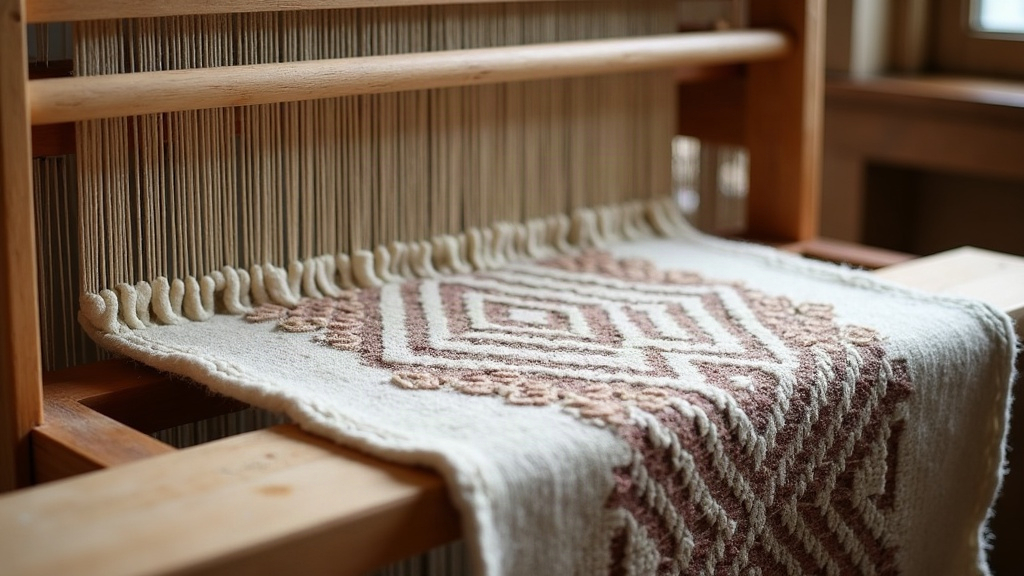
Turkmen tribes were pastoral and semi-nomadic, moving across what is now Turkmenistan, and into neighboring Iran and Afghanistan. Weaving was portable work, done on horizontal ground looms that traveled with the household. You can read more about how these looms function in our piece on how a rug loom works, which explains the tension and setup that makes this kind of repeat pattern possible.
The “Bukhara” Label, and Why It Misleads
You will often see Turkmen-style rugs sold as “Bukhara rugs.” Bukhara is a historic trading city in present-day Uzbekistan. It was a major market where Turkmen weavings were bought and sold, not a place where they were made. The name stuck as shorthand in the Western trade, and it now covers everything from genuine antique Tekke pieces to modern machine-made rugs with a vaguely similar repeating medallion. It tells you almost nothing about origin, tribe, or age. For background on how regional names get attached to rugs loosely, our guide on whether an old rug is automatically an antique covers a related labeling problem.
Reading a Gul: A Decision Rule
Naming Tekke, Yomut, and Salor is easy. Telling them apart on an actual rug in front of you is the harder, more useful skill. Four features do most of the work: how the gul is quartered, how tightly its edges are hooked or serrated, what fills the interior, and how densely the guls repeat across the field. Ground color and dye tone add a fifth, softer clue. None of these features is decisive alone, and combinations matter more than any single trait.
| Group | Quartering | Hooking / edge | Interior motifs | Ground color | Repeat density |
|---|---|---|---|---|---|
| Tekke | Clean quarter division, four near-mirrored sections | Tight, closely serrated edge | Small stepped hooks, secondary lozenges filling each quarter | Deep red-brown, often burgundy | Dense; little open field visible between guls |
| Salor | Looser, less symmetrical quartering | Bolder, more angular hooked lozenges | Fewer, larger secondary elements | Saturated red, sometimes with a purplish cast | Guls sit larger relative to the field; more space around each one |
| Yomut | Present but softer, less rigid | Smaller-scale hooking | Denser minor ornament, minor guls between major ones | Wider red range, sometimes with ivory or blue accents | Tight, small-scale repeat with more guls per square foot |
| Commercial copy (Pakistani/Afghan production) | Approximate or mechanically regular quartering |