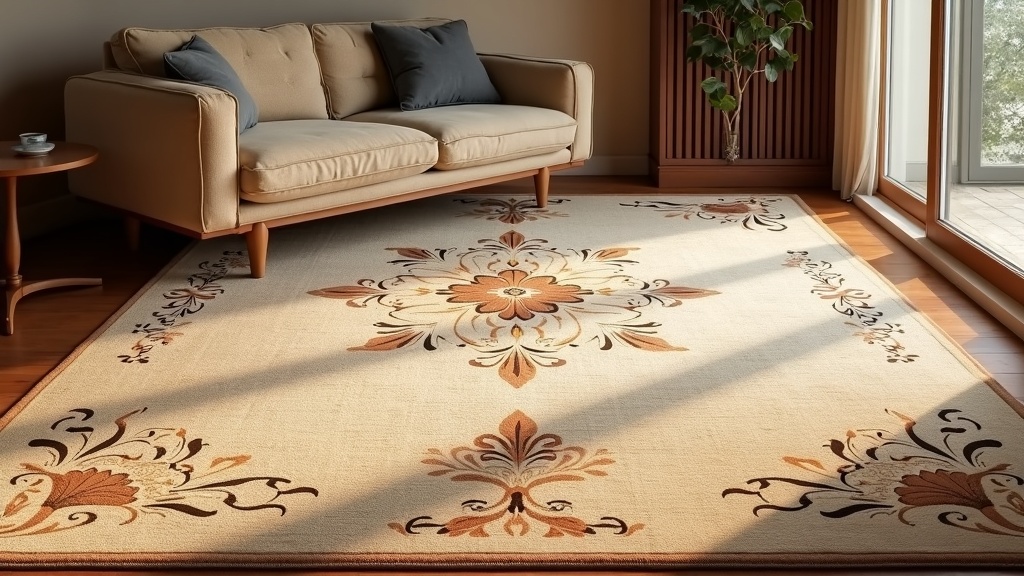
Chinese and Tibetan rugs are often shelved together in showrooms, but they come from separate weaving cultures with different knots, wool, dye traditions and design language. Chinese rugs, historically from workshops around Beijing, Tianjin and Ningxia, tend toward smooth, low-relief pile, open fields and carved floral or dragon motifs. Tibetan rugs use a distinct wrap-around knot, thicker handspun wool, and bold, saturated colour blocks tied to Buddhist symbolism. Knowing which tradition a rug belongs to matters for care, display, and understanding what you actually own.
Two different knots, two different textures
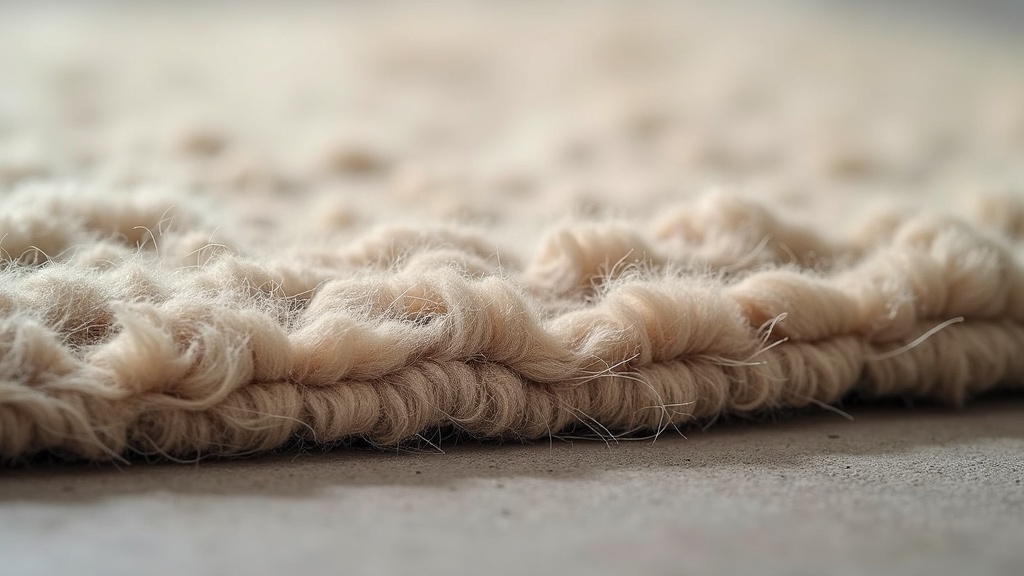
The most concrete structural difference is the knot itself. Most Chinese pile rugs use the same asymmetrical or symmetrical knots found across the wider Persian and Turkish weaving world, tied tightly to a cotton foundation, which gives a relatively flat, dense surface that takes well to carving. Tibetan weavers traditionally use a technique sometimes called the Tibetan knot or “cut-loop” method, where the pile yarn is wrapped around a gauge rod and then cut, producing a slightly looser, springier pile that is easier to hand-carve into raised relief patterns. If you want the full vocabulary of warp, weft and pile before comparing constructions side by side, the site’s rug anatomy explainer is a good place to start, and the broader rug craft hub covers weaving techniques and regional traditions in more depth.
Knot density is often quoted as a quality marker, but it behaves differently across traditions. A coarse, thick Tibetan rug is not “lower quality” than a fine Chinese piece — it is built for a different visual and tactile effect entirely. The knot count myths article goes into why higher density isn’t automatically better, which applies directly here: judging a hand-knotted Tibetan rug by the density standards used for finely woven Persian city rugs misses the point of the craft.
Wool, dye, and where each tradition sources its fibre
Traditional Tibetan rugs are prized for handspun highland wool, often from sheep raised at altitude, which produces a lustrous, resilient fibre with natural lanolin content that resists soiling. Older Chinese rugs, especially Ningxia-region antiques, also used regional wool but were more frequently finished with a sheared or carved surface and, in some periods, silk highlights for outlining motifs. Both traditions used natural dyes historically — indigo, madder, and walnut among them — before synthetic dyes became widely available in the twentieth century. Because natural and some early synthetic dyes can bleed or shift when wet, this is one of the first things worth understanding before any cleaning is attempted; the natural vs synthetic dyes guide explains how to spot the difference and why it changes what’s safe to do with water.
Design language: dragons, medallions, and Buddhist symbolism
Chinese rug design draws on a long decorative vocabulary — dragons, phoenixes, cloud bands, bats (a rebus for good fortune), and shou (longevity) characters worked into borders. Fields are often left relatively open around a central motif, a restraint that reads as distinctly different from the all-over repeat patterns common in Persian or Caucasian weaving. Tibetan design leans on Buddhist iconography: lotus forms, the endless knot, tiger stripes on rugs originally made as meditation seat covers, and bold geometric borders in strong reds, oranges and blues. If you’re trying to place a rug’s motifs generally, the guide to medallions, boteh and herati patterns covers the broader motif families that show up across many weaving regions, which is useful context even though Chinese and Tibetan vocabularies diverge from the Persian-derived ones discussed there.
Carved pile and sculpted relief
One visual signature worth knowing: many Chinese and Tibetan rugs use carving, where the weaver or finisher trims the pile at different heights around a motif to create a raised, sculptural effect. This is a hand or machine-assisted finishing technique applied after weaving, and it’s part of why some pieces feel more like a low relief textile than a flat painted surface. It also means the pile has variable height across the rug, which is worth remembering when vacuuming or cleaning — uneven pile can trap more debris in the lower-cut areas.
What actually indicates age, origin, or value — and what doesn’t
Rug Academy can’t tell you what a specific rug is, how old it is, or what it’s worth from a description or photo, and any credible appraiser will say the same without physically examining the piece. What an appraiser actually looks at includes the knot type and density, the foundation material (cotton versus wool versus a synthetic blend), dye characteristics under magnification and sometimes under UV light, wear patterns consistent with age and use, and the finishing of the selvedge and fringe. A perfectly uniform machine-made reproduction will typically show an even, mechanically consistent pile, a printed or one-dimensional pattern that doesn’t show on the reverse, and fringe that’s sewn on rather than a continuation of the foundation warp. For a genuine sense of what an in-person appraisal involves and what documents or photos to prepare, see getting a rug appraised: what to expect. If real money is involved — buying, insuring, or selling — an in-person appraisal by a qualified appraiser is the only reliable answer; nothing published online, including this article, substitutes for that.
Caring for Chinese and Tibetan rugs without damaging them
Because both traditions commonly use handspun wool pile on a cotton or wool foundation, general wool-safe care applies, with important caveats. For routine dust removal, vacuum without a beater bar or on a setting that lifts the bar away from the pile, since beater bars catch and pull loose fringe and carved pile edges — the guide to vacuuming correctly covers this in detail. For a fresh, small spill on a wool pile rug of known construction, blot — never rub — with a clean white cloth and, if needed, a small amount of cool water and a wool-safe, pH-neutral detergent, working from the outside of the stain inward. Hot water and alkaline or high-pH cleaners cause wool to felt, shrink and yellow, so avoid both. Never use chlorine bleach on wool or silk-highlighted areas — it will disintegrate the fibre. Never mix cleaning chemicals or reach for ammonia alongside another product; combinations can produce fumes or reactions with no benefit to the stain and real risk to you and the rug.
Always test any product on a hidden corner first — the underside of a corner or an edge under furniture — and watch for colour transfer before treating a visible area. Because many Chinese and especially Tibetan rugs are hand-knotted, and because older pieces may carry natural dyes that migrate when wet or wool that felts if oversaturated, a full wash or deep stain treatment is genuinely a job for a professional rug cleaner, not a DIY project with a carpet shampooer or steam unit. Saturating a hand-knotted rug or steam cleaning it can shrink the foundation unevenly and buckle the rug permanently. The rug care hub links out to cleaning, storage and repair guidance for exactly these situations, and it’s worth reading before, not after, an accident happens. If you’re unsure how often professional cleaning is actually warranted for a rug this valuable, that’s covered separately as well.
Buying new: what’s on the market now
Today’s market includes both hand-knotted pieces from workshops in China, Nepal and Tibet-adjacent regions, and large volumes of machine-made or hand-tufted rugs styled after traditional Chinese and Tibetan designs, sold at a fraction of the cost. A hand-tufted wool rug with a Tibetan-style pattern in a mid-size format might sit anywhere from the low hundreds to over a thousand dollars depending on wool quality and finishing, while a genuinely hand-knotted piece of similar size can run substantially higher — these are illustrative examples only, since construction, wool quality, size and current market conditions all move the number enormously. Understanding the practical difference between these production methods, including how it affects durability and resale expectations, is worth reading about before you buy, and the site’s material on hand-loomed labeling is a useful companion for decoding vague marketing language on a hang tag.
Frequently asked questions about Chinese and Tibetan rugs
What’s the difference between a Chinese rug and a Tibetan rug?
Chinese rugs generally use a tighter, flatter knot on a cotton foundation with open fields and carved floral or dragon motifs, while Tibetan rugs use a distinct wrap-around knot, thicker handspun wool, and bold geometric or Buddhist-inspired patterns with a springier, more textured pile.
Are Tibetan rugs actually made in Tibet?
Many rugs sold as “Tibetan style” today are woven by Tibetan refugee communities and workshops in Nepal, using traditional techniques and wool, rather than inside Tibet itself; construction and origin details should be confirmed with the seller rather than assumed from the label.
Can I clean a Chinese silk rug myself?
Generally no — silk is damaged by water and by most detergents, loses lustre and can distort permanently when wet, so silk or silk-highlighted rugs should go to a professional cleaner experienced with delicate fibres rather than being treated at home.
How do I know if my Tibetan-style rug is hand-knotted or machine-made?
Check the back: a hand-knotted rug shows the pattern clearly on the reverse and slight irregularities in knot spacing, while a machine-made or tufted rug usually has a uniform mesh or fabric backing and a pattern that doesn’t read through to the underside.
Is a carved Chinese rug more valuable than a flat one?
Carving is a finishing choice, not a reliable value indicator on its own — value depends far more on knot construction, wool and dye quality, age and condition, so a proper appraisal rather than the presence of carving is the only reliable way to judge worth.
Rug Academy publishes general information about rugs and is not a dealer, appraiser, or cleaning service. Cleaning and repair methods depend entirely on fibre, dye and construction — test any treatment on a hidden corner first, and consult a professional rug cleaner or conservator before treating a hand-knotted, antique, silk, or valuable rug, as damage from cleaning is usually permanent. Any prices mentioned are illustrative examples only, and nothing here is an appraisal, an authentication, or a guarantee of a rug’s origin or value.