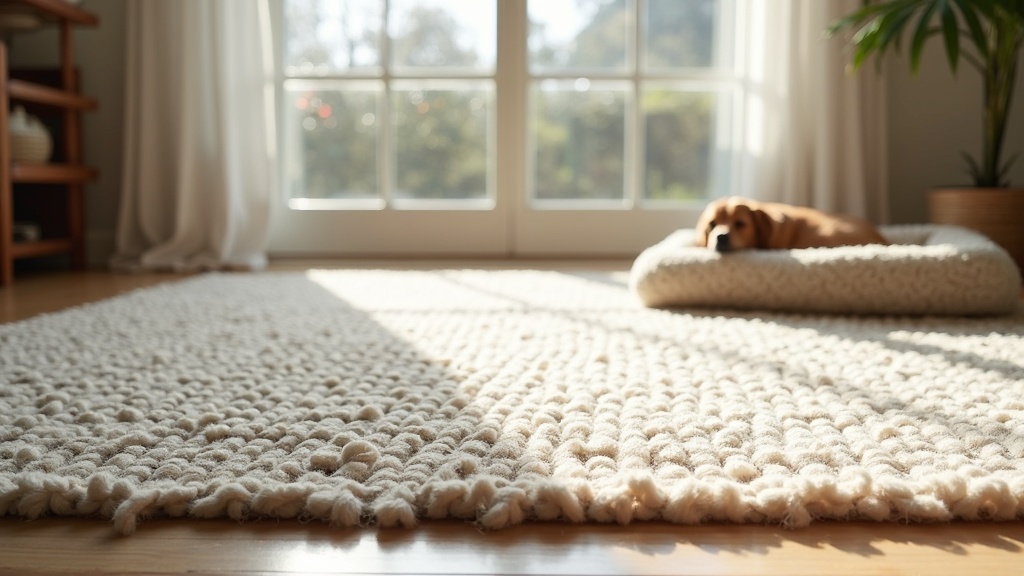
The best rug for a home with pets is a densely woven, low-pile piece in a synthetic or wool-blend fibre, in a mid-tone colour or pattern that hides shedding and the occasional accident. Flatweaves and tightly knotted wool also perform well because they resist matting and are easier to clean than shag, silk, or loosely tufted styles. The right choice depends less on brand and more on fibre, construction, and how much risk you’re willing to accept with an heirloom piece near an animal.
What actually matters when pets are in the house
Pets create three predictable problems: shedding fur that works into the pile, accidents that can stain and odour-set into fibres, and claws that snag loops or loose weaves. A rug that handles all three well is usually dense, low-to-medium pile, and made from a fibre that tolerates moisture without felting, bleeding, or degrading. This is a fibre-and-construction question first, and a style question second — which is why it’s worth understanding the materials before falling in love with a pattern. The rug buying guides hub is a good starting point if you’re still deciding on size and placement alongside durability.
Pile height and density
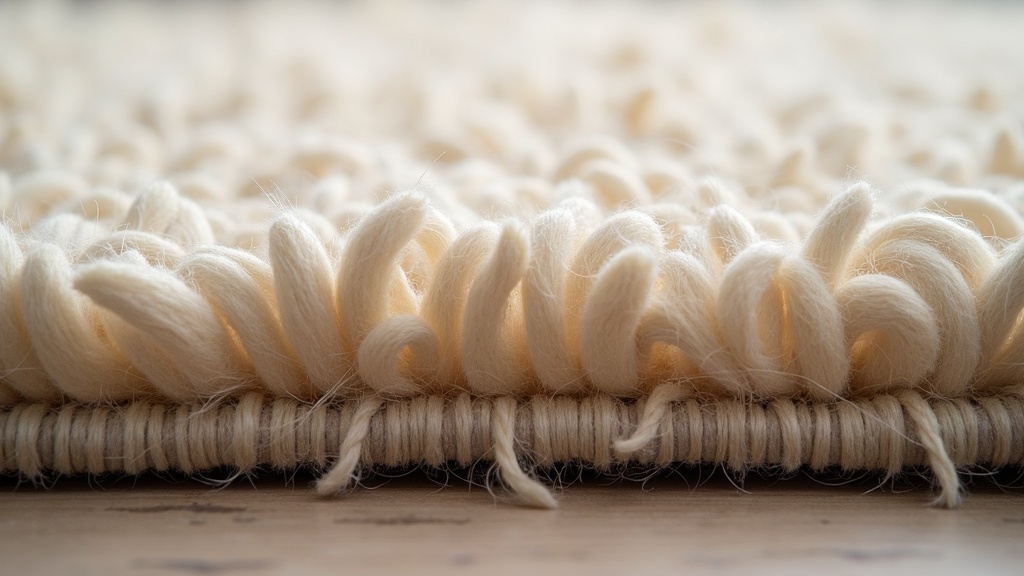
Long, loose pile (shag styles, some hand-tufted wool) traps hair and dirt deep in the fibre where a vacuum can’t easily reach it, and claws can catch and pull loops loose over time. A tightly packed, shorter pile — whether hand-knotted wool or a well-made machine-made synthetic — sheds fur back onto the surface where it’s easy to lift, and resists permanent crushing from paw traffic.
Flatweaves as a pet-friendly option
Flatwoven rugs — kilims and similar structures with no pile at all — have nowhere for hair or dander to hide, and most can be shaken out or vacuumed quickly. They generally handle a damp mop-up better than deep pile too, since there’s no cushion of fibre holding moisture against a backing. If you want to understand how flatweave performs against pile construction more broadly, it’s worth comparing the two directly rather than assuming one is automatically superior.
Fibre-by-fibre trade-offs
No fibre is immune to a determined cat or a large dog, but some tolerate pet life better than others. The table below is a general comparison, not a guarantee — construction quality varies enormously within any fibre category.
| Fibre | Shedding/matting resistance | Moisture tolerance | Notes |
|---|---|---|---|
| Wool (hand-knotted, dense) | Good | Moderate — resists staining if treated promptly | Durable long-term but hot water and alkaline cleaners cause felting; needs correct care |
| Synthetic (nylon, polypropylene) | Very good | High | Often the most forgiving for accidents; check backing quality — see the note on wool vs synthetic lifespan |
| Wool-blend | Good | Moderate to high | Balances wool’s resilience with easier-care synthetic fibres |
| Sisal / seagrass | Poor for claws | Low — stains set permanently | Natural grass fibres snag easily and absorb liquid; see durability and drawbacks |
| Silk / viscose | Poor | Very low | Fragile, crushes and stains easily — generally a poor match for active pets |
A machine-made wool-blend rug in a common living-room size might sit somewhere in the low-to-mid hundreds as an illustrative example, while a hand-knotted wool piece in the same footprint can run considerably higher — construction, origin, and knot density all move that price, not just size.
Colour and pattern choices that forgive daily life
Solid pale rugs show every hair and paw print; solid dark rugs show dust and shed fur as pale streaks. A busy, multi-tone pattern — tribal geometrics, Persian florals, or a textured Berber-style weave — does the most visual work at hiding both shedding and minor soiling between cleanings. This is as much a practical decision as an aesthetic one, and it’s worth reading about motifs and pattern density before choosing a design purely on trend.
Pads, placement, and everyday protection
A good rug pad reduces slipping (important for older or arthritic pets), cushions paws on hard floors, and protects the floor underneath from any moisture that gets through. Pad choice depends on the floor: some pads that grip well on hardwood are unsuitable on tile, and vice versa, which is covered in more depth in the guide to rug pads by floor type. Keep feeding and water bowls off the rug entirely if possible, and consider placing a washable mat under them instead — it’s a far easier item to launder than the rug itself.
Cleaning routines that don’t damage the rug
Regular vacuuming is the single most effective thing you can do, but the method matters. A beater-bar vacuum head can pull at fringe and loosen pile in hand-knotted or looser-woven rugs; a suction-only setting or a brushless attachment is safer for these constructions, and the full technique is laid out in the guide on vacuuming a rug correctly around beater bars and fringe.
For accidents, speed matters more than force. Blot — never rub — liquid up immediately with a clean absorbent cloth. On a synthetic or wool-blend rug, a small amount of cool water and a mild, wool-safe (pH-neutral) detergent applied to a cloth, not poured onto the rug, can lift fresh residue; work from the outside of the stain inward to avoid spreading it. On a hand-knotted wool rug, the same approach can work for very fresh spots, but always test on a hidden corner first, since natural dyes can bleed when wet. Never reach for chlorine bleach or ammonia-based cleaners — bleach breaks down wool and silk fibres outright, and mixing ammonia with other household cleaners can produce dangerous fumes for no cleaning benefit. Hot water and high-pH cleaners cause wool to felt, shrink, and yellow, so lukewarm water only. Full odour and stain-specific steps are covered separately in the article on how to remove pet stains and odour from a rug.
If the rug is hand-knotted, antique, silk, or you’re not certain what it’s made of, don’t experiment — a professional rug cleaner or conservator has the equipment and knowledge to treat it without risking the dyes or foundation, and the difference between what each does is explained in our piece on what a rug conservator does that a cleaner doesn’t. For deep-set accidents or musty odour that’s worked into the foundation, home treatment often isn’t enough, and repeated saturation attempts can do more harm than the original stain.
When a valuable or antique rug and an active pet don’t mix
If you own — or are considering buying — a hand-knotted or antique rug, it’s worth being honest about risk rather than assuming any fibre will simply “be fine.” A puppy in a chewing phase, a cat that scratches at pile, or a household with frequent accidents is a genuine threat to a rug’s long-term condition and value, regardless of how well it’s cleaned afterward. This doesn’t mean pet owners can’t own good rugs — many do, successfully — but it’s a reason to reserve a delicate or valuable piece for a lower-traffic room, or to choose a durable, less precious rug for the spaces pets actually live in. If you’re ever assessing what a rug is worth before deciding how much risk to accept, an in-person appraisal from a qualified appraiser is the only reliable way to know, and the process is outlined in our guide to getting a rug appraised.
Frequently asked questions about choosing a rug for a home with pets
What is the most durable rug material for dogs?
Tightly woven synthetic fibres like nylon or polypropylene, and dense wool or wool-blend constructions, tend to hold up best against shedding, claws, and moisture. Loose pile, silk, and natural grass fibres like sisal generally struggle with active dogs.
Are wool rugs good for pet owners?
Yes, if the weave is dense and cleaned properly — wool resists soiling naturally and wears well, but it felts and shrinks with hot water or high-pH cleaners, so accidents need prompt, lukewarm, pH-neutral treatment rather than aggressive scrubbing.
Can I put a hand-knotted rug in a room with a cat?
You can, but claws can snag pile and accidents on natural dyes carry more cleaning risk than on synthetics. Many owners reserve valuable hand-knotted rugs for lower-traffic rooms and use a more durable synthetic or flatweave in spaces where pets spend most of their time.
Do rug pads help with pets?
Yes — a good pad reduces slipping for pets on hard floors, adds cushioning for paws and joints, and can protect the floor beneath from any moisture that seeps through the rug before it’s cleaned up.
How often should I clean a rug in a home with pets?
Vacuum at least weekly with a suction setting appropriate to the rug’s construction, and treat spills or accidents immediately rather than waiting. Beyond that, most household rugs benefit from a professional clean every year or two, more often with heavy pet traffic.
Rug Academy publishes general information about rugs and is not a dealer, appraiser, or cleaning service. Cleaning and repair methods depend entirely on fibre, dye and construction — test any treatment on a hidden corner first, and consult a professional rug cleaner or conservator before treating a hand-knotted, antique, silk, or valuable rug, as damage from cleaning is usually permanent. Any prices mentioned are illustrative examples only, and nothing here is an appraisal, an authentication, or a guarantee of a rug’s origin or value.