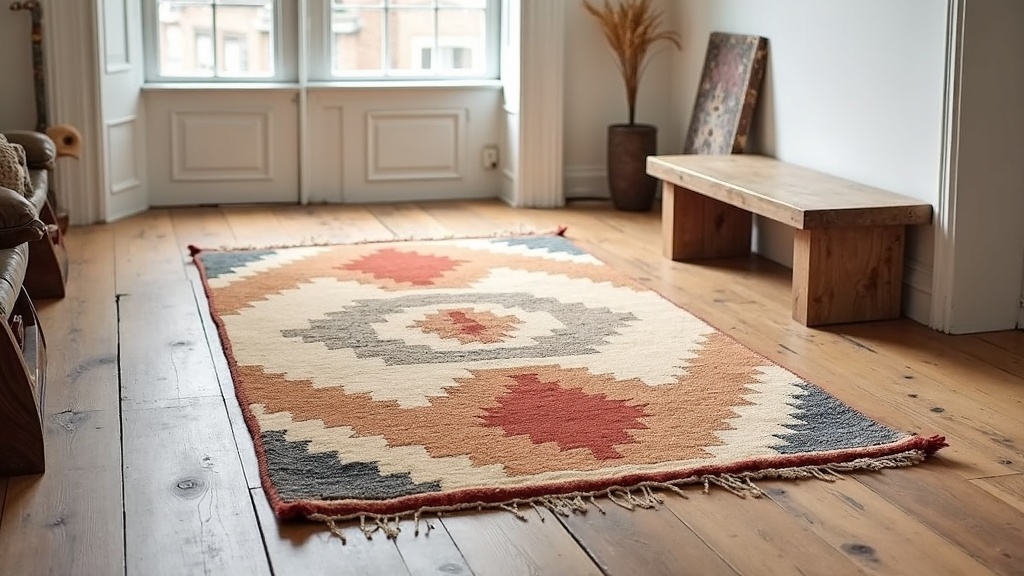
A Gabbeh rug is a thick-piled, coarsely knotted tribal weaving traditionally made by nomadic and semi-nomadic groups in southwestern Iran, most often the Qashqai and other Fars-region weavers. It is defined less by fine detail than by soft, high-relief wool, loose knotting, and simplified, almost abstract motifs. The “misunderstood” part comes from buyers who judge it by the standards of a fine city-workshop Persian rug — dense knots, intricate medallions — and conclude it must be low quality, when in fact its looseness and simplicity are the point.
What actually defines a Gabbeh
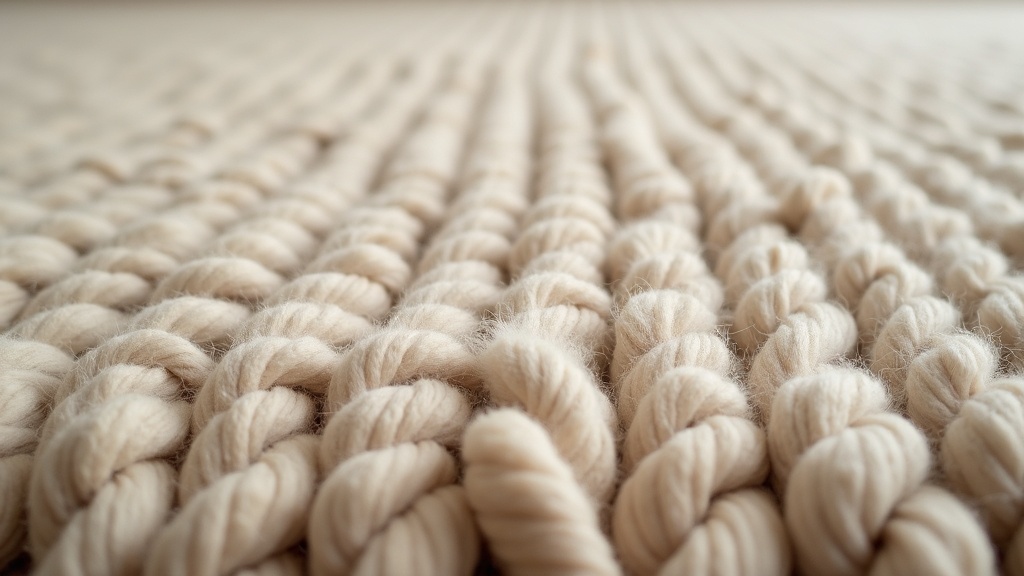
Gabbeh weaving grew out of practical tribal life rather than court or workshop production. Shepherding families needed thick, durable floor coverings and bedding, not intricately mapped garden designs. The result is a rug with a notably deep pile — sometimes twice the height of a city-made Persian piece — knotted more loosely and with fewer knots per square inch. That lower knot density isn’t corner-cutting; it’s a deliberate structural choice suited to a thicker, springier textile. If you want the fuller technical picture of how knot count relates to quality across rug types, our piece on whether knot density actually matters goes through the trade-offs in more depth.
Designs tend toward large, simplified fields: a single animal, a tree, a lattice, or fields of solid color broken by a few bold shapes. Symmetry is loose by intention — a slightly wandering border or an animal placed off-center is part of the visual language, not a defect. This sits in contrast to the tightly mirrored medallion-and-corner layouts you’ll see discussed in our overview of common rug motifs like medallions, boteh and herati patterns, and it’s worth understanding both traditions before assuming one is simply a lesser version of the other.
Why the low knot count throws people off
Knot density is a reasonable proxy for fineness in a curvilinear, densely patterned Persian city rug, where more knots per inch allow tighter detail. Applied to a Gabbeh, the same measure is close to meaningless — you’re comparing a rug built for bold graphic shapes and cushioned bulk to one built for miniature detail. A dealer or previous owner unfamiliar with tribal weaving sometimes assumes a coarse-knotted rug is machine-made or cheaply produced simply because it isn’t fine. The honest way to judge a Gabbeh is by the evenness of the handspun wool, the liveliness of the natural dyes, the security of the selvedge, and how the piece has aged — not by trying to force it into a knots-per-inch hierarchy that was never the goal.
Wool quality matters enormously here because the pile is doing most of the visual and tactile work. Good Gabbeh wool has a slight sheen, some natural variation in thickness from hand-spinning, and dyes — historically walnut husks, madder root, indigo, and other plant and mineral sources — that shift subtly across the field rather than sitting as one flat, uniform tone. That kind of gentle “abrash,” or color striping between dye lots, is a hallmark of hand-dyed tribal wool, not a flaw to be blended out. Our comparison of natural versus synthetic dyes in rugs explains how to read this kind of variation and what it typically signals about age and production method.
Reading construction and foundation
As with any hand-knotted rug, an appraiser looking at a Gabbeh examines several things together rather than any single feature in isolation: the knot type and how consistently it’s tied, whether the foundation is handspun wool or cotton, the finishing of the selvedge (the woven edge) and how the ends are secured, and the wear pattern across the pile. Tribal Gabbeh often has a wool foundation rather than cotton, which affects both handle and how the rug ages. A perfectly uniform, machine-straight pile, a printed-looking pattern with no pile-side irregularity, or a glued rather than woven edge finish are common signs you’re looking at a machine-made or power-loomed interpretation of the style rather than a hand-knotted tribal piece — our broader guide to how different rug fibres compare is a useful starting point if you’re trying to work out what’s actually under your feet before you go further with any appraisal question.
None of this lets a written guide tell you what a specific rug is, how old it is, or what it’s worth — that requires physically examining the knot structure, dye behavior, and wear under good light, which is exactly what a qualified appraiser does. If money is genuinely at stake, an in-person appraisal is the only reliable answer, and our hub on rug weaving, regional traditions and value is a good place to understand what that process typically involves before you commission one.
Living with a Gabbeh: care basics
The thick pile that makes a Gabbeh comfortable underfoot also means dirt and grit can sit deep in the wool, so routine care is mostly about gentle, regular maintenance rather than aggressive cleaning. Vacuum a hand-knotted wool Gabbeh with suction only, or with a brush attachment — never a rotating beater bar, which can snag loose pile and fray the foundation over time; our guide on vacuuming rugs without damaging beater bars and fringe covers the settings and attachments that are actually safe.
For spills, blot immediately with a clean, dry cloth to lift as much liquid as possible before it soaks into the thick pile, then, for a wool Gabbeh with stable natural or colorfast dyes, a small amount of cool water and a wool-safe, pH-neutral detergent can be used on the stained area only — never hot water, and never an alkaline or high-pH cleaner, since heat and alkalinity are what cause wool to felt, shrink, and yellow. Chlorine bleach should never touch wool under any circumstances, and mixing cleaning products (bleach with ammonia, for instance) is never a safe shortcut regardless of the stain — it risks toxic fumes as well as fibre damage. Always test any solution on a hidden corner first, since dyes that haven’t been chemically stabilized, including some natural and early synthetic dyes, can bleed or migrate the moment they get wet. Our full walkthrough on how to clean a wool rug safely goes through this step by step, including when to stop and call in help.
Because Gabbeh rugs are hand-knotted, saturating one in a washing machine, steam-cleaning it, or soaking the pile can shrink the foundation unevenly and leave the rug permanently buckled or rippled. If a Gabbeh has a deep stain, an odor, moth damage, or you’re simply unsure what it’s made of, the safer move is a professional rug cleaner or conservator who can identify the fibre and dye behavior before committing to any wet treatment.
Buying one: what actually drives price
Prices for Gabbeh rugs vary enormously based on wool quality, dye type (natural dyes generally command more than synthetic), age, size, and where along the supply chain you’re buying — direct from a cooperative, through a specialist dealer, or as a decorative reproduction from a large retailer. As an illustrative example only, a small new hand-knotted wool Gabbeh might sit in a modest three-figure range, while a larger, older, naturally dyed piece with good provenance can run substantially higher — but these are not quotes for any specific rug, and construction, size, and condition drive the real number far more than any single label. Our explainer on how rug prices are actually set unpacks the variables in more detail if you’re comparing two pieces that look similar but are priced very differently.
If you’re shopping specifically for the look — that plush, slightly irregular, tribal-graphic style — it’s worth deciding upfront whether you want a genuine hand-knotted piece or are comfortable with a machine-made or hand-tufted version made to evoke it; both exist on the market, and neither is inherently “better,” just different in construction, durability, and cost. Understanding the practical differences before you buy will save disappointment either way.
Frequently asked questions about Gabbeh rugs
What makes a Gabbeh rug different from a regular Persian rug?
Gabbeh rugs come from tribal, often nomadic weaving traditions and feature thick pile, loose knotting, and simplified abstract designs, while workshop Persian rugs typically use finer knotting and intricate curvilinear patterns like medallions or vines.
Are Gabbeh rugs good quality even with a low knot count?
Yes — knot count isn’t the right measure for this style. Quality in a Gabbeh comes from handspun wool character, dye behavior, even weaving, and secure edges, not from matching the density expected of finely knotted city rugs.
Can I clean a Gabbeh rug myself?
Light maintenance like suction-only vacuuming and prompt blotting of spills is generally fine for a wool Gabbeh, but always test any cleaner on a hidden area first, avoid hot water and bleach, and call a professional for deep stains or if you’re unsure of the fibre.
Why does my Gabbeh rug have uneven color in the wool?
Subtle color striping, called abrash, happens when hand-spun wool is dyed in small batches and comes from different dye lots; it’s typical of hand-dyed natural wool and is generally considered a feature of authentic tribal weaving, not a flaw.
How much should a Gabbeh rug cost?
There’s no fixed price — it depends on wool quality, dye type, size, age, and construction (hand-knotted versus machine-made). Ranges vary enormously, and an in-person look from a knowledgeable seller or appraiser is the only way to get a reliable number for a specific rug.
Rug Academy publishes general information about rugs and is not a dealer, appraiser, or cleaning service. Cleaning and repair methods depend entirely on fibre, dye and construction — test any treatment on a hidden corner first, and consult a professional rug cleaner or conservator before treating a hand-knotted, antique, silk, or valuable rug, as damage from cleaning is usually permanent. Any prices mentioned are illustrative examples only, and nothing here is an appraisal, an authentication, or a guarantee of a rug’s origin or value.
Related reading
cleaning and stains, repair and restoration, protection and storage, sizes and placement, materials and construction, styles and patterns, How Rug Prices Are Actually Set.