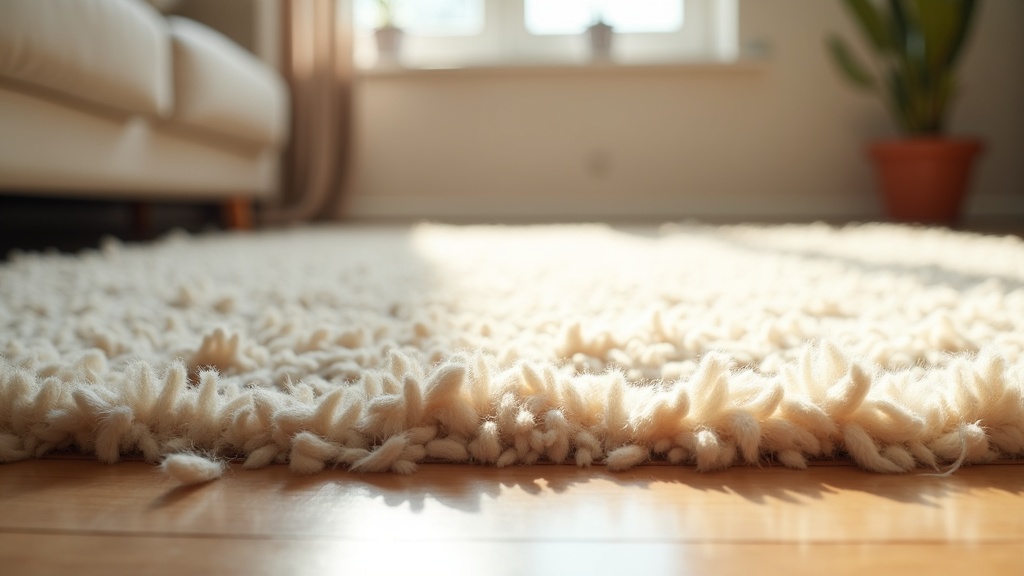
A rug that sheds a little is usually just settling in — loose fibres left over from manufacturing work their way out over the first six to twelve months of use, and regular vacuuming solves it. A rug that keeps shedding heavily well beyond that window is telling you something else: worn or brittle yarn, a weakening foundation, or a backing that is starting to fail. The fix depends entirely on which of those it is, and on what the rug is made of.
Why rugs shed in the first place
Shedding happens because short, loose fibres trapped inside the pile during spinning and weaving work their way to the surface as the rug is walked on and vacuumed. This is completely normal in new wool rugs, especially hand-knotted and hand-tufted ones, because wool is a staple fibre spun from shorter lengths rather than one continuous filament. Some shedding is simply the manufacturing process finishing itself in your living room. It typically tapers off within the first several months as the loose ends are worked free and the remaining pile settles.
Synthetic rugs made from continuous filament yarns — many polypropylene and some polyester constructions — shed far less from the start because the fibre itself isn’t made of short spun lengths. If you want the background on how fibre choice affects this kind of long-term behaviour, our comparison of wool and synthetic rug lifespans goes into more detail on wear patterns beyond just shedding.
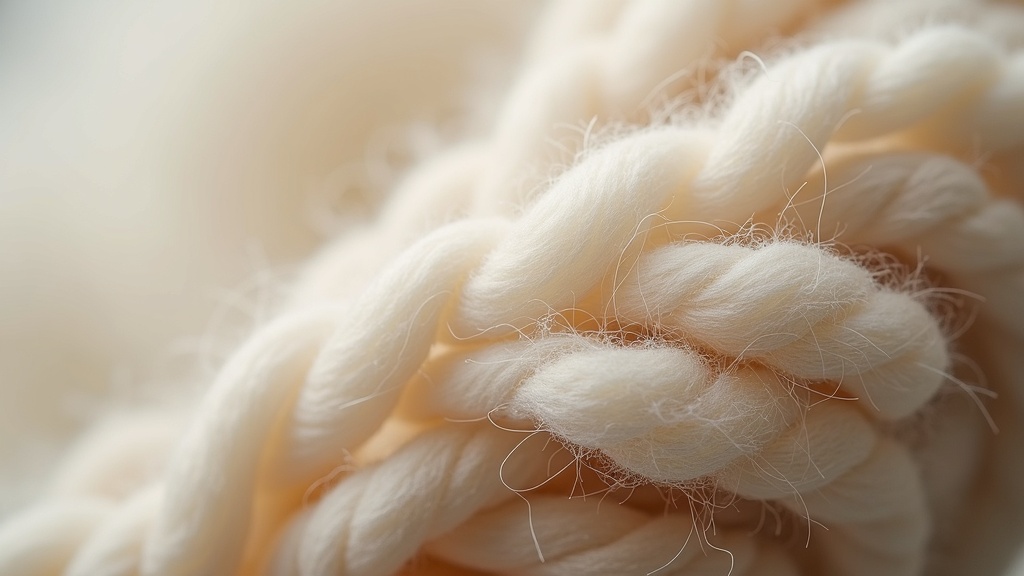
Normal shedding versus a real problem
The simplest test is time and trend. Normal shedding gradually decreases the more you vacuum and walk on the rug. If you’re pulling out noticeably less fluff each week than the week before, you’re on the expected curve. A problem is indicated when:
- Shedding hasn’t slowed after roughly a year of regular use
- You can see thinning patches or the foundation starting to show through the pile
- Tufts come away in clumps rather than as loose fibre, especially near the edges
- The rug is a tufted construction and the backing feels stiff, cracked, or is flaking
- Shedding increased suddenly after a spill, a cleaning attempt, or exposure to a lot of moisture
That last point matters. Wetting a rug that shouldn’t have been wetted, or cleaning it with the wrong product, can loosen the adhesive or the knots holding pile in place and cause a sudden spike in shedding that has nothing to do with normal wear.
Construction changes everything here
Before doing anything, work out how your rug is made, because the cause of shedding — and what you can safely do about it — is different for each type.
Hand-knotted rugs
In a hand-knotted rug, pile yarn is individually tied around the warp threads, so a knot has to physically loosen or the yarn has to break for pile to come free in any quantity. Ordinary shedding here is just loose fibre ends within the yarn itself and settles over time. Heavier shedding, especially in an older or antique piece, can point to dry, brittle wool from age, sun exposure, or a moth infestation that has weakened the fibre from within — see our guide on preventing and treating moth infestations in rugs if you notice any powdery residue or larvae casings in the pile.
Hand-tufted rugs
Tufted rugs are punched into a fabric backing and held in place with a layer of latex adhesive, then usually covered with a secondary cloth backing. That adhesive degrades over years — it dries out, cracks, and loses its grip — and when it does, tufts release far more easily than they would from a knotted structure. This is one of the most common causes of a sudden, heavy shedding problem, and unfortunately it’s a lifespan issue rather than a cleaning one. Our piece on tufted rugs and latex backing explains why this construction has a shorter practical life than hand-knotted pile, no matter how well you look after it.
Machine-made rugs
Machine-woven rugs, including power-loomed wool and polypropylene pieces, are constructed with the pile locked into a woven backing rather than glued or knotted by hand, so they tend to shed the least once broken in. Persistent shedding in a machine-made rug more often points to a manufacturing defect or fibre quality than to age.
Safe ways to reduce shedding at home
Whatever the construction, the single most useful ongoing step is correct vacuuming. Use suction-only attachments or a canister vacuum without an active beater bar on wool, tufted, and any rug with fringe, because a rotating beater bar pulls at loose pile and fringe and accelerates the very shedding you’re trying to control — our guide to vacuuming rugs around beater bars and fringe covers the settings and attachments that are gentler on pile. Vacuum in the direction of the pile rather than against it, and go over a new rug lightly and often rather than aggressively in one session.
For wool rugs of sound, stable construction, a light surface clean with a wool-safe detergent diluted in cool water and applied with a soft cloth — never saturating the pile — can help remove grit that abrades fibre and worsens shedding, but this is a maintenance step, not a fix for a structural problem, and it should always be tested on a hidden corner first. Hot water and high-pH or alkaline cleaners are unsafe for wool because they can felt, shrink, and yellow the fibre, and chlorine bleach will destroy wool and silk outright, so neither belongs anywhere near this process. Silk and silk-blend rugs should not be cleaned this way at all; water and most detergents damage silk, and any cleaning beyond light dry surface care is a job for a professional. If you’re unsure what your rug is even made of, our overview in cleaning a wool rug safely explains how to test fibre and colourfastness before you touch anything with liquid.
Never mix cleaning products — combining bleach and ammonia-based cleaners, for instance, produces dangerous fumes, and mixing any household chemicals on a rug you can’t identify the fibre of is a genuine safety risk as well as a fibre risk.
When shedding signals it’s time for a professional
Heavy, ongoing shedding in a hand-knotted, antique, silk, or otherwise valuable rug is not a do-it-yourself repair, and treating it as one can turn a fixable problem into a permanent loss. A rug conservator can assess whether pile loss is coming from foundation wear, moth damage, dry rot, or a failing weave structure, and can often consolidate or reweave affected areas — something a general carpet cleaner is not trained or equipped to do. Our explainer on what a rug conservator does that a cleaner doesn’t lays out that distinction clearly, and it’s worth reading before you hand a valuable piece to anyone. If the rug is uncertain in age or origin and shedding has you wondering whether it’s even worth the cost of restoration, that’s a separate, in-person appraisal question — no online description can substitute for a qualified appraiser handling the piece directly.
For everyday wool and synthetic rugs of no particular sentimental or monetary value, a periodic professional deep clean can also help, since embedded grit is one of the quieter causes of ongoing fibre breakage. Our guide to how often to professionally clean a rug covers reasonable intervals by rug type and household. For broader day-to-day care once shedding has settled down, the rug care hub is a good starting point, and the repair and restoration archive covers related issues like fringe damage and worn edges that often show up alongside shedding on older pieces.
Frequently asked questions about fixing a rug that sheds excessively
Why is my new wool rug shedding so much?
This is normal for hand-knotted and hand-tufted wool rugs. Short loose fibres left from spinning work their way out as you walk on and vacuum the rug, and shedding typically decreases steadily over the first six to twelve months without any special treatment beyond gentle, regular vacuuming.
Will my rug ever stop shedding?
Most wool rugs shed less and less over time and eventually stabilise. If shedding hasn’t noticeably slowed after about a year, or if you see thinning patches or bald spots, that points to a deeper issue rather than ordinary settling and is worth having assessed.
Can vacuuming make shedding worse?
Yes, if you use a rotating beater-bar vacuum on wool pile or on any rug with fringe, because it pulls at loose fibre and can fray the ends further. Suction-only settings or a canister vacuum with a bare-floor attachment are gentler and still remove the loose fibre effectively.
Is heavy shedding a sign my rug is falling apart?
It can be, particularly in tufted rugs where the latex backing holding pile in place has dried out and cracked with age, or in older knotted rugs where moth damage or dry, brittle wool has weakened the fibre. A professional can usually tell the difference from normal settling shedding fairly quickly.
Should I have a shedding rug cleaned at home or by a professional?
Light surface maintenance with a fibre-appropriate, wool-safe detergent is fine for sturdy, everyday rugs once tested on a hidden area. Hand-knotted, antique, silk, or valuable rugs, and any rug with sudden or heavy shedding, are better handled by a professional cleaner or conservator to avoid permanent damage.
Rug Academy publishes general information about rugs and is not a dealer, appraiser, or cleaning service. Cleaning and repair methods depend entirely on fibre, dye and construction — test any treatment on a hidden corner first, and consult a professional rug cleaner or conservator before treating a hand-knotted, antique, silk, or valuable rug, as damage from cleaning is usually permanent. Any prices mentioned are illustrative examples only, and nothing here is an appraisal, an authentication, or a guarantee of a rug’s origin or value.