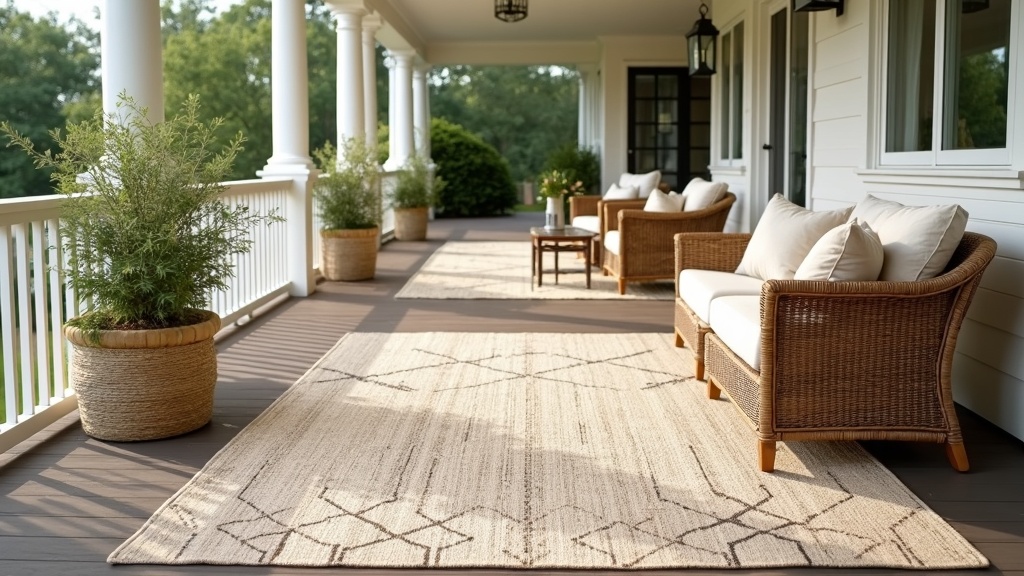
Yes, an outdoor rug is generally worth it for a covered porch, provided you buy one built for the job. A covered porch shields a rug from direct rain but not from humidity, temperature swings, dust, and UV exposure at the edges, so a rug made from solution-dyed synthetic fiber will outperform an indoor wool or cotton piece by a wide margin. The real decision isn’t whether to use a rug at all — it’s choosing a material that matches how exposed the space actually is.
Why “covered” doesn’t mean “indoors”
A covered porch is a in-between space. It’s protected from standing water and direct sun for much of the day, but it still deals with blown-in rain, condensation, dew, mildew-friendly humidity, and often more UV than a shaded interior room gets, especially on a south- or west-facing porch. That combination is exactly what breaks down rugs designed for indoor conditions. Natural fibers that are perfectly stable inside — wool, cotton, jute — respond to humidity and moisture cycling in ways that indoor use rarely tests.
This is why the materials conversation matters more here than almost anywhere else in a house. If you’re still deciding between fiber types generally, the rug buying guides hub and the materials and construction archive are good starting points before you narrow in on porch-specific choices.
What actually holds up outdoors
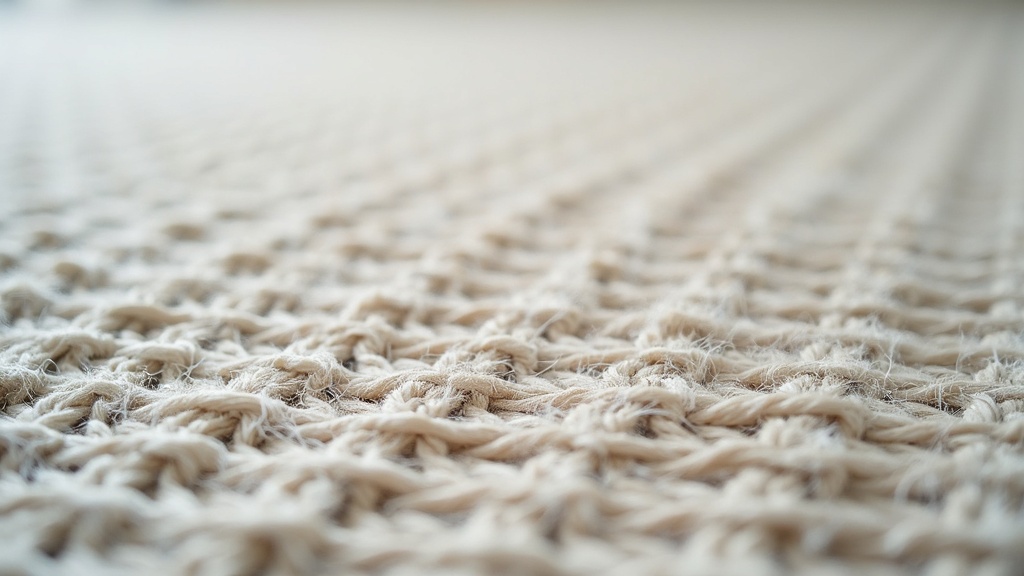
Rugs marketed specifically as “outdoor” or “indoor/outdoor” are typically made from polypropylene (often labeled olefin) or polyester, usually solution-dyed rather than surface-dyed. Solution dyeing means the color is mixed into the fiber before it’s extruded, so fading happens more evenly and slowly than with a topically dyed fiber. These rugs are woven flat, without a plush pile that can trap moisture, and they’re designed to be hosed off and air-dried.
- Polypropylene/olefin flatweaves — the most common true outdoor option; resistant to mildew, fading, and moisture, though less soft underfoot than wool.
- Polyester outdoor weaves — similar performance profile, sometimes with a slightly softer hand.
- Treated natural-fiber blends — some manufacturers offer wool- or cotton-look outdoor rugs with weather treatments; useful for their appearance, but the treatment is a coating, not a change to the fiber itself, so read the care label rather than assuming it behaves like synthetic through and through.
A plain synthetic flatweave rug in a common porch size might sit somewhere in the low hundreds, though size, weave density, and brand positioning move that number substantially — treat any figure like that as illustrative only, not a quote.
What to avoid on a porch
Hand-knotted wool, silk, viscose, and most cotton dhurries are not good candidates for uncovered exposure to porch humidity, even under a roof. Wool can felt and develop mildew smell if it stays damp after a wind-blown rain; viscose in particular looks great and ages badly under exactly this kind of humidity and light stress, and cotton has its own limits worth understanding before it ends up somewhere it can’t recover from — see where cotton rugs work and where they fail. If you already own a valuable wool or silk rug and are tempted to use it decoratively on a porch for a season, that’s the scenario where the cost of a mistake is highest and least reversible.
Sun, moisture, and the two real threats
On a covered porch, fading and moisture are doing almost all the damage, not foot traffic. UV light reaches further under an overhang than people expect, especially in the afternoon on an east- or west-facing porch, and it will bleach synthetic dye over time just as it bleaches indoor rugs — solution-dyed fiber simply resists it longer. The general principles for slowing that process, like rotating a rug and limiting direct light exposure, are covered in how to protect a rug from sun fading, and they apply outdoors too, just on a faster timeline.
Moisture is the other threat, and it’s less visible. Rain that blows in at an angle, condensation from cool mornings, and splash-back from planters or hose-downs all add up. A synthetic flatweave handles this because water passes through or sits on top rather than soaking into a fiber core. Anything with a natural-fiber foundation or a thick pile is at risk of trapping moisture against the decking, which invites mildew and can eventually affect the deck surface itself, not just the rug.
Pads, airflow, and setup that actually protects the rug
A rug pad isn’t just an indoor comfort item — outdoors it does a different, arguably more important job: keeping air moving underneath the rug so moisture doesn’t sit trapped against the decking or concrete. A porous, mildew-resistant outdoor pad is worth the modest extra cost even under a synthetic rug; the general reasoning behind pads (grip, cushioning, airflow, protecting the floor beneath) is laid out in do you need a rug pad, and it holds true here with the added variable of humidity.
A few habits extend the life of any porch rug regardless of material:
- Shake out or vacuum debris regularly so grit doesn’t grind into the weave under foot traffic.
- Lift and check underneath periodically, especially after a stretch of humid weather, to catch mildew early.
- Bring the rug in, or store it dry and rolled, during extended wet seasons or winter if the porch isn’t fully enclosed.
- Hose off dirt and mild grime on synthetic outdoor rugs with plain water, then let them air-dry fully before putting furniture back on top.
If you’re storing a rug off-season, the same core principles used for indoor rugs — clean, fully dry, rolled rather than folded, protected from pests — apply; see how to store a rug long term without damaging it for the fuller version, and note that a rug that’s been outdoors needs to be completely dry before it’s rolled, since trapped moisture is what causes mold in storage.
Cleaning a synthetic outdoor rug safely
Most solution-dyed polypropylene or polyester outdoor rugs can be cleaned with a hose, mild dish soap, and a soft brush, then left to air-dry flat or hung over a rail — this is generally safe because the fiber itself doesn’t absorb water and the dye is set through the material rather than sitting on the surface. That said, always test any soap on a hidden corner first, since some finishes and backings vary by manufacturer. This approach is not appropriate for wool, silk, or hand-knotted rugs of any kind, or for antique or natural-fiber pieces — those should never be soaked or hosed, and if one ends up outdoors accidentally, or you’re unsure of its construction, a professional rug cleaner is the safer route rather than guessing with water and detergent. Chlorine bleach should never be used on any rug with wool or silk content, and mixing bleach with ammonia-based cleaners is dangerous regardless of what’s being cleaned, so it’s worth keeping that combination out of the routine entirely.
When a natural-fiber look still makes sense
Some homeowners want the visual warmth of a wool or jute rug on a porch and are willing to accept a shorter lifespan in exchange. That’s a legitimate trade-off as long as it’s made knowingly: a natural-fiber rug on a covered porch in a dry climate with good airflow can last reasonably well, while the same rug on a humid coastal porch may show mildew within a season. If longevity matters more than authenticity of material, a well-made synthetic flatweave styled to resemble a flatweave kilim or dhurrie pattern — a look explored more broadly in pieces on what a kilim is and how it’s made — often gets you most of the aesthetic without the maintenance risk.
Frequently asked questions about outdoor rugs on covered porches
Can I use a regular indoor rug on a covered porch?
Technically yes for a short time, but it’s risky long-term. Humidity, temperature swings, and indirect moisture on a covered porch will fade dyes faster and can encourage mildew in wool, cotton, or jute rugs that aren’t built to handle repeated damp-dry cycles.
What material is best for an outdoor rug under a roof?
Solution-dyed polypropylene (olefin) or polyester flatweaves are the most common choice because color runs through the fiber rather than sitting on the surface, and the flat construction resists trapping moisture better than pile rugs.
Do outdoor rugs get moldy on a porch?
They can, especially if moisture gets trapped underneath with no airflow. A breathable outdoor rug pad, periodic lifting to check the underside, and full drying after cleaning all reduce that risk substantially.
How long do outdoor rugs actually last on a porch?
It varies enormously with climate, sun exposure, and rug quality, so any specific lifespan claim would be a guess rather than a fact; a rug in a shaded, dry, well-ventilated porch will generally outlast one in a humid, sun-exposed spot by a wide margin.
Is it worth spending more on a higher-quality outdoor rug?
Denser weave and solid solution-dyeing generally hold color and shape better over time than thinner budget weaves, but “worth it” depends on how exposed your specific porch is and how long you expect to keep the rug in place.
Rug Academy publishes general information about rugs and is not a dealer, appraiser, or cleaning service. Cleaning and repair methods depend entirely on fibre, dye and construction — test any treatment on a hidden corner first, and consult a professional rug cleaner or conservator before treating a hand-knotted, antique, silk, or valuable rug, as damage from cleaning is usually permanent. Any prices mentioned are illustrative examples only, and nothing here is an appraisal, an authentication, or a guarantee of a rug’s origin or value.