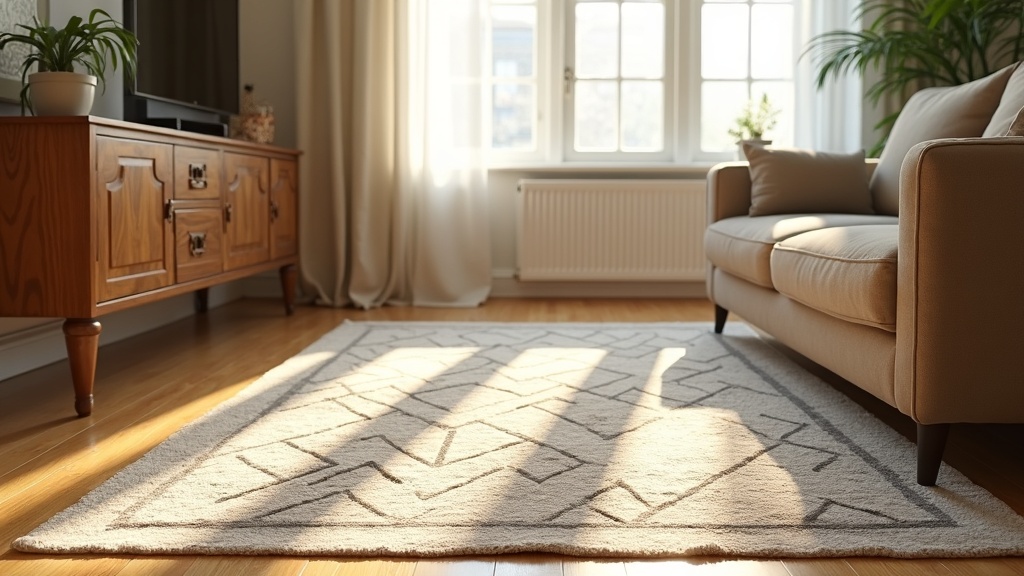
Sun fading happens because ultraviolet light breaks down the chemical bonds that hold dye molecules to fibre, and once that colour is gone, it cannot be restored by cleaning or conditioning. You protect a rug from fading by cutting its UV exposure — window film, curtains, blinds, or simply rotating and repositioning the rug — and by choosing rugs and dyes that resist UV damage in the first place. There is no product you spray on a rug that reverses or fully prevents this; management of light exposure is the only real lever you have.
Why sunlight fades rugs
UV radiation carries enough energy to break the molecular bonds in dye compounds, a process called photodegradation. Visible light and heat accelerate the same reaction, which is why a rug near a hot, bright window fades faster than one across a shaded room. Fading is cumulative and irreversible — it is not dirt sitting on the surface, so no amount of washing brings the colour back. This matters for how you think about prevention: your job is to reduce total UV dose over the rug’s lifetime, not to treat a fade after it happens.
Different dyes fade at different rates. Natural dyes such as madder, indigo, and cochineal generally have decent lightfastness but can still shift over years of direct sun. Some early synthetic dyes from the 19th and early 20th centuries are notoriously fugitive and fade or change hue quickly. Modern synthetic dyes used in most contemporary machine-made rugs are engineered for lightfastness and tend to hold up better under UV than many handmade rugs woven with traditional dye recipes. If you’re weighing durability against authenticity when buying, our rug buying guides hub and the piece on telling a handmade rug from a machine-made one both cover how construction and dye choice affect long-term wear.
Practical ways to reduce UV exposure
- Window film: UV-blocking film applied to glass can filter out a large share of ultraviolet radiation while still letting visible light through. It’s one of the most effective single interventions because it protects everything in the room, not just the rug.
- Curtains, blinds, or shutters: Closing them during peak sun hours, especially south- or west-facing windows in the northern hemisphere, meaningfully cuts cumulative exposure.
- Rug placement: Position furniture or the rug itself so direct sun falls on the floor rather than the textile, or set the rug back from the window’s sun path.
- Rotation: Turn the rug 180 degrees every three to six months so no single section takes the brunt of the light indefinitely. This spreads fading evenly rather than eliminating it, which matters most for rugs already in a sunny spot.
- Rug pads and layering: A rug pad won’t block UV, but keeping the rug flat and unbuckled means less of the pile bends and shows uneven fading at curled edges — see whether you really need a rug pad for the broader case.
- Seasonal storage or swapping: Rotating a valuable rug out of a sun-heavy room for part of the year, or swapping it with a less precious rug seasonally, is a legitimate long-term strategy discussed further in the rug care hub‘s protection and storage material.
What already-faded rugs need — and don’t need
If fading has already occurred, resist the urge to “fix” it with bleach, dye touch-ups, or aggressive cleaning products. Chlorine bleach destroys wool and silk fibre structure outright and will not restore colour — it only causes further damage. Home dye kits marketed for fabric are not formulated for wool or silk pile and typically produce blotchy, unnatural results that a professional would then have to work around, if it can be corrected at all. The one legitimate remedy for uneven fading on a valuable rug is professional reweaving or selective redyeing by a conservator, which is a skilled, and usually costly, restoration process rather than a quick fix. Read more on when this kind of investment makes sense in when a damaged rug is worth repairing.
Cleaning a faded rug won’t reverse the fade, but it’s still worth doing correctly and safely, since a clean rug photographs and shows better and dirt embedded in faded pile can make the contrast look worse. For wool rugs, that means cool water, a wool-safe or pH-neutral detergent, and gentle blotting rather than scrubbing or saturating the pile — full details are in how to clean a wool rug without ruining it. Hot water and high-pH or alkaline cleaners cause wool to felt, shrink, and yellow, so they should be avoided regardless of whether fading is present. Silk rugs are a different matter entirely: silk is damaged by water and by most detergents, and a faded silk rug should go to a professional rather than be cleaned at home, a point covered at length in silk rugs: beautiful, fragile, and often misunderstood. Never mix cleaning chemicals — combining bleach and ammonia-based products, for instance, produces toxic fumes, and neither belongs anywhere near a wool or silk rug regardless of the fading question.
Always test any cleaning approach on a hidden corner first, and when the rug is hand-knotted, antique, silk, or of uncertain construction, bring in a professional rug cleaner or conservator before doing anything beyond light vacuuming. Fibre damage from cleaning is almost always permanent, and a rug that’s valuable enough to worry about UV protection is usually valuable enough to warrant that call.
Choosing rugs and rooms with fading in mind
If you’re buying a rug for a genuinely sunny room — a sunroom, a south-facing living room, a spot beside sliding glass doors — it’s worth weighing lightfastness at the point of purchase rather than only after damage shows up. Solid, heavily saturated colours in natural dyes tend to show fading more visibly than busy, multicoloured patterns where uneven fade is less obvious to the eye; this is one practical argument in the pattern-versus-solid decision covered in choosing between a patterned and a solid rug. Flatweaves and pile rugs also respond differently to sun exposure over time in terms of how wear and fade interact, which the flatweave vs pile rugs guide addresses in more depth.
Machine-made rugs using modern synthetic dyes (nylon, polypropylene, or solution-dyed acrylics) generally resist UV fading better than natural fibres with traditional dyes, which is part of the tradeoff discussed in wool vs synthetic rugs: which lasts longer. A machine-made wool-blend rug in a common living-room size might sit somewhere in the low hundreds, while a comparable hand-knotted wool rug can run substantially higher — construction, origin, and size drive that gap enormously, and neither price point guarantees lightfastness on its own.
When fading intersects with value
Uneven fading — a distinct sun-bleached rectangle where furniture once sat, or a stronger colour along one edge — is something an appraiser will note when examining a rug, alongside knot density, foundation material, dye characteristics, wear patterns, and selvedge and fringe finishing. Fading doesn’t necessarily reduce an antique rug’s value the way a repair or a moth hole might; on some older pieces, an appraiser reads gentle, even fading as consistent with genuine age and long-term light exposure, though this is only one data point among many. What determines an antique rug’s worth is covered in more general terms in what determines the value of an antique rug, and if fading or condition questions come up in the context of a rug you’re trying to value or insure, an in-person appraisal by a qualified appraiser is the only reliable way to get a real answer — nothing in this article, or any general guide, substitutes for that.
Frequently asked questions about protecting a rug from sun fading
Can you reverse sun fading on a rug?
No. Fading is caused by UV breaking down dye molecules, which is a permanent chemical change. Cleaning removes dirt, not fade. The only real remedies are professional reweaving or selective redyeing by a conservator, both specialist restoration work rather than a DIY fix.
Does window film really stop rugs from fading?
UV-blocking window film can filter out a large portion of the ultraviolet radiation that causes fading while still letting in visible light, making it one of the more effective single steps you can take, especially for rooms with large south- or west-facing windows.
How often should I rotate a rug to prevent uneven fading?
Rotating a rug 180 degrees every three to six months is a common rule of thumb, more often in a very sunny room. Rotation spreads fading evenly across the rug rather than preventing it, which matters most when the rug can’t be moved out of direct sun entirely.
Do darker rugs fade less than light-coloured ones?
Not necessarily — darker, more saturated dyes can actually show fading more visibly as contrast against the original shade, while busy multicoloured patterns tend to disguise uneven fading better than a solid block of colour, regardless of whether that colour is light or dark.
Is it safe to put a faded rug through a deep clean to brighten it?
A proper cleaning can remove embedded dirt that makes faded areas look duller, but it won’t restore lost colour, and aggressive methods risk further damage. Use fibre-appropriate, low-moisture cleaning and consult a professional for hand-knotted, antique, or silk rugs before attempting anything yourself.
Rug Academy publishes general information about rugs and is not a dealer, appraiser, or cleaning service. Cleaning and repair methods depend entirely on fibre, dye and construction — test any treatment on a hidden corner first, and consult a professional rug cleaner or conservator before treating a hand-knotted, antique, silk, or valuable rug, as damage from cleaning is usually permanent. Any prices mentioned are illustrative examples only, and nothing here is an appraisal, an authentication, or a guarantee of a rug’s origin or value.