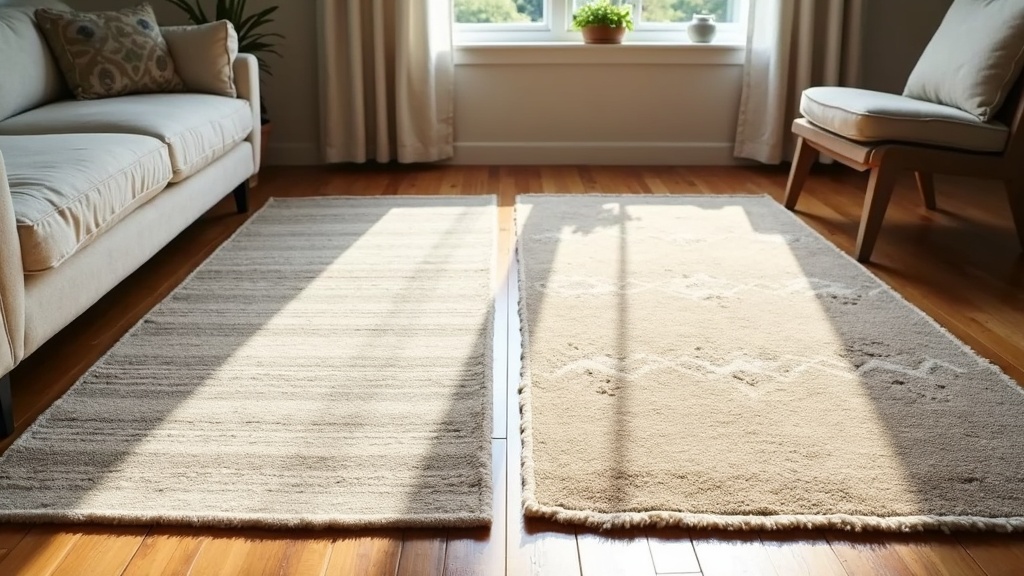
Flatweave rugs suit high-traffic, low-fuss spaces and rooms where you want pattern without bulk — entryways, kitchens, layered looks. Pile rugs suit rooms where comfort underfoot and sound-dampening matter, like living rooms and bedrooms, but they trap more dirt and generally need more careful cleaning. The right choice comes down to how the room is used, not which construction is “better.”
What “flatweave” and “pile” actually mean
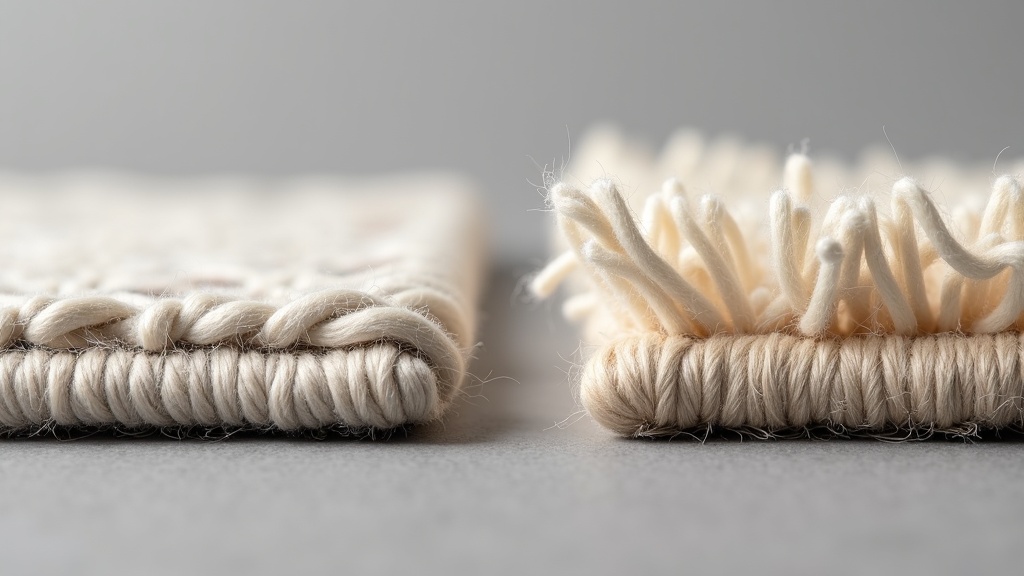
The terms describe how the yarn sits in the rug, and that structural difference drives almost everything else about how each type performs. A flatweave rug — a kilim, dhurrie, or a machine-made cotton or wool flat rug — is made by interlocking warp and weft threads with no extra yarn added on top. The pattern is created entirely by the weave itself, so the front and back often look almost identical, and the rug has no more thickness than a few stacked threads.
A pile rug, by contrast, has yarn knotted or looped around the foundation and then cut (or left as loops) to create a raised surface — the “pile.” Hand-knotted Persian and Oriental rugs, tufted rugs, and most plush residential carpets are pile constructions. That extra layer of yarn is what gives pile rugs their cushioning, their ability to hide footprints and vacuum lines, and their weight. It’s also what makes them more complicated to clean, because dirt and moisture can work down into the base of the pile rather than staying on the surface. For a deeper look at how different weaves and knot structures are built, the rug craft hub is a good starting point, and /category/materials-construction/ has more comparisons of specific fibres and constructions.
Durability and how they age
Flatweaves tend to wear evenly because there’s no pile height to crush or flatten — a well-made wool kilim can look much the same after a decade of foot traffic as it did new, aside from some fading. They don’t shed, and they’re generally lighter and easier to flip or rotate. Their weak point is usually the edges and any fringe, since a flatweave has less structural bulk protecting its selvedge; see how to fix frayed rug fringe if that becomes an issue.
Pile rugs wear differently: high-quality wool pile can spring back after being walked on for years, while cheaper or synthetic pile can crush permanently in traffic lanes and under furniture. Hand-knotted pile rugs, in particular, often improve in appearance with age as the wool develops a soft sheen (called patina), which is one reason older knotted rugs are prized rather than considered worn out. Loose fibres shedding in the first few months is normal for many new wool pile rugs and isn’t a sign of poor quality.
Where each works best in a room
Think about the room’s job before the rug’s look.
- Entryways and mudrooms: flatweaves handle grit and repeated foot traffic without holding onto debris in a deep pile, and they lie flatter against doors.
- Kitchens and dining areas: flatweave or low, tight pile both work; a low pile is easier to slide chairs across than a plush one.
- Living rooms: pile rugs generally win on comfort and acoustic softening, especially over hard flooring — the /living-room-rug-size-guide/ covers sizing once you’ve settled on construction.
- Bedrooms: a medium or high pile feels better on bare feet first thing in the morning; a thin flatweave can feel cold and hard by comparison.
- Layered looks: flatweaves are the classic base layer under a smaller pile rug because their low profile doesn’t create an odd double-height edge.
Households with pets, small children, or heavy furniture traffic often lean flatweave for practicality, while households prioritising comfort and a more traditional, decorative statement lean pile. Neither is objectively the right answer — it’s a genuine trade-off, and the /rug-buying-guides/ hub walks through sizing and placement questions that apply regardless of which construction you choose.
Cleaning and care: where the real differences show up
This is where construction matters most, because the wrong method can cause damage that no amount of regret will undo.
Flatweave rugs made of cotton or wool can usually be vacuumed on both sides (without a beater bar, which can fray thin flatweaves and any fringe) and shaken out or hung and lightly beaten to remove dust. For a spill on a wool flatweave, blot promptly with a clean cloth and, if needed, a small amount of cool water and a wool-safe, pH-neutral detergent, working from the outside of the stain inward — never hot water, and never a chlorine bleach or ammonia-based cleaner, both of which can yellow or degrade wool and any natural dyes present. Cotton flatweaves and dhurries are generally more washable than wool, but colourfastness varies, so always test on a hidden corner first.
Pile rugs are more demanding because moisture and cleaning solution can migrate into the foundation and the base of the knots, where they’re slow to dry and can encourage mildew or shrink the backing. A wool pile rug should be vacuumed with the pile direction and without a beater-bar attachment on fringe; deeper cleaning generally means either a careful, minimal wool-safe process (detailed at how to clean a wool rug without ruining it) or a professional cleaner, particularly for anything hand-knotted, antique, or silk. Silk pile rugs should not be treated with water or household detergent at all in most cases — see /silk-rugs-fragile-misunderstood/ for why silk behaves so differently from wool. Steam cleaners and rental carpet machines are risky on hand-knotted or antique pile rugs because they can over-wet the foundation and cause it to shrink or buckle; /steam-clean-rug-risks/ goes into when steam genuinely helps versus when it ruins a rug.
Whatever the construction, if a rug is hand-knotted, antique, made of silk, or simply of uncertain fibre and you’re not confident, the safest move is a professional rug cleaner or textile conservator rather than a DIY attempt — the cost of a proper cleaning is far lower than the cost of a ruined heirloom. And never combine cleaning chemicals, including reaching for bleach plus another household cleaner on a stain, since the fumes and reactions can be dangerous and the bleach alone will damage most rug fibres regardless.
Maintenance basics that apply to both
Both flatweave and pile rugs benefit from a rug pad — it reduces slipping, cushions the rug against grit grinding in from underneath, and on hard floors it can prevent the corners of thinner flatweaves from curling. If curling is already a problem, /stop-rug-curling-corners/ has fixes specific to that issue. See /do-you-need-a-rug-pad/ for the fuller case on pads and which type suits which flooring.
Fibre and price, in general terms
Fibre choice interacts with construction. Wool flatweaves and wool pile rugs both tend to be more resilient and easier to clean safely than many early synthetic pile rugs, whose dyes can bleed or fade unpredictably. Jute and other plant-fibre flatweaves are popular for their texture and low cost but are more vulnerable to moisture staining and wear in heavy-traffic zones — /jute-rug-living-room-pros-cons/ covers that trade-off in detail. Synthetic pile (polypropylene, nylon) is generally cheaper and more stain-resistant than wool but doesn’t age or feel the same underfoot; /wool-vs-synthetic-rugs-lifespan/ compares how long each realistically holds up.
On price: as a rough illustration only, a machine-made flatweave in a common living-room size might sit in the low hundreds, a decent wool pile rug of similar size often runs several hundred to over a thousand, and hand-knotted wool or silk pile rugs can range from several hundred to many thousands depending on knot density, origin, age, and condition — construction and size drive this enormously, and these are examples, not current market figures. If you’re weighing an expensive purchase, /handmade-vs-machine-made-rug/ explains what to look for at the back and edges of a rug to tell the two apart, and /knot-density-does-it-matter/ explains why knot count is a genuine but easily misunderstood value factor. For anything where real money is on the line — buying, insuring, or selling — an in-person appraisal from a qualified appraiser is the only reliable way to establish age, origin, or worth; no article, including this one, can do that from a description or photo.
Frequently asked questions about flatweave vs pile rugs
Is a flatweave rug good for a living room?
Yes, especially in busy households or under a coffee table where chairs slide often — flatweaves lie flat, don’t crush, and are easier to clean than pile. The trade-off is less cushioning and warmth underfoot compared with a pile rug of similar size.
Do flatweave rugs slip more than pile rugs?
Often yes, because they’re thinner and lighter with less friction against the floor. A rug pad rated for hard flooring or for rugs on carpet largely solves this and also protects the rug’s underside from grit abrasion over time.
Which is easier to clean, flatweave or pile?
Flatweaves are generally easier because dirt and moisture stay closer to the surface rather than working into a deep pile or foundation. Pile rugs, especially hand-knotted ones, need more careful, fibre-specific care and often benefit from professional cleaning.
Can I put a flatweave rug over a pile carpet?
Yes, this is a common layering approach, though a grip pad underneath helps prevent bunching since flatweaves can shift more easily on top of plush carpet than they would on a hard floor.
Are pile rugs warmer than flatweave rugs?
Generally yes — the raised yarn traps air and insulates, which is why pile rugs are popular in bedrooms and living rooms, while flatweaves feel closer to the temperature of the floor beneath them.
Rug Academy publishes general information about rugs and is not a dealer, appraiser, or cleaning service. Cleaning and repair methods depend entirely on fibre, dye and construction — test any treatment on a hidden corner first, and consult a professional rug cleaner or conservator before treating a hand-knotted, antique, silk, or valuable rug, as damage from cleaning is usually permanent. Any prices mentioned are illustrative examples only, and nothing here is an appraisal, an authentication, or a guarantee of a rug’s origin or value.
Related reading
cleaning and stains, repair and restoration, protection and storage.