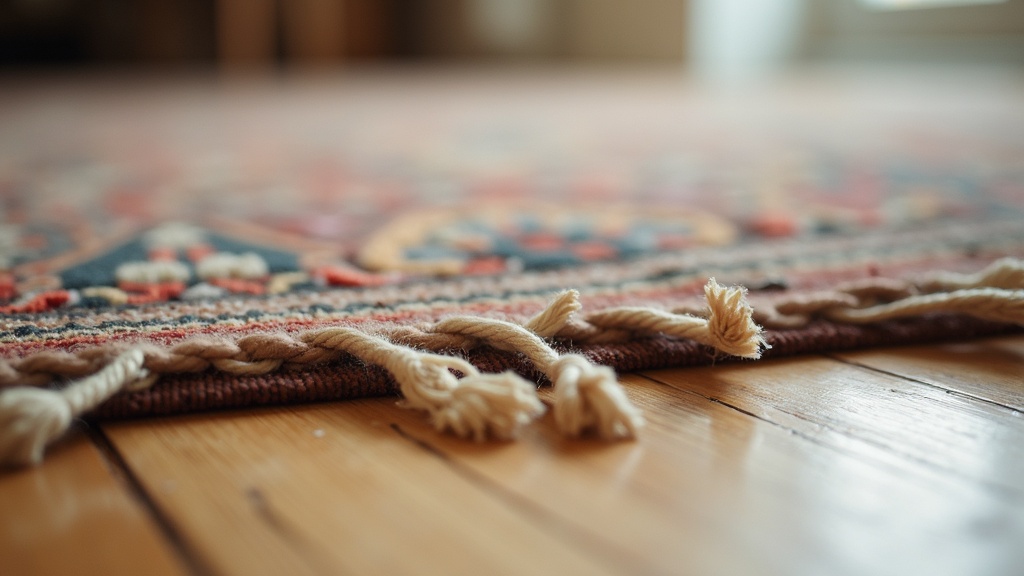
Frayed rug fringe is fixed by first securing the loose ends with hand-stitching (overcasting or whipstitching) to stop further unraveling, then trimming stray fibers rather than the fringe itself. Minor fraying on a sturdy wool rug can often be handled at home with a needle and matching thread, but heavily worn, knotted, or silk fringe on an antique or hand-knotted rug should go to a professional restorer, because the fringe is usually the exposed end of the rug’s actual foundation threads, not a separate decoration.
Why rug fringe frays in the first place
On a hand-knotted rug, the fringe is not sewn on afterward — it is the continuation of the warp threads that run the entire length of the rug and hold every knot in place. That is why damaged fringe matters more than it looks: pull too hard on a badly frayed end and you are tugging at the same threads that anchor the pile. Fraying happens from foot traffic catching the ends, vacuum beater bars snagging and shredding fibers, pets chewing, dragging the rug across a floor, or simply decades of use wearing the twist out of the warp cotton or wool.
Machine-made rugs are different. Their “fringe” is frequently a separate strip of material sewn or glued onto a serged edge after the rug is woven, purely for a hand-knotted look. This distinction is one of the things an appraiser checks when trying to tell handmade from machine-made construction — continuous warp fringe versus applied fringe is a meaningful clue, alongside knot structure and selvedge finishing, though it is only one piece of the picture and not something to judge from a photo alone. If you are curious about that broader question, our guide on how to tell if a rug is handmade or machine-made walks through the other signs.
Identify what you’re dealing with before touching it
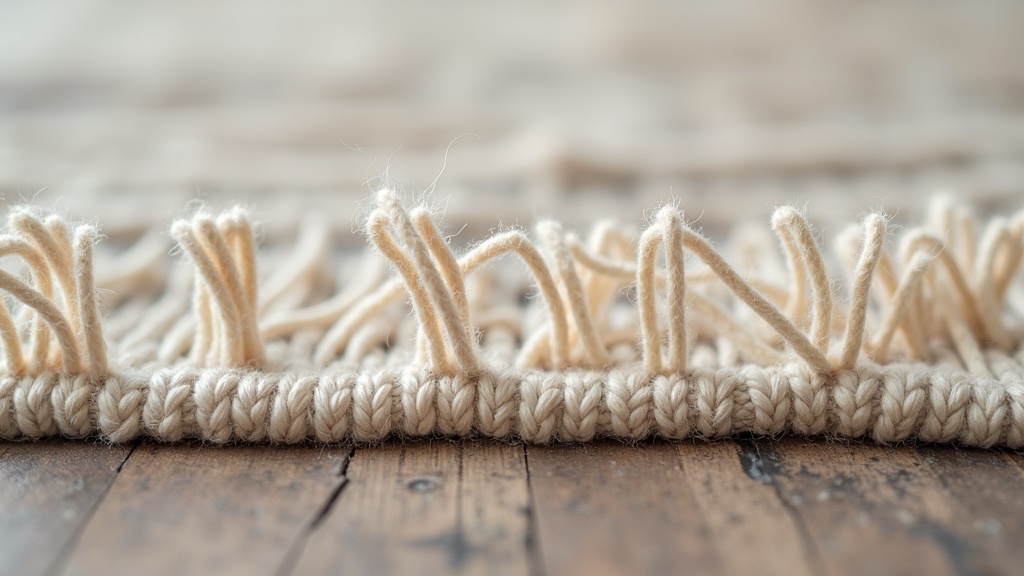
Before any repair, look closely at the fringe and answer three questions: what fiber is it (cotton, wool, or silk), is it continuous with the rug’s foundation or applied separately, and is the fraying isolated to a few strands or spreading across the whole end. Cotton fringe is the most common and the most forgiving to work with. Wool fringe is less common but reasonably sturdy. Silk fringe, or silk foundation fringe on a fine antique piece, is fragile, slippery, and easy to damage further with the wrong needle tension or thread choice — this is a case where hiring a textile conservator is worth the cost rather than a place to practice.
Materials for a basic fringe repair
- A blunt or curved needle sized for the fringe’s thickness
- Cotton or silk thread that closely matches the fringe color and fiber
- Sharp fabric scissors, not household scissors, for trimming stray ends
- A hard, flat surface to work against so the fringe stays under light tension
Fixing minor fraying with overcasting
For small sections of frayed cotton or wool fringe on a rug you’re confident is not antique or especially valuable, hand-overcasting is the standard fix. Thread the needle, anchor it into the rug’s selvedge or end finishing where it’s still solid, and wrap the thread in tight, even loops around the frayed group of warp ends, working from the solid part outward toward the tip. This binds the loose fibers together the same way the original weaver’s finishing knot did, without cutting away any length. Stop periodically to check tension — too tight and you’ll pucker the end of the rug; too loose and the wrap will slip off within a season.
Where individual strands have simply frizzed rather than separated from the group, a light touch with a fine-tooth comb can realign the fibers before you decide whether wrapping is even necessary. Trim only the fuzzy overhang, never the full fringe length, and never with a lighter or heat source — melting synthetic fringe fibers to “seal” them is not a safe substitute for stitching and can scorch adjacent pile.
When the whole fringe end is gone
If an entire end of fringe has worn down to almost nothing, overcasting individual strands won’t help — there’s nothing left to grab. At that point the realistic options are a new hand-applied fringe sewn onto the existing end (a cosmetic fix that doesn’t restore structural warp), or a proper reweave that extends the foundation and reties the fringe from new warp material, which is skilled, time-consuming restoration work. This is squarely a job for a professional; it is also the point where it’s worth asking whether the repair cost makes sense relative to the rug, a question our piece on when a damaged rug is worth repairing goes into in more detail.
Do not attempt to needle-felt, hot-glue, or fuse new fringe onto a hand-knotted rug’s end yourself if the rug has any age or value to it. These shortcuts are difficult to reverse and can make later professional restoration harder, not easier.
Cleaning frayed fringe safely
Fringe collects ground-in dirt and oils faster than the rest of the rug because it drags on the floor, and dirty fringe frays faster because grit abrades the fibers with every step. For wool or cotton fringe on a rug you’ve confirmed is not silk, spot-clean gently with cool water and a small amount of pH-neutral, wool-safe detergent, working in the direction of the fringe rather than scrubbing across it, then blot and air-dry fully before the rug goes back down. Never use chlorine bleach on fringe — it breaks down both wool and silk protein fibers and will yellow cotton over time — and never combine cleaning products like bleach and ammonia, which produces dangerous fumes and offers no cleaning benefit.
Hot water and high-pH or alkaline cleaners are unsafe for wool fringe specifically because heat and alkalinity cause wool to felt, shrink, and yellow permanently. Silk fringe should generally not be wet-cleaned at home at all; water and most detergents can dull or damage silk, and natural dyes used on older rugs can bleed when saturated. Always test any cleaning approach on a small hidden section of the fringe first, and if the rug is hand-knotted, antique, silk, or of uncertain construction, take it to a professional rug cleaner rather than experimenting. Our rug care hub and the cleaning and stains archive cover fiber-specific cleaning in more depth if you’re dealing with the rest of the rug as well as the fringe.
Preventing fringe from fraying again
Most fringe damage is preventable with a few habits. Vacuum fringe with the beater bar switched off or lifted, since rotating brushes are one of the most common causes of shredded fringe and loose pile. A well-fitted rug pad keeps the whole rug from sliding and dragging its ends across hard flooring, which reduces wear at the edges — see do you really need a rug pad for how pads help beyond just cushioning. Rotate the rug periodically so foot traffic and furniture don’t concentrate wear on one end, and keep fringe away from chair legs and doorways where it gets caught and pulled. For longer-term storage, tuck or roll fringe carefully rather than folding it, which creases and weakens the threads at the crease line — the protection and storage archive has more on rolling and storing rugs correctly.
What fringe condition can and can’t tell you
Wear patterns in fringe are one of several things an appraiser looks at alongside knot density, foundation material, and dye characteristics, but fringe condition alone never tells you a rug’s age, origin, or value — a well-loved rug can have ragged fringe and still be finely made, and a newer rug can have fringe deliberately distressed to look older. If you’re trying to understand what actually drives a rug’s worth, our guide on what determines antique rug value lays out the fuller set of criteria, and any real financial decision about a rug should rest on an in-person appraisal by a qualified appraiser, not on fringe condition or anything else assessed from a photo.
Frequently asked questions about fixing frayed rug fringe
Can I just cut off frayed rug fringe?
You can trim loose, fuzzy overhang, but cutting the fringe flush removes the visible end of the rug’s warp threads, which can leave the corner knots unsecured over time. Overcasting to stabilize the ends is safer than cutting, especially on hand-knotted rugs.
Is it normal for rug fringe to wear out?
Yes — fringe takes the most foot traffic and floor friction of any part of the rug, so it naturally wears faster than the pile. Regular vacuuming without a beater bar, a rug pad, and periodic rotation all slow this down considerably.
Should I glue rug fringe to stop fraying?
No. Glue is difficult to reverse, can discolor fibers, and doesn’t hold up to repeated foot traffic or cleaning the way hand-stitching does. It’s better used sparingly by a professional restorer than applied at home as a quick fix.
How do I know if my rug’s fringe is part of the rug or sewn on?
Gently check where the fringe meets the pile: continuous warp fringe runs straight into the foundation with no seam, while applied fringe is stitched or glued onto a finished edge and will show a visible seam line if you look closely.
When should I take frayed fringe to a professional instead of fixing it myself?
Take it to a professional rug cleaner or conservator whenever the rug is hand-knotted, antique, silk, of uncertain construction, or has sentimental or financial value you’re not willing to risk, since a wrong repair can undermine the rug’s structure or worth.
Rug Academy publishes general information about rugs and is not a dealer, appraiser, or cleaning service. Cleaning and repair methods depend entirely on fibre, dye and construction — test any treatment on a hidden corner first, and consult a professional rug cleaner or conservator before treating a hand-knotted, antique, silk, or valuable rug, as damage from cleaning is usually permanent. Any prices mentioned are illustrative examples only, and nothing here is an appraisal, an authentication, or a guarantee of a rug’s origin or value.