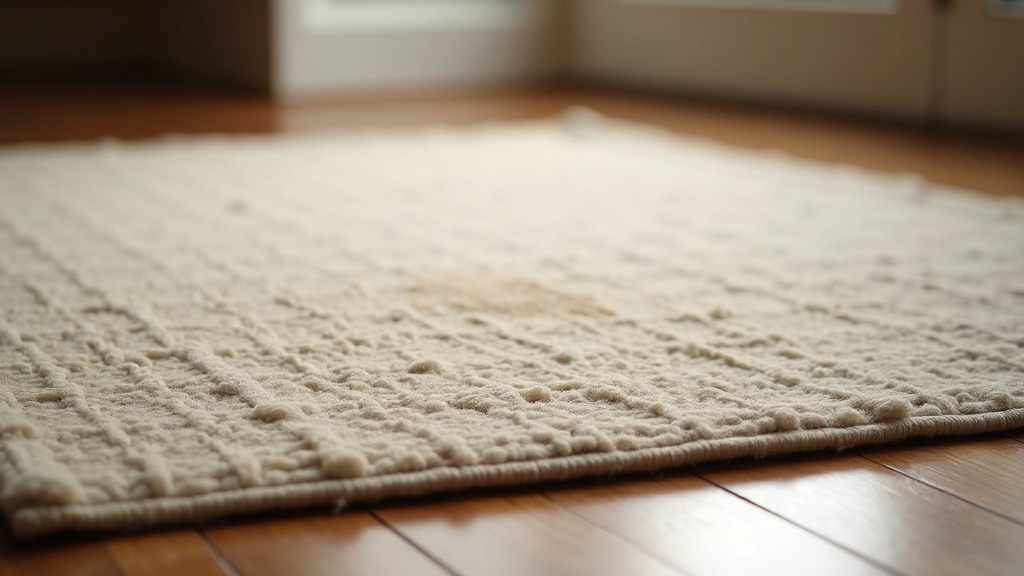
Grease and oil stains come out of a rug most reliably by first absorbing the loose oil with an inert powder, then treating the residue with a solvent or detergent matched to the fibre — mineral spirits or a dry-cleaning solvent for wool and most synthetics, a wool-safe detergent for water-based residue, and professional handling for silk or any hand-knotted, antique or unidentified rug. There is no single household fix that is safe across all fibres, and the wrong solvent or a hot-water scrub can set the stain permanently or damage the pile.
This is one of the few stain categories where speed matters less than method. Grease does not sit on top of a fibre the way a wine spill does — it coats individual filaments and, if pushed with water or heat, spreads into the foundation and backing, where it becomes far harder to reach. Working slowly and in the right order matters more than working fast.
Why oil-based stains behave differently
Most rug stains — wine, coffee, mud — are water-soluble and respond to blotting and a mild detergent. Oil and grease are not. They repel water, which is why a wet cloth alone will smear a grease mark rather than lift it. Getting oil out generally requires two separate actions: pulling out as much of the free oil as possible before it bonds further to the fibre, and then using a solvent-based or surfactant-based treatment that can actually break the oil’s grip on the yarn. Skipping the first step and going straight to scrubbing with soap and water is the most common way a small stain becomes a permanent shadow.
Step one: absorb before you touch a liquid
As soon as you notice a fresh grease or oil stain, cover it generously with an absorbent powder — plain cornstarch, talcum powder, or fuller’s earth all work — and leave it for several hours, ideally overnight. The powder draws the oil up out of the pile by capillary action. Vacuum it away gently afterward using suction only; a beater-bar attachment can grind residual oil deeper into the pile and is hard on fringe regardless, a point covered in more detail in our guide to vacuuming a rug correctly. Repeat the powder treatment two or three times if the stain is old or has already darkened, since older grease has had time to migrate further into the yarn.
Treating the residue, by fibre
Once the bulk of the oil is absorbed out, what remains is a faint residue that needs a chemical assist. What is safe here depends entirely on what the rug is made of and how it is constructed, which is why identifying the fibre matters more than following a generic recipe. General background on how pile, foundation and dye interact is covered on our rug care hub, and the fibre-specific cleaning archive under cleaning and stains is worth browsing before you start.
| Fibre / construction | Generally safe approach | Avoid |
|---|---|---|
| Wool, hand-knotted or machine-made | Cool-water blot with a wool-safe (pH-neutral) detergent; for stubborn residue, a small amount of mineral spirits applied to a cloth, not directly to the rug, dabbed and then rinsed with a barely damp cloth | Hot water, alkaline detergents, steam — all can felt or shrink wool and yellow lighter colours |
| Nylon, polyester, olefin (most machine-made rugs) | A grease-cutting dish detergent diluted in cool water, or a commercial dry-cleaning solvent applied sparingly and blotted | Prolonged soaking, which can affect a latex secondary backing common in tufted pieces |
| Cotton and jute flatweaves | Cool water with a mild detergent, worked gently with a soft cloth, then thorough air-drying | Saturating the weave, which can shrink cotton or weaken jute fibres and cause the rug to buckle |
| Silk, or silk-blend | Blotting only with a dry cloth; residue treatment should go to a professional | Water, most detergents, and any solvent applied by an untrained hand — silk fibres are damaged easily and often bleed dye when wet |
For any solvent-based treatment, work from the outside of the stain inward to avoid spreading it, use a clean white cloth rather than a coloured one that might transfer dye, and blot rather than rub. Rubbing pushes oil sideways into surrounding fibres and can also fray or fuzz the pile surface, which shows permanently under raking light.
What to avoid entirely
Chlorine bleach is not appropriate on wool or silk under any circumstances — it breaks down the protein structure of the fibre and will weaken or discolour it. Ammonia-based cleaners should never be combined with bleach or with other household chemicals; mixing cleaning agents can produce fumes that are genuinely hazardous, and there is no situation in ordinary rug care where combining them helps. Hot water and high-pH degreasers marketed for kitchens or garages are formulated for surfaces that do not felt, shrink, or bleed dye the way wool and natural fibres can. Steam cleaning is another common mistake with an oil stain specifically, because heat can drive the residue deeper before it has been treated — our piece on dry cleaning methods and when they’re appropriate covers gentler alternatives that don’t introduce water or heat at all.
Test before you commit
Before applying any solvent or detergent, test it on a hidden corner or the underside of a fringe — an area that won’t be seen if something goes wrong. Apply a small amount, wait several minutes, and check for colour transfer onto your cloth, which signals that the dye is not stable and that further treatment risks bleeding the pattern. This is especially important on rugs dyed with natural or early synthetic dyes, which are more prone to migration when wet; the differences are explained in our guide to natural vs synthetic dyes. If the test patch shows any colour change, stop and treat the whole thing as a job for a professional rather than experimenting further on the visible pile.
When to call a professional instead
Grease and oil stains are one of the more forgiving categories of rug stain when caught early on a synthetic or wool machine-made piece, but the calculation changes completely for anything hand-knotted, antique, silk, or of uncertain origin. Older or hand-spun wool can be more delicate than it looks, dyes may not be colourfast, and a foundation that has already loosened with age can be pushed out of shape by even careful spot treatment. A qualified rug cleaner or conservator has access to testing methods and solvents that aren’t practical or safe to use at home, and can assess the rug’s structure before touching it — the distinction between the two kinds of service is explained in what a rug conservator does that a cleaner doesn’t. If you’re at all unsure what your rug is made of, that uncertainty itself is a reason to get a professional opinion rather than guess. Routine professional cleaning on a sensible schedule, discussed in how often you should professionally clean a rug, also reduces how often you’re dealing with set-in stains in the first place.
Frequently asked questions about removing grease and oil stains from a rug
How do you get an old grease stain out of a rug?
Old grease has usually migrated deeper into the fibre, so repeat the powder-absorption step several times over a few days before attempting any solvent treatment, and expect it to take more patience than a fresh stain. If it doesn’t lift, a professional cleaner has stronger, fibre-appropriate options.
Will WD-40 or cooking oil stains ruin a wool rug permanently?
Not necessarily, if treated promptly with absorption and a cool, wool-safe detergent — but hot water, scrubbing, or the wrong solvent can set the stain or felt the wool, which is much harder to reverse than the original mark.
Can I use dish soap to remove grease from a rug?
A small amount of grease-cutting dish soap diluted in cool water works reasonably well on synthetic pile like nylon or polyester, but it’s too alkaline to use liberally on wool and should never be used on silk, where even mild detergents can cause damage.
Does baking soda or cornstarch actually remove oil stains from rugs?
They absorb surface oil effectively when left on the stain for several hours before vacuuming, which is why they’re a recommended first step — but they won’t fully remove residue that has already bonded to the fibre, which usually still needs a follow-up treatment.
Should I rent a steam cleaner for a grease stain on my rug?
Generally no — heat and moisture can drive oil deeper into the pile and foundation before it’s been treated, and steam carries its own risks of shrinkage and dye bleed on wool and natural-fibre rugs, so a dry, targeted approach is usually safer.
Rug Academy publishes general information about rugs and is not a dealer, appraiser, or cleaning service. Cleaning and repair methods depend entirely on fibre, dye and construction — test any treatment on a hidden corner first, and consult a professional rug cleaner or conservator before treating a hand-knotted, antique, silk, or valuable rug, as damage from cleaning is usually permanent. Any prices mentioned are illustrative examples only, and nothing here is an appraisal, an authentication, or a guarantee of a rug’s origin or value.