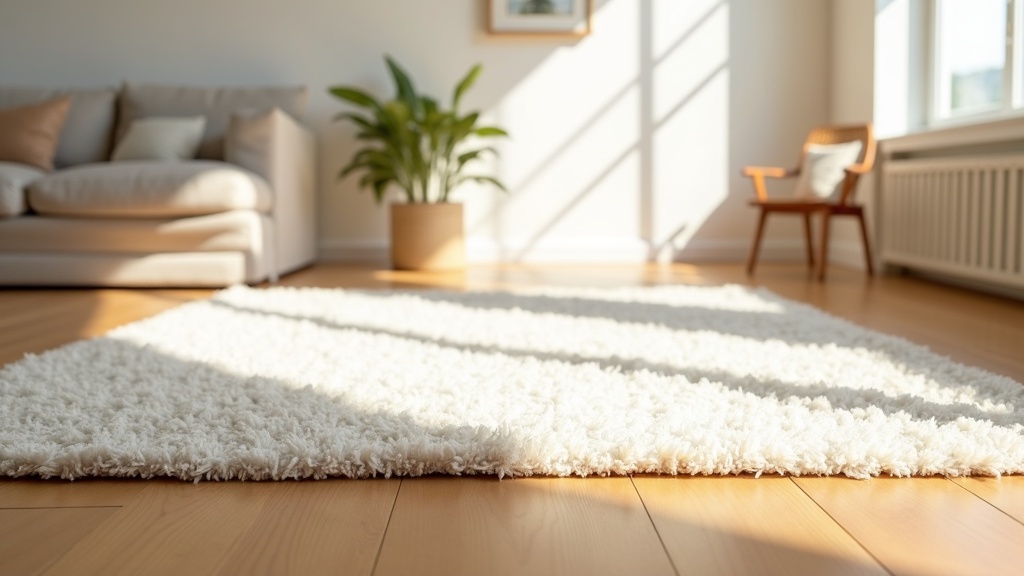
The reliable way to keep a rug in place on hardwood is a rug pad sized to sit just inside the rug’s edges, chosen for a construction that grips the floor without gluing to its finish. Double-sided carpet tape, non-slip sprays, and pads made from unsuitable rubber compounds can all leave a haze, a tacky residue, or a discoloured patch on wood finish that’s expensive to fix. The right pad also protects the rug itself, cushioning the pile and slowing the wear that causes buckling and curling over time.
Why rugs slide on hardwood in the first place
Hardwood is smooth, sealed, and offers almost no friction against a woven rug back. Flatweaves and thin machine-made rugs are especially prone to sliding because they have little weight or texture on the underside to grip the floor. Hand-knotted rugs with a dense wool foundation tend to sit somewhat better on their own, but even a heavy rug will creep over months of foot traffic, especially near doorways or where a chair is pushed in and out repeatedly. Underfloor heating can make matters worse, since gentle warmth dries and stiffens a rug’s backing and reduces what little natural grip it has.
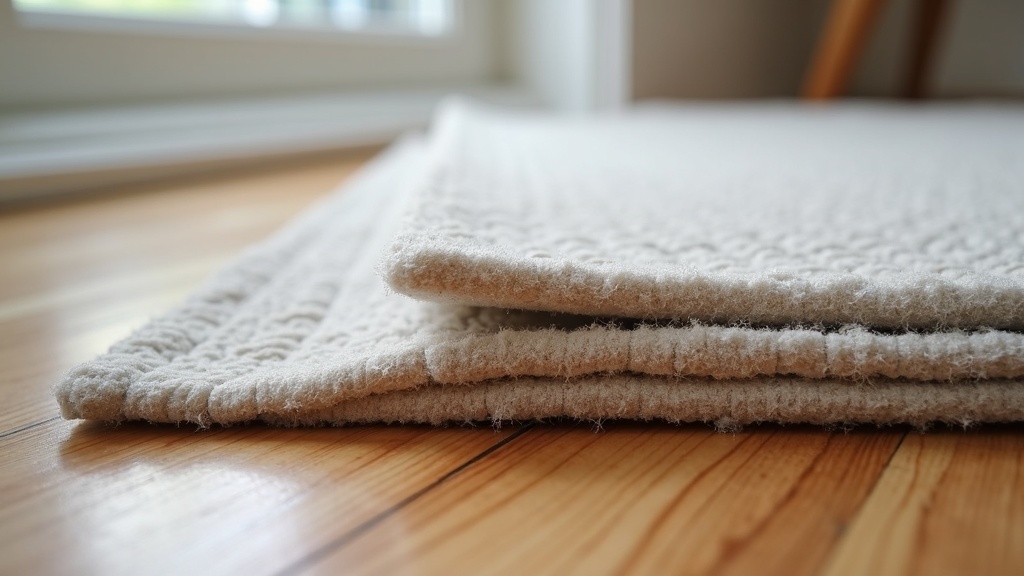
Rug pads: what actually works on wood
Not every rug pad is safe for every floor finish. The main categories are:
- Felt pads — dense wool or synthetic felt that adds cushioning and a bit of grip through weight and texture, but limited slip resistance on its own on hard, sealed floors.
- Felt-and-rubber combination pads — felt on top for cushioning, a natural or synthetic rubber layer on the bottom for grip. This is generally the safest all-round choice for hardwood, provided the rubber is labelled safe for wood finishes.
- PVC or vinyl-coated mesh pads — thin, inexpensive, and gripping, but some PVC formulations can react with certain floor sealants over months, leaving a sticky or discoloured outline. These are more commonly a concern on older or oil-finished floors than modern polyurethane finishes, but it is worth checking the manufacturer’s guidance before committing a pad to an expensive floor.
- Natural rubber pads — good grip and breathability, though lower-quality rubber can degrade and crumble after a few years, leaving a gritty residue under the rug.
Whichever type is used, the pad should be cut two to three centimetres smaller than the rug on all sides, not full width — a pad that peeks out from under the rug edge can catch shoes and cause a trip rather than prevent one. For a fuller comparison across surfaces, rug pads by floor type covers how hardwood, tile and carpet each call for a different pad construction, and do you need a rug pad is worth reading if it isn’t obvious yet whether a pad is necessary at all for a particular rug and room.
What to avoid
Double-sided carpet tape is the single most common cause of avoidable damage in this situation. It’s designed to bond, and on a sealed hardwood floor that bond can lift finish, leave adhesive residue that attracts dirt, or tear fibres out of the rug’s back when it’s eventually removed. Sprays marketed as “non-slip” grip coatings carry a similar risk: they are meant to be sprayed onto the rug backing or the floor, and some contain solvents that soften certain floor finishes. Corner grippers — small adhesive discs placed under each corner — are a gentler compromise for a rug that only needs to stop curling at the edges rather than full-surface anti-slip, and they’re worth trying before reaching for tape. If curling rather than sliding is the main problem, stop rug curling corners goes through fixes aimed specifically at that.
Moisture, fibre safety, and the floor underneath
A rug pad that traps moisture against either the hardwood or the rug’s foundation is a bigger risk than sliding. If a spill happens on a padded rug, blot it promptly rather than leaving the rug to dry in place on top of the pad — a wet rug pressed onto a non-breathable pad slows drying and can encourage mould on the pad, staining or cupping in the wood, and, in wool rugs, a musty smell that’s difficult to fully remove afterwards. For general spot-cleaning on a wool rug of known, sturdy construction, blot (never scrub) with a clean cloth and cool water, adding a small amount of a wool-safe, pH-neutral detergent only if plain water isn’t enough — never a chlorine bleach or an ammonia-based household cleaner, both of which can yellow or felt wool and will damage silk outright. Always test any product on a hidden corner of the rug first. If the rug is hand-knotted, antique, silk, or of uncertain fibre, this is a case for a professional rug cleaner or conservator rather than a DIY attempt, since water and detergent choices that are safe for one construction can be ruinous for another. The rug care hub and its cleaning and stains archive go into fibre-specific methods in more depth.
A quick comparison
| Method | Grip on hardwood | Floor finish risk | Best for |
|---|---|---|---|
| Felt-and-rubber pad | Good | Low, if labelled floor-safe | Most living-room and bedroom rugs |
| Felt-only pad | Moderate | Very low | Layered rugs or where cushioning matters more than grip |
| PVC/vinyl mesh pad | Good | Variable — check finish compatibility | Budget rugs, rented spaces (with care) |
| Double-sided tape | Very high | High | Generally not recommended for hardwood |
| Corner grippers | Low (corners only) | Low, but can mark finish if left too long | Stopping curling, not full sliding |
Placement, rotation, and everyday habits
A well-chosen pad solves most of the problem, but a few habits make it last. Rotating a rug every six months or so evens out wear and reduces the chance of one section of the pad compressing unevenly and losing grip; rotating a rug: why it matters and how often explains the reasoning in more detail. In entryways and other high-traffic spots, a rug is more likely to bunch and travel regardless of pad, so it’s worth reading protecting a rug in a high-traffic entryway for placement tricks alongside the pad itself. If a rug has already started to ripple or buckle from being pushed around, that’s a separate mechanical problem from sliding, and rug buckling and rippling: causes and fixes covers how to flatten it out safely rather than forcing it down with furniture weight, which can crease the foundation permanently. For general guidance on sizing and placement decisions that affect how much a rug moves in the first place, the sizes and placement archive is a useful starting point.
Frequently asked questions about keeping a rug in place on a hardwood floor
Will a rug pad damage my hardwood floor?
A well-made felt-and-rubber pad labelled safe for wood finishes is very unlikely to damage a hardwood floor. The risk comes mainly from low-quality PVC pads, degraded rubber, or adhesive tape, which can leave residue or interact with certain floor sealants over time.
Can I use double-sided tape to stop a rug slipping on wood?
It’s best avoided on hardwood. Tape strong enough to hold a rug in place is also strong enough to lift floor finish or leave sticky residue when removed, and it can pull fibres from the rug backing too.
Do I need a rug pad if my rug is heavy and hand-knotted?
Weight helps, but even dense hand-knotted rugs creep over months on smooth hardwood. A breathable felt or felt-rubber pad also cushions the pile and protects the foundation, so it’s usually worth using one regardless of the rug’s weight.
Why does my rug curl at the corners on hardwood but not on carpet?
Hardwood offers little friction to hold a rug’s edges flat, so corners lift more easily than on textured carpet. A rug pad, corner grippers, or gentle reshaping can help; persistent curling is covered in more detail elsewhere on the site.
Can I clean a rug pad the same way I clean the rug?
No — treat them separately. Most rug pads can be vacuumed and occasionally rinsed with plain water and air-dried, but check the manufacturer’s care notes, and never apply rug-cleaning detergents formulated for wool or silk directly onto rubber or PVC pad material.
Rug Academy publishes general information about rugs and is not a dealer, appraiser, or cleaning service. Cleaning and repair methods depend entirely on fibre, dye and construction — test any treatment on a hidden corner first, and consult a professional rug cleaner or conservator before treating a hand-knotted, antique, silk, or valuable rug, as damage from cleaning is usually permanent. Any prices mentioned are illustrative examples only, and nothing here is an appraisal, an authentication, or a guarantee of a rug’s origin or value.