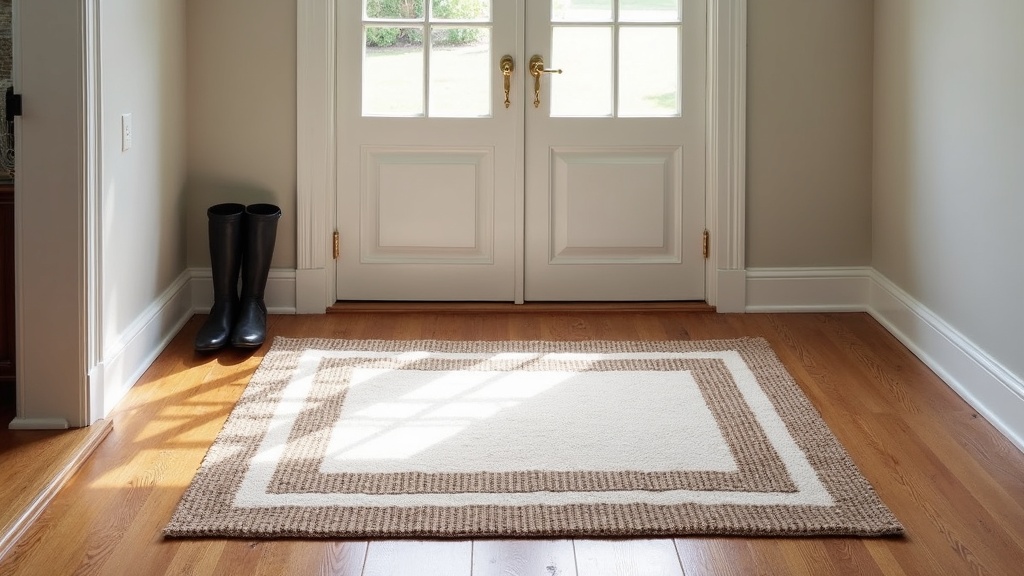
An entryway rug takes more abuse in a month than a living room rug takes in a year: grit, moisture, salt, and direct foot traffic all land on the same few square feet. Protecting it means controlling what comes in on people’s shoes, choosing a construction that can take the wear, using a rug pad rated for the floor beneath it, and rotating and cleaning it before soil has a chance to grind into the pile. None of this is complicated, but skipping any one step shortens the rug’s working life considerably.
Why entryways are the hardest place for a rug
Three things converge at a front door that don’t happen anywhere else in the house: abrasive grit tracked in on shoe soles, moisture from rain or snow, and concentrated foot pressure in a narrow path rather than spread across the whole rug. Grit is the real enemy — sand and mineral particles act like sandpaper on pile fibres every time a foot presses down and twists slightly, which is exactly what happens when someone steps in from outside. Moisture compounds this by softening fibres and, in wool, can encourage the felting that makes pile go flat and matted if the rug never fully dries between wettings.
This is also why the same rug placed in an entryway will show wear years before an identical one in a bedroom. The fix isn’t necessarily a different rug — it’s a system around the rug that intercepts grit and moisture before they reach it.
Start before the rug: a door mat that actually works
A separate scraper mat outside or just inside the door does more for a rug’s longevity than any treatment applied afterward. A coarse-textured mat — coir, rubber-backed synthetic, or a doormat with stiff bristles — physically knocks grit off shoe soles before it reaches the rug itself. Two mats (one outside, one inside) catch more than one, since the outside mat handles bulk debris and the inside mat catches what’s left along with residual moisture.
Choosing or placing a rug built for the job
If you’re selecting a rug specifically for a high-traffic entry, construction matters more than pattern. Flatweaves and low, dense pile shed grit more easily than deep plush pile, which traps particles down at the base where they abrade the foundation. Durable plant-fibre weaves like sisal and seagrass are popular for entries because they resist crushing, though they have real drawbacks with moisture and staining worth understanding before buying — the trade-offs are covered in more detail in our piece on sisal and seagrass rugs. Wool holds up well to repeated foot traffic and resists soiling better than many synthetics because of its natural fibre structure, though synthetic blends have their own advantages in moisture resistance; the comparison is worth reading if you’re choosing between them, in our guide to wool versus synthetic rugs and lifespan.
If you already own the rug and it’s simply landed in this spot by necessity — a good hand-knotted piece inherited or bought for another room — the calculation changes. A valuable or antique rug generally does not belong in the single hardest-wearing spot in the house at all; a lower-cost, purpose-built entry rug protects the good piece by keeping it elsewhere.
The rug pad is not optional here
A rug pad does three jobs in an entryway specifically: it stops the rug sliding on a hard floor (a real safety issue where people are stepping in fast from outside), it cushions the pile so foot pressure doesn’t grind grit straight through to the foundation, and it lets air circulate underneath so any dampness dries rather than sitting against the floor. The right pad depends on the floor underneath — hardwood, tile and rugs sitting over carpet each call for a different pad material and thickness, which is covered in our guide to rug pads by floor type. A cheap felt-only pad that holds moisture against hardwood can do more harm than no pad at all, so this is worth getting right rather than grabbing whatever’s cheapest.
A cleaning and maintenance routine that actually protects the rug
Regular, gentle maintenance matters more in an entryway than almost anywhere else in the home, because soil accumulates faster and grit damage is cumulative and largely irreversible once it’s ground fibres down.
- Vacuum often, gently. Frequent vacuuming — several times a week in a busy entry — removes grit before foot traffic works it into the pile. Use suction only, not a beater bar, on any rug with fringe or a hand-knotted construction, since beater bars catch and tear loose yarns and fringe threads. The safe technique for different rug types is covered in vacuuming a rug correctly.
- Blot moisture immediately. Wet shoes or a dripping umbrella should be blotted from the rug with a dry towel right away rather than left to soak in and dry slowly, which is what encourages felting in wool and can cause natural dyes to migrate. Never leave a wool rug damp under a closed door where air can’t reach it.
- Rotate it regularly. Foot traffic in an entry wears one path far more than the rest of the rug. Turning the rug periodically evens out that wear so it doesn’t develop a bare track down the centre; how often depends on the rug and traffic level, discussed in rotating a rug.
- Address spills and stains fast, but carefully. For a wool rug, blot (don’t rub) with a clean cloth and, if needed, a small amount of cool water and a wool-safe, pH-neutral detergent, testing on a hidden corner first. Hot water and alkaline or high-pH cleaners cause wool to felt, shrink and yellow, so stick to cool water only. Never use chlorine bleach on wool or silk — it will destroy the fibre outright — and never mix cleaning chemicals like bleach and ammonia, which produces dangerous fumes as well as ruining the rug. Silk rugs and anything you suspect might be silk should not be treated with water or detergent at all; they need a professional. Full guidance on safe at-home cleaning for wool is in cleaning a wool rug safely, and if you’re unsure whether wet cleaning is appropriate at all for a given piece, our overview of dry cleaning methods and when they’re appropriate is a good starting point.
When to call a professional
An entryway rug that’s hand-knotted, antique, silk, or of uncertain construction should go to a professional rug cleaner or conservator rather than being treated at home — not just for stains, but for periodic deep cleaning, since ground-in grit sits down near the foundation where home vacuuming and spot cleaning can’t reach it. A professional wash also removes accumulated grit that acts abrasively on the foundation threads over years, which is the main mechanism by which entryway rugs fail early. How frequently that’s worth doing depends on traffic and fibre, and is covered in how often to professionally clean a rug. If you notice the pile flattening irreversibly, edges fraying, or fringe pulling apart despite good maintenance, it’s also worth reading about restoring worn rug edges before wear becomes structural. Our full rug care hub covers cleaning, repair and protection in more depth, and the protection and storage archive has further reading on pads, sun exposure and seasonal care.
Frequently asked questions about protecting a rug in a high-traffic entryway
What is the best rug material for a busy entryway?
There’s no single best fibre for every situation — flatweaves and dense low-pile wool resist grit and crushing well, while plant fibres like sisal handle abrasion but stain more easily. The right choice depends on your climate, traffic level, and whether the rug will get wet.
Do I really need a rug pad under an entryway rug?
Yes — a pad prevents slipping on hard floors where people step in fast, cushions the pile from grinding grit, and lets air circulate so moisture dries instead of sitting against the floor. The right pad depends on whether it’s over hardwood, tile, or carpet.
Can I vacuum a fringed rug in my entryway normally?
Use suction-only attachments rather than a beater bar on any rug with fringe or hand-knotted construction, since beater bars catch and tear loose fibres and fringe threads. Frequent, gentle vacuuming actually protects the rug more than occasional heavy vacuuming does.
How do I get salt or water stains out of an entryway rug?
Blot moisture immediately with a dry towel rather than letting it soak in. For wool, cool water and a small amount of pH-neutral wool-safe detergent applied gently after testing on a hidden area is generally safe; hot water, bleach, and high-pH cleaners can felt, shrink or discolour wool and should be avoided.
Should I put a valuable or antique rug in a high-traffic entryway at all?
Generally, no — an entryway sees the heaviest combination of grit, moisture and foot pressure in the house, and a valuable hand-knotted or antique rug will wear and lose value there faster than in a lower-traffic room. A durable, purpose-bought rug protects the good piece by taking the abuse instead.
Rug Academy publishes general information about rugs and is not a dealer, appraiser, or cleaning service. Cleaning and repair methods depend entirely on fibre, dye and construction — test any treatment on a hidden corner first, and consult a professional rug cleaner or conservator before treating a hand-knotted, antique, silk, or valuable rug, as damage from cleaning is usually permanent. Any prices mentioned are illustrative examples only, and nothing here is an appraisal, an authentication, or a guarantee of a rug’s origin or value.