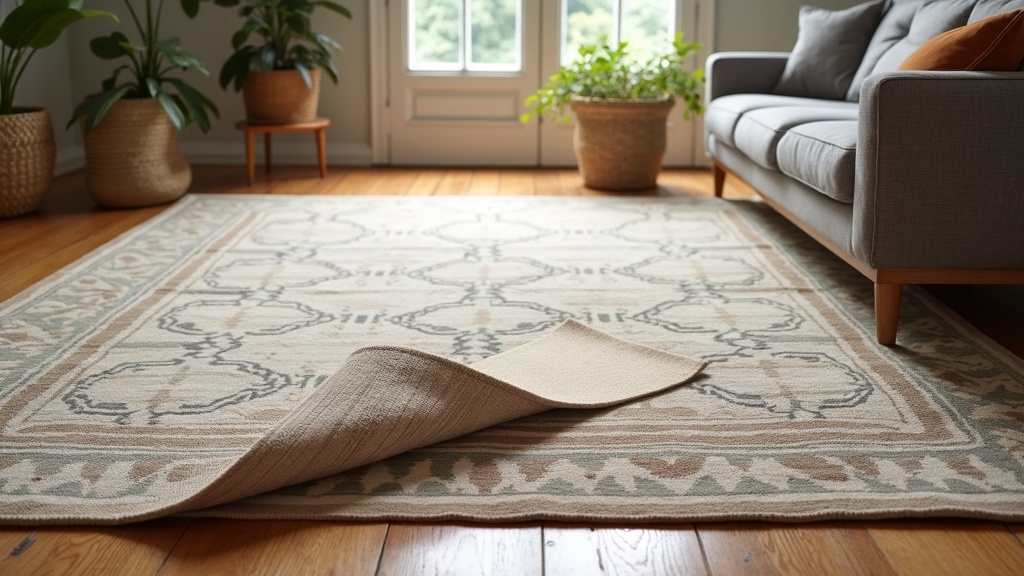
For most rugs on most floors, yes — a rug pad is worth having. It keeps the rug from sliding underfoot, cushions the pile so it wears more slowly, and creates a breathable barrier between the rug and the floor finish. The exceptions are narrow: a very small mat on low-pile carpet, or a rug you plan to move seasonally, where a pad may be more trouble than it’s worth.
The question sounds like a matter of taste, but it’s really a matter of physics and floor chemistry. A rug pad changes how weight, friction, and moisture move between two surfaces that were never designed to sit on top of each other. Understanding what a pad actually does helps you decide whether your particular rug, floor, and household need one — and which type.
What a rug pad actually does
A rug pad performs several jobs at once, and not every pad does all of them equally well.
- Grip: keeps the rug from creeping or curling at the edges, which is a genuine fall hazard on hard flooring.
- Cushioning: absorbs some of the impact of foot traffic, so the pile fibres bend and spring back rather than crushing flat.
- Airflow: a felt or breathable pad lets air move under the rug, reducing the trapped moisture that invites mold or mildew in humid climates.
- Floor protection: separates rough-backed rugs from finished wood, vinyl, or laminate, and keeps dye or backing residue off the floor.
Cushioning also matters more than people expect for longevity. A rug pile that’s repeatedly crushed against a hard subfloor breaks down faster than one with a bit of give beneath it — this is one of the quieter factors covered in our broader guide to rug buying guides on materials and construction, since a wool pile and a synthetic pile respond to that repeated compression differently, a topic explored further in our comparison of wool vs synthetic rug lifespan.
Do you need one on hardwood, tile, or laminate?
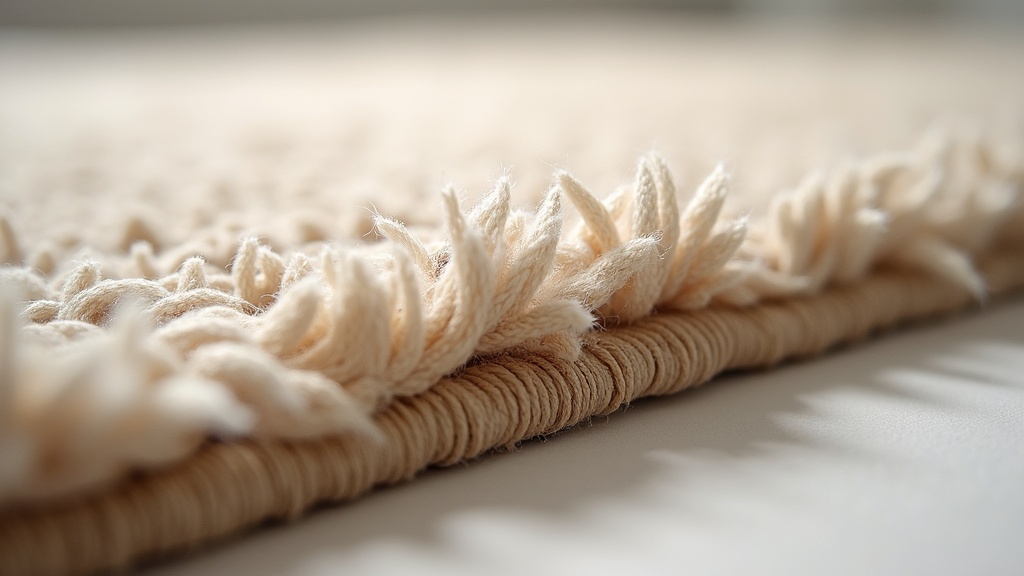
On hard flooring, a pad is doing real protective work, not just comfort work. Rug backings — especially latex-coated or PVC-backed machine-made rugs — can react with certain floor finishes over months or years, sometimes leaving a discoloured outline on wood or vinyl. A breathable felt or felt-rubber pad puts a barrier between the two materials. It also stops a rug from acting like a skateboard on a polished floor, which matters most in high-traffic paths, at the base of stairs, and anywhere a rug lies near a doorway or a bed — placement questions we cover in more detail in our sizes and placement archive.
The main thing to avoid is a pad with a solid PVC or adhesive-style backing left in prolonged contact with sealed wood floors, since some formulations can soften finishes over time in humid rooms. A natural rubber or felt pad marketed as floor-safe is the more conservative choice for finished wood.
Do you need one on carpet?
Rug-on-carpet is a different problem: the risk isn’t sliding, it’s that friction between two textured surfaces can cause the rug to creep and bunch, and it can also trap moisture and grit against the carpet fibres underneath. A thin, breathable grip pad — often a waffle-weave or open-mesh design rather than thick felt — solves the sliding without adding excessive bulk that makes the rug edge into a trip hazard. Very small mats and runners on low-pile carpet sometimes get away without a pad if traffic is light, but anywhere near a hallway or a step, use one.
What about hand-knotted and antique rugs?
Here the case for a pad is stronger, not weaker. A hand-knotted rug’s foundation — the warp and weft threads the knots are tied around — is what actually holds it together, and repeated flexing, sliding, and abrasion against a bare floor stresses that foundation over years. A good pad reduces that stress and also reduces the chance of the rug creeping and folding at a corner, which is one of the more common ways old, brittle foundations crack. This is one reason pad selection belongs alongside the broader questions of care and longevity in our rug care hub, which covers cleaning, repair, and protection together, since they’re really one continuous maintenance story rather than separate tasks.
For a valuable or antique piece, choose a natural-fibre pad — felt, or felt combined with natural rubber — rather than a synthetic pad with strong adhesives or chemical off-gassing, since some synthetic backings can interact with old dyes or brittle foundation fibres over long contact. If you’re at all unsure what your rug is made of, that uncertainty is itself a reason to be cautious with any material placed against it for years at a time, and it’s part of the larger conversation about how to tell if a rug is handmade or machine-made in the first place.
Choosing pad thickness and material
| Situation | Reasonable pad choice |
|---|---|
| Hardwood or laminate, everyday room | Felt or felt-rubber combo pad, breathable, no strong adhesive |
| Rug on top of wall-to-wall carpet | Thin open-mesh or waffle grip pad |
| Antique or hand-knotted rug | Natural felt or felt-rubber, no PVC, replaced if it starts to harden |
| High-humidity room (bathroom-adjacent, basement) | Breathable pad only, checked periodically for trapped moisture |
As a rough illustration only — a basic felt pad for a living-room-sized rug might sit somewhere in the twenty-to-sixty-dollar range, while a denser felt-rubber combination pad for the same size might run higher, but pad pricing varies enormously by thickness, brand, and region, so treat any figure here as a starting point for comparison rather than a quote.
Pads and cleaning: what to know before you lift the rug
Whenever you lift a rug to check or replace its pad, it’s a good moment to check the underside and the floor for dust, grit, or early signs of moisture damage — grit acts like sandpaper on the back of a rug with every step, so vacuuming the floor and the rug’s underside occasionally extends the life of both. If you see mildew spotting on the pad or the floor, address the moisture source before replacing the pad, since a new pad over a damp floor will just repeat the problem.
If the underside of the rug itself looks dirty or discoloured, resist the urge to scrub it with whatever’s under the sink. A wool rug can generally tolerate a light surface clean with cool water and a wool-safe detergent once you’ve confirmed the fibre and tested it on a hidden corner — the fuller method is in our guide to cleaning a wool rug without ruining it — but hot water and alkaline or high-pH cleaners will felt and shrink wool fibres, and chlorine bleach will damage wool and silk outright. Silk rugs, and any rug you’re not sure about the fibre or dye stability of, should go to a professional cleaner rather than being treated at home, since natural and some early synthetic dyes bleed when saturated with water and the damage doesn’t reverse. Never mix cleaning chemicals — combining bleach and ammonia-based products, for instance, produces dangerous fumes, and neither belongs on a rug regardless. For anything hand-knotted, antique, or of uncertain construction, a professional rug cleaner or conservator is the safer route, and that judgment call is worth making before, not after, a stain sets.
When you can skip the pad
A pad isn’t strictly necessary for a small, inexpensive machine-made mat on carpet in a low-traffic spot, or for a rug you deliberately keep loose so it can be rolled up and moved — a seasonal accent rug, for example. Even then, a thin non-slip strip along the edges is a cheap way to prevent a curling corner from becoming a trip hazard, without committing to a full pad underneath.
Frequently asked questions about rug pads
Does a rug pad damage hardwood floors?
A quality felt or felt-rubber pad marketed as floor-safe generally does not damage hardwood, but some PVC or heavy adhesive-backed pads can soften or discolour a floor finish over long contact, especially in humid rooms. Choosing a breathable, natural-fibre pad and checking under it occasionally avoids most of this risk.
What size rug pad do I need?
Most guidance is to cut or buy a pad about one to two inches smaller than the rug on all sides, so it stays hidden under the edge and doesn’t peek out or create a ridge. Getting the rug size right in the first place is its own decision, covered in our living room rug size guide.
Can I use a rug pad on top of carpet?
Yes — a thin, breathable grip pad designed for rug-on-carpet use reduces sliding and bunching without adding bulky height. Thick cushioned pads meant for hard floors usually aren’t the right choice here, since they can make the rug edge too high and increase tripping risk.
Do antique or hand-knotted rugs need a rug pad?
Generally yes, and arguably more so than newer rugs, since a pad reduces the sliding and flexing stress that can crack an old foundation over years. Choose a natural felt or felt-rubber pad without strong adhesives, and if the rug is valuable, a conservator can advise on the safest option for that specific piece.
How often should I replace a rug pad?
There’s no fixed timeline, but check a pad every year or two, or sooner if it starts to feel hardened, sticky, or if you notice it crumbling — felt pads compress and rubber-backed pads can degrade with heat and moisture. A pad that’s lost its cushioning or grip isn’t doing its job anymore.
Rug Academy publishes general information about rugs and is not a dealer, appraiser, or cleaning service. Cleaning and repair methods depend entirely on fibre, dye and construction — test any treatment on a hidden corner first, and consult a professional rug cleaner or conservator before treating a hand-knotted, antique, silk, or valuable rug, as damage from cleaning is usually permanent. Any prices mentioned are illustrative examples only, and nothing here is an appraisal, an authentication, or a guarantee of a rug’s origin or value.