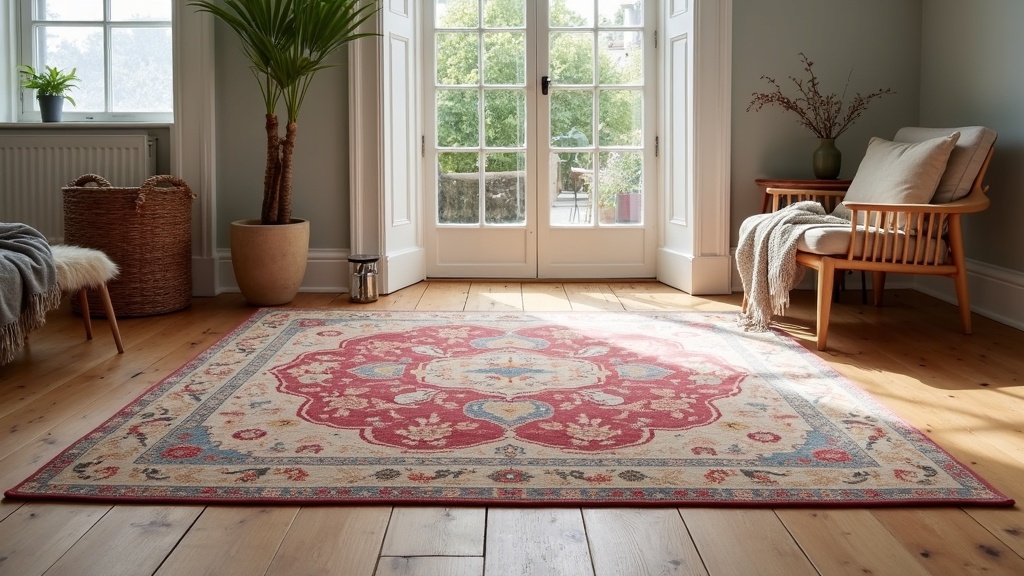
“Oriental rug” is a broad geographic umbrella term covering hand-knotted and hand-woven rugs from a wide stretch of Asia — Iran, Turkey, the Caucasus, Central Asia, Afghanistan, Pakistan, India, China. “Persian rug” is narrower: it refers specifically to rugs woven in Iran, historically called Persia. Every Persian rug is technically an Oriental rug, but not every Oriental rug is Persian — and neither label, on its own, tells you whether a specific piece is hand-knotted, machine-made, antique, or brand new.
That last point trips up more shoppers than anything else. The terms describe geography and tradition, not construction quality, and retailers have used both loosely for over a century. Understanding what each word is actually claiming — and what it isn’t — is the first step to figuring out what’s really in front of you.
What “Oriental” Actually Covers
“Oriental rug” is a Western trade term, not a designation used within any single weaving culture. It was coined generically to describe rugs coming from “the East” and, over time, settled into covering hand-knotted and flat-woven rugs from a huge range of regions: Iran, Turkey, the Caucasus (Azerbaijan, Armenia, Georgia), Central Asia (Turkmenistan, Uzbekistan), Afghanistan, Pakistan, India, China, and Tibet. These are wildly different weaving traditions with their own knot structures, wool sources, dye histories, and design vocabularies. Calling a Turkmen tribal rug and a Chinese silk rug both “Oriental” is accurate in the loosest sense, but it groups together pieces that have almost nothing in common beyond continent of origin.
Because the term is so elastic, it gets attached to almost anything with a certain look — including machine-made rugs manufactured in Belgium or Turkey that simply borrow Persian or Turkish-style motifs. The pattern on a rug and the place it was actually made are two separate questions, and the word “Oriental” answers neither reliably.
What “Persian” Actually Means
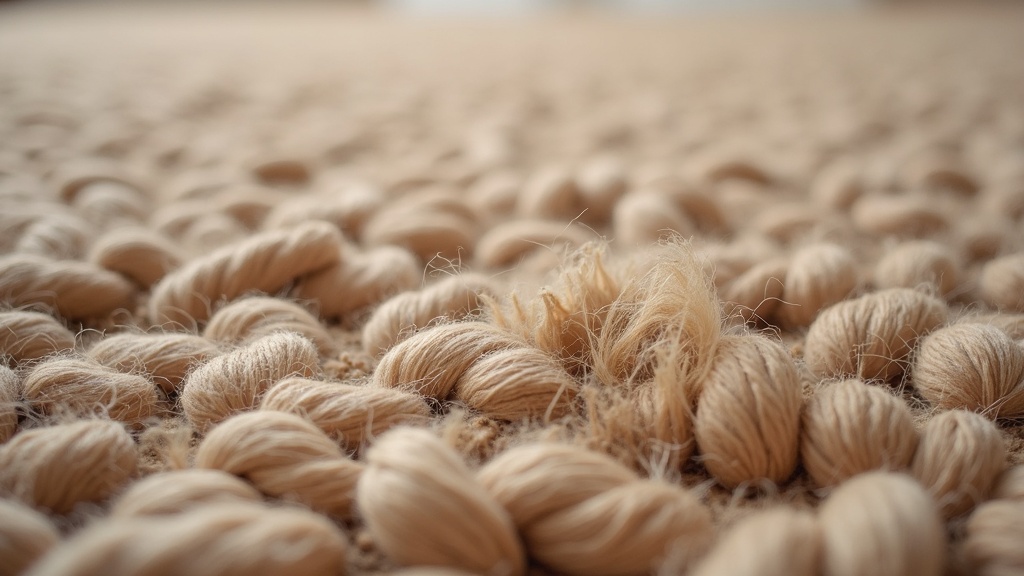
“Persian rug” is a national and geographic term specific to Iran (Persia was the country’s name in the West until 1935; the rug trade kept the older word). But “Persian” is itself an umbrella over dozens of distinct regional weaving traditions, each with its own city or workshop name, knot type, and design language: Tabriz, Kashan, Heriz, Qom, Isfahan, Kerman, Nain, and many more. A Heriz and a Qom rug can differ enormously in knot density, wool quality, and pattern — the shared label “Persian” tells you the country of origin, not the specific tradition, materials, or age. It’s a bit like “French wine”: true as a category, but not remotely enough information to know what you’re actually holding.
Where the Confusion Comes From
Retail marketing is the main source of the mix-up. Rugs described as “Oriental style” or “Persian style” are frequently machine-made, produced with synthetic fibers on power looms, and priced accordingly — a machine-made wool-blend rug in a common living-room size might sit somewhere in the low hundreds, while a hand-knotted wool rug of comparable size, depending on age, origin, and knot density, can run into the thousands. Both can carry a Persian-looking medallion pattern. The pattern tells you almost nothing about how the rug was actually constructed, which is the real driver of both durability and value. The most reliable way to sort this out is to look past the design and examine construction directly, which is covered in detail in our guide to telling a handmade rug from a machine-made one and in our comparison of hand-knotted versus hand-tufted construction.
| Term | What it describes | What it does NOT tell you |
|---|---|---|
| Oriental | Broad Western trade term for rugs from across Asia | Construction, age, materials, or specific region |
| Persian | Rugs made in Iran, across many regional traditions | Which city/workshop tradition, knot count, or era |
| Oriental-style / Persian-style | A design borrowed for a machine-made or reproduction rug | Country of manufacture or hand-knotted status |
Does the Label Tell You Anything About Value?
Not by itself. What actually determines a rug’s value is a combination of factors an appraiser looks at directly, and none of them can be read off a marketing label. Those factors include the knot type and knots-per-square-inch, the foundation material (cotton, wool, or silk warp and weft), the character of the dyes (natural dyes tend to show subtle variation and controlled fading; some early synthetic dyes bleed or shift oddly), the wear pattern across the pile, and the finishing at the selvedge (the woven edge) and fringe, which is usually an extension of the foundation on a genuinely hand-knotted piece rather than glued or sewn on separately. A perfectly even, machine-uniform back, a printed pattern with no knots visible, or a fringe that’s obviously sewn on afterward are all signs pointing toward a machine-made rug or reproduction rather than a hand-knotted one.
None of this is something we can determine from a description or a photo, and we won’t render a verdict on what a specific rug is, where it’s from, or what it’s worth — that requires physical inspection. If money is genuinely at stake, an in-person appraisal by a qualified rug appraiser is the only reliable path, and our rug craft hub and value and authentication archive go deeper into the specific criteria appraisers use.
How to Start Figuring Out What You Actually Have
Before assuming a rug is either “Persian” or generically “Oriental,” it helps to look at the object itself rather than the label it was sold under. Turn it over and look at the back: hand-knotted rugs show individual knots and slight irregularity; machine-made rugs typically show a uniform, mesh-like backing. Bend a corner back and look at the pile depth and knot spacing. Check whether the fringe is a continuation of the foundation threads or something stitched on separately afterward. These are the same checks laid out step by step in our comparison of handmade versus machine-made construction, and they matter far more to both durability and resale value than whatever regional name appears on a tag.
Care Depends on Construction, Not on the Label
This is the part where the terminology genuinely matters for practical reasons: a hand-knotted wool Persian rug and a machine-made “Oriental-style” synthetic rug can look similar from across the room but need completely different handling. A few things hold true regardless of label. Chlorine bleach destroys both wool and silk fibers and should never touch either. Hot water and alkaline or high-pH cleaners cause wool to felt, shrink, and yellow, so any wool rug should be cleaned with cool water and a wool-safe, pH-neutral detergent, applied by blotting rather than saturating. Silk is damaged by water and by most detergents and should generally be handled by a professional rather than cleaned at home. Natural dyes, and some early synthetic ones, can bleed or migrate when wet, which is one more reason to test any treatment on a hidden corner first. Never mix cleaning chemicals — combining bleach and ammonia-based products, for instance, produces dangerous fumes and won’t do anything good for the fibers either.
If a rug is hand-knotted, antique, silk, or you’re simply not sure of its construction, the safest and most honest recommendation is to take it to a professional rug cleaner or conservator rather than experiment. Our guide on cleaning a wool rug without ruining it and the broader rug care hub cover routine maintenance, stain response, and storage in more depth.
Frequently asked questions about Persian vs Oriental rugs
Is a Persian rug the same thing as an Oriental rug?
No. Persian rugs are a subset of Oriental rugs — Oriental is the broad geographic term covering rugs from across Asia, while Persian specifically means woven in Iran. All Persian rugs are Oriental rugs, but most Oriental rugs are not Persian.
How do I know if my rug is really Persian?
You can’t determine origin from pattern alone. Examine knot type, foundation material, dye behavior, and finishing details on the back and edges, or, for anything of potential value, have it examined in person by a qualified rug appraiser who can assess these features directly.
Are all Oriental rugs handmade?
No. “Oriental” and “Oriental-style” are often used for machine-made rugs manufactured with power looms and synthetic fibers, sometimes far from the regions the term traditionally refers to. Checking the back of the rug for knot structure is the most reliable way to tell.
Why are Persian rugs often described as expensive?
Hand-knotted rugs in general take enormous time and skilled labor to produce, and quality wool or silk and natural dyes add further cost. Prices vary hugely by knot density, size, age, and condition, so any specific figure is only ever illustrative, not a market rate.
What’s the difference between Persian and Turkish rugs?
Both are hand-knotted traditions but from different countries, with different typical knot types (Persian rugs commonly use an asymmetric knot, Turkish rugs a symmetric one), different regional motifs, and different wool and dye histories. Neither is inherently “better” — they’re distinct traditions.
Rug Academy publishes general information about rugs and is not a dealer, appraiser, or cleaning service. Cleaning and repair methods depend entirely on fibre, dye and construction — test any treatment on a hidden corner first, and consult a professional rug cleaner or conservator before treating a hand-knotted, antique, silk, or valuable rug, as damage from cleaning is usually permanent. Any prices mentioned are illustrative examples only, and nothing here is an appraisal, an authentication, or a guarantee of a rug’s origin or value.