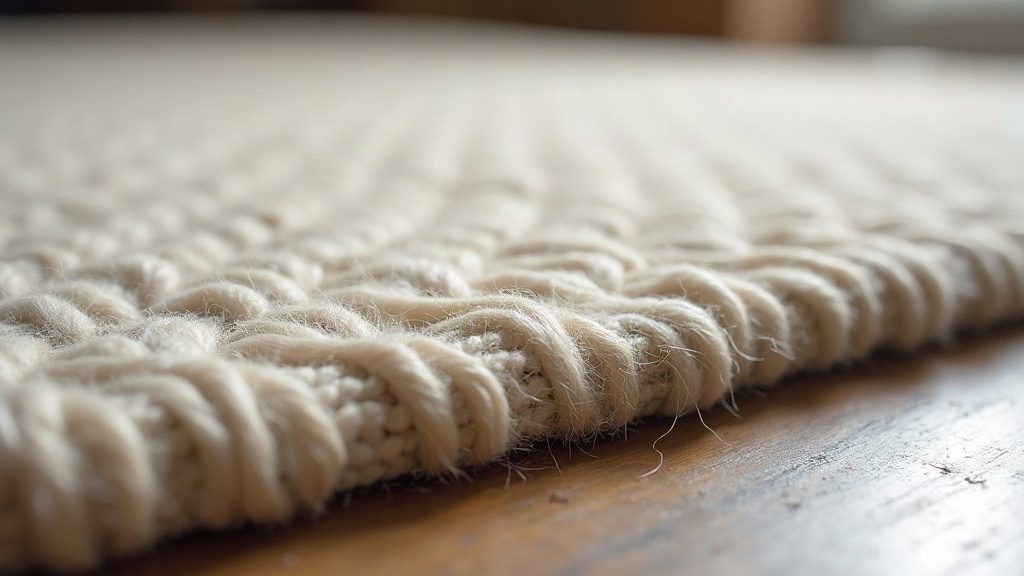
A loose rug binding can usually be reattached by hand, but only if the binding is sewn-on tape. If the edge is a machine-serged (overlocked) finish that’s coming apart, hand stitches will not hold it — that edge needs to go back under a sewing machine, or a repair technician’s version of one. Get this wrong and the fix often fails within a few weeks.
Binding is the narrow strip of fabric or the wrapped stitching that finishes the long sides of a rug. It is not the same as fringe, which is the knotted warp ends at the short sides, or the selvedge, the reinforced edge cord along the sides of a hand-knotted piece. Binding shows up mostly on machine-made rugs, tufted rugs, and some flatweaves. Understanding which kind you have is the whole repair.
Two kinds of binding, two different repairs
Most rug bindings fall into one of two categories.
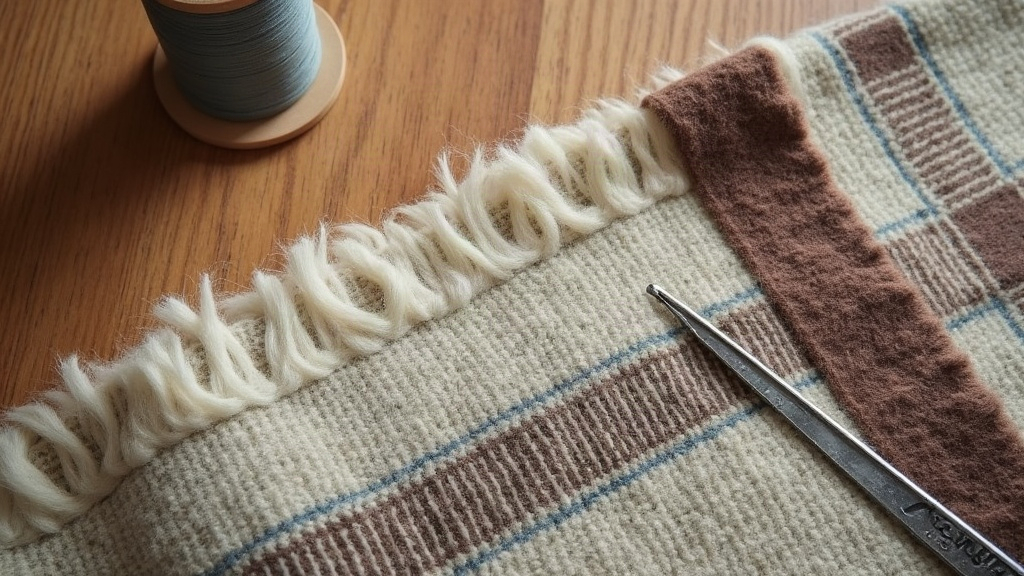
- Sewn-on tape binding. A separate strip of cotton twill tape, or sometimes a wool or nylon blend tape, is folded over the raw edge and stitched down. This is common on tufted rugs and on many flatweaves. When it comes loose, you’ll see the tape lifting away while the stitching holes are still intact.
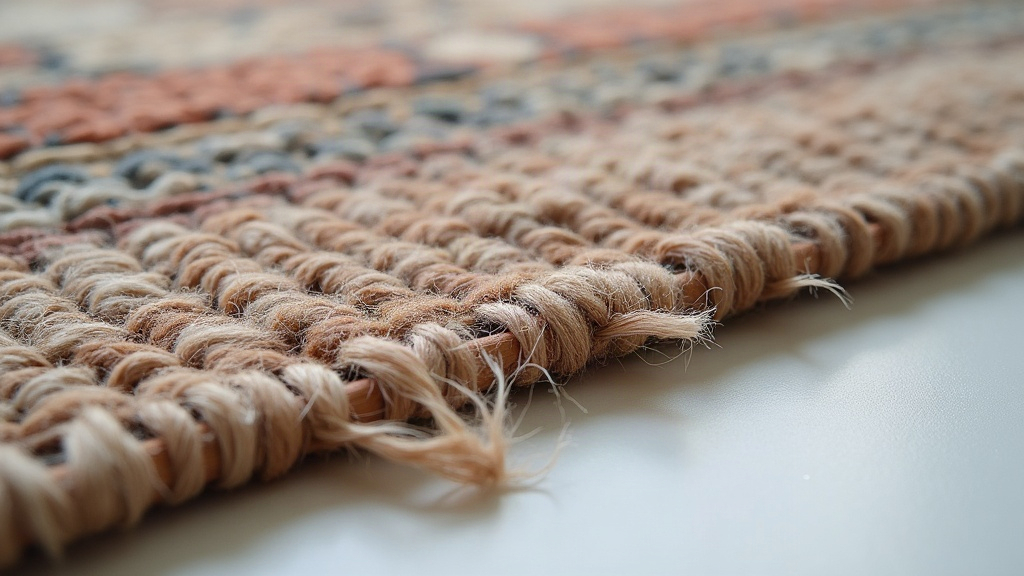
- Machine-serged (overlocked) edge. The rug’s own edge yarns are looped and locked by a serger, the same kind of machine that finishes seams on clothing. There’s no separate tape. When this fails, the thread loops pull free one after another, and the pile at the edge starts to shed loose fibers.
The visual difference matters more than it looks like it should. Tape binding has a visible seam and a folded edge you can lift with a fingernail. A serged edge looks like a continuous rope of thread wrapped around the rug’s border, with no separate strip underneath.
The decision rule
Here is the rule that actually determines whether a repair holds.
| Binding type | Correct repair | Why hand stitching alone fails |
|---|---|---|
| Sewn-on tape (cotton twill or similar) | Hand whipstitch, using the existing needle holes as a guide | N/A — this is the right method |
| Machine-serged edge, small section (a few inches) | Hand whipstitch as a temporary hold, then professional re-serging | Hand stitches don’t recreate the interlocking loop structure, so the unraveling resumes at the next stitch |
| Machine-serged edge, unraveling along a length | Re-serge on a machine, done by a rug repair shop | A serged edge relies on a continuous locked-loop stitch; hand thread can only tack it down, not rebuild the lock |
In short: tape binding is a hand-sewing job. A failing serged edge is a machine job. Treating a serged edge like tape binding is the single most common reason these repairs come undone fast — often within a month of normal foot traffic.
Reattaching sewn-on tape binding by hand
This part genuinely is a simple repair, and most people can do it in under an hour for a loose section a foot or two long.
- Vacuum the area gently first, without a beater-bar attachment — beater bars catch loose binding and pile and make the damage worse, as covered in our note on vacuuming around fringe and loose edges.
- Choose a heavy-duty polyester or waxed linen thread, doubled, in a color close to the tape.
- Use a curved upholstery needle if you have one — it makes stitching through a folded edge much easier than a straight needle.
- Fold the tape back into its original crease and work a whipstitch through the existing needle holes, roughly 6 to 8 stitches per inch, matching the original spacing where you can see it.
- Knot off and tuck the tail under the tape rather than cutting it flush, so it doesn’t work loose.
Test any solvent or spot cleaner on a hidden corner before treating the area near the repair, since dirt buildup along an edge sometimes gets mistaken for damage. If the rug is wool, use a wool-safe detergent in cool water only; hot water and high-pH cleaners cause wool to felt and shrink. If it’s silk, or you’re not sure what it is, skip cleaning it yourself and see a professional — silk is damaged by water and by most household detergents. Our rug care hub covers safe cleaning by fiber type in more depth.
When to call a repair shop instead
Send the rug out rather than attempting a hand fix when any of the following applies:
- The edge is machine-serged and unraveling along more than a few inches.
- The rug is hand-knotted, antique, or made of silk — in these cases the “binding” you’re seeing may actually be selvedge or overcast edge finishing tied into the weave structure itself, and a wrong repair can distort the rug’s shape permanently.
- You can’t tell what construction the rug is. Guessing wrong here is how a $40 fix turns into a $400 problem.
- The rug has resale or sentimental value you don’t want to risk.
A rug repair specialist re-serges an edge on a machine built for carpet binding, matching stitch tension and thread weight to the pile. Turnaround and cost vary a lot by shop and rug size — a short section might run in the low tens of dollars, a full-perimeter re-bind on a larger rug considerably more — so treat any number you hear as a starting estimate, not a quote. For guidance on what a conservator does differently from a general cleaner or repair shop, see our piece on what a rug conservator does that a cleaner doesn’t.
The American Institute for Conservation maintains a directory and general guidance for finding a qualified textile conservator, which is worth consulting before handing an antique or valuable piece to a general repair shop (culturalheritage.org). For background on how edge and binding treatments differ across construction types, the Carpet and Rug Institute publishes general consumer information on carpet and rug edge finishing methods (carpet-rug.org).
Related edge problems worth knowing apart
Binding is only one of several edge issues that get lumped together. Curling corners are usually a foundation or humidity issue, not a binding one — see fixing curling and damaged selvedge. Fraying at the ends is fringe damage, addressed separately in our guide to repairing frayed rug fringe. And general wear along the outer few inches of a rug, apart from the binding itself, is covered in restoring a rug’s worn edges. If you’re weighing whether any of this is worth doing at all versus living with it, our article on when a damaged rug is worth repairing lays out the trade-offs. For the full range of structural repairs, browse the Repair & Restoration archive.
A loose binding, caught early, is one of the cheapest rug problems to fix. Left alone, it lets the pile at the edge start shedding and unraveling into the rug itself, which is a much bigger job. The five minutes it takes to check whether your binding is tape or serge decides which repair actually works.
Rug Academy publishes general information about rugs and is not a dealer, appraiser, or cleaning service. Cleaning and repair methods depend entirely on fibre, dye and construction — test any treatment on a hidden corner first, and consult a professional rug cleaner or conservator before treating a hand-knotted, antique, silk, or valuable rug, as damage from cleaning is usually permanent. Any prices mentioned are illustrative examples only, and nothing here is an appraisal, an authentication, or a guarantee of a rug’s origin or value.