
Humidity is one of the hardest environments for a rug to live in, because moisture in the air keeps a rug’s foundation and pile from ever fully drying out, which invites mold, mildew, dye bleed and a slow weakening of the fibres themselves. The fix is mostly about airflow, moisture control and choosing the right rug pad and cleaning method for the fibre you actually own — not about scrubbing harder. Get the humidity managed first, and most other problems become far easier to prevent.
Why humidity is genuinely risky for rugs
Wool, cotton, jute and silk are all organic materials that absorb moisture from the air, not just from spills. In a humid room, a rug’s foundation — the warp and weft threads hidden beneath the pile — can stay damp for days, especially where it sits against a slab floor, tile, or a poorly ventilated wood subfloor. That trapped moisture is exactly what mold and mildew need to establish themselves, and it’s also what allows natural and some early synthetic dyes to migrate slightly, softening the crispness of a pattern over time. For a broader look at how sun exposure and moisture interact to affect rugs over the long term, see our guide to sun, humidity and rugs.
The risk isn’t distributed evenly across fibres. Wool tolerates some ambient moisture reasonably well as long as air can move through it, but it felts and shrinks if it’s ever saturated with hot water. Jute and sisal are far more vulnerable — they absorb water readily, they’re slow to dry, and they can develop a musty smell or visible mold with surprisingly little exposure, which is one of several reasons plant-fibre rugs are a poor match for bathrooms, mudrooms and covered porches without real airflow. Silk is the most delicate of the common rug fibres and should be kept away from damp conditions altogether; if you’re at all unsure whether a rug contains silk, treat it as silk until a professional tells you otherwise.
Airflow matters more than any product
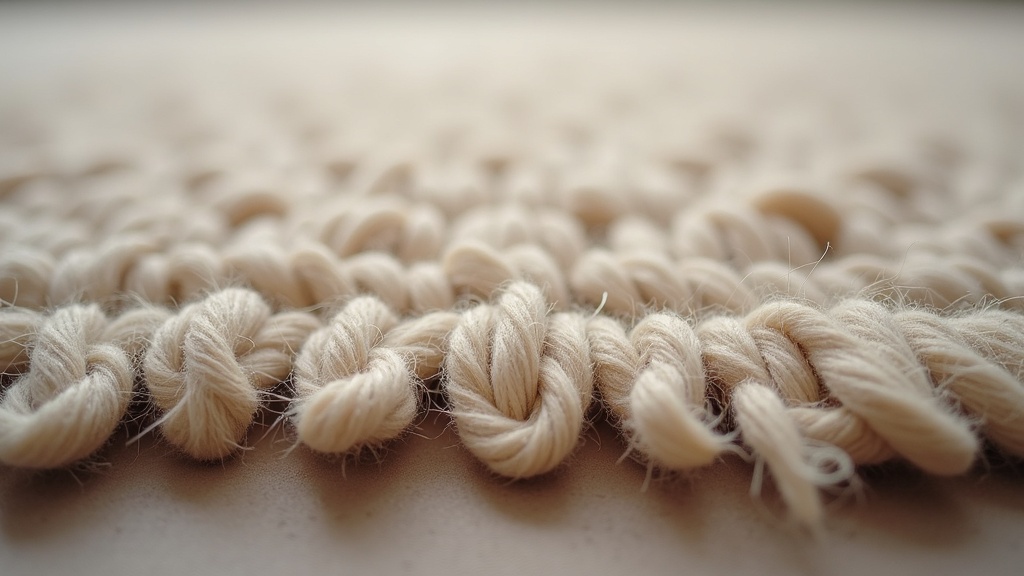
The single most effective thing you can do in a humid climate is keep air moving under and around the rug. A rug pressed flat against tile or vinyl with no ventilation traps moisture against its underside, and that’s where mold typically starts — often invisibly, on the back, before it’s noticeable on the face. A breathable rug pad designed for the specific floor underneath, rather than a solid rubber mat that seals moisture in, makes a real difference; our breakdown of rug pads by floor type covers which materials suit hardwood, tile and carpet without trapping damp air.
Running a dehumidifier or air conditioner to keep indoor relative humidity below roughly 50–55% is one of the more reliable long-term interventions, since it addresses the cause rather than the symptom. Ceiling fans, open windows on dry days, and simply lifting furniture off the rug periodically to let light and air reach the pile all help. Rotating the rug every few months also evens out wear and moisture exposure rather than letting one area sit damp and shaded indefinitely.
Cleaning and drying: what’s safe, and what isn’t
Regular, gentle vacuuming is the most useful routine maintenance step in a humid climate, because it removes the dust and organic debris that mold feeds on. Use a vacuum without a beater bar, or run it on a bare-floor or low setting, since beater bars catch and pull at fringe and loose pile — a point covered in more detail in our piece on vacuuming rugs without damaging fringe.
If a rug does get damp — from a spill, a leak, or a period of high humidity — dry it as quickly as possible with fans and, if practical, sunlight on the back of the rug rather than direct sun on a dyed face for extended periods. Do not use hot water, steam cleaners, or high-pH detergents on a wool rug to try to “sanitize” it; heat and alkalinity are what cause wool to felt, shrink and yellow, and that damage is not reversible. Never reach for chlorine bleach on wool or silk, and never combine ammonia with other household cleaners in an attempt to kill mold or odour — the fumes are hazardous and the chemical damage to dyes and fibre can be immediate and permanent. If a rug smells musty, address the moisture source first; our guide on how to deal with a musty-smelling rug walks through safe drying and odour steps by fibre type.
For plant-fibre rugs such as jute and sisal, water is the enemy rather than the ally — these fibres swell, stain and can develop permanent brown “water rings” from even modest dampness, and they should never be soaked or steam-cleaned. Our dedicated guide to cleaning a jute or sisal rug safely covers dry-cleaning methods appropriate to these fibres. As a general rule for any rug, test any product on a hidden corner first — an edge under furniture is ideal — and wait to see how the dye and fibre respond before treating a visible area.
When to call a professional instead
Hand-knotted, antique, silk, or simply valuable rugs should go to a professional rug cleaner or textile conservator rather than being treated at home in a humid climate, because the risks compound: a foundation that’s already slightly damp is more vulnerable to shrinkage if it’s then saturated during a well-meaning home cleaning attempt, and dyes that have already begun to soften from ambient moisture bleed more readily under water or detergent. A conservator can also assess whether mold has affected only the surface or has reached the foundation, which changes the entire treatment approach; our article on what a rug conservator does that a cleaner doesn’t explains the distinction. If you’re uncertain what your rug is even made of, that uncertainty itself is a reason to get an expert opinion before doing anything more than vacuuming.
Storage and rotation in a humid environment
If a rug needs to be stored — during a renovation, a move, or a seasonal changeover — it must be completely dry before rolling, never folded, and ideally wrapped in breathable cotton rather than plastic, which traps residual moisture against the fibres. A closed plastic wrap in a humid climate is close to a guarantee of mold given enough time. Our guide to storing a rug long-term safely covers the specifics of rolling direction, wrapping materials and where to store rolled rugs to avoid damp basements or uninsulated attics, both of which are common trouble spots.
Signs it’s time to act
- A musty or “basement” smell that persists even after airing the room out
- Discoloured patches, especially near walls, under furniture, or along edges that sit against damp flooring
- A powdery white or greenish bloom on the rug’s back or fringe
- Dye that seems softer or slightly blurred at pattern edges compared with when the rug was new
- Stiffness or a slightly crunchy texture in the foundation, which can indicate the backing has been affected by moisture
Any of these warrant a closer look, and mold or suspected foundation damage in particular is a case for a professional rather than a home remedy — mixing cleaning products to “kill” mold risks both your health and the rug’s dyes, and surface treatment alone won’t resolve mold that has reached the foundation.
Frequently asked questions about rug care in a humid climate
Can I use a dehumidifier to protect a rug from mold?
Yes — keeping indoor relative humidity around 50–55% is one of the most effective ways to prevent mold and mildew in rugs, since it removes the damp conditions these organisms need. Pair it with good airflow under the rug and regular vacuuming for the best results.
Why does my rug smell musty even though it looks clean?
A musty smell usually means moisture has reached the foundation or backing even if the surface looks fine, often from humidity trapped underneath the rug rather than a visible spill. It’s worth checking the underside and improving airflow before assuming the smell will fade on its own.
Is it safe to put a jute or sisal rug in a humid room?
Plant-fibre rugs like jute and sisal absorb moisture readily and dry slowly, making them a poor fit for bathrooms, covered porches or other consistently humid spaces without strong ventilation. They’re prone to staining, swelling and mold in these conditions.
Will a rug pad help with humidity problems?
A breathable rug pad can help by allowing air to circulate under the rug rather than trapping moisture against the floor, which is where mold often starts unnoticed. Solid, non-breathable rubber pads can make humidity problems worse rather than better.
Should I try to clean mold off a rug myself?
Light surface mold on a synthetic or low-value rug might respond to careful vacuuming and thorough drying, but mold on a wool, silk, hand-knotted, or valuable rug should be assessed by a professional first. Home remedies involving bleach or ammonia can permanently damage dyes and fibres and don’t address mold in the foundation.
Rug Academy publishes general information about rugs and is not a dealer, appraiser, or cleaning service. Cleaning and repair methods depend entirely on fibre, dye and construction — test any treatment on a hidden corner first, and consult a professional rug cleaner or conservator before treating a hand-knotted, antique, silk, or valuable rug, as damage from cleaning is usually permanent. Any prices mentioned are illustrative examples only, and nothing here is an appraisal, an authentication, or a guarantee of a rug’s origin or value.