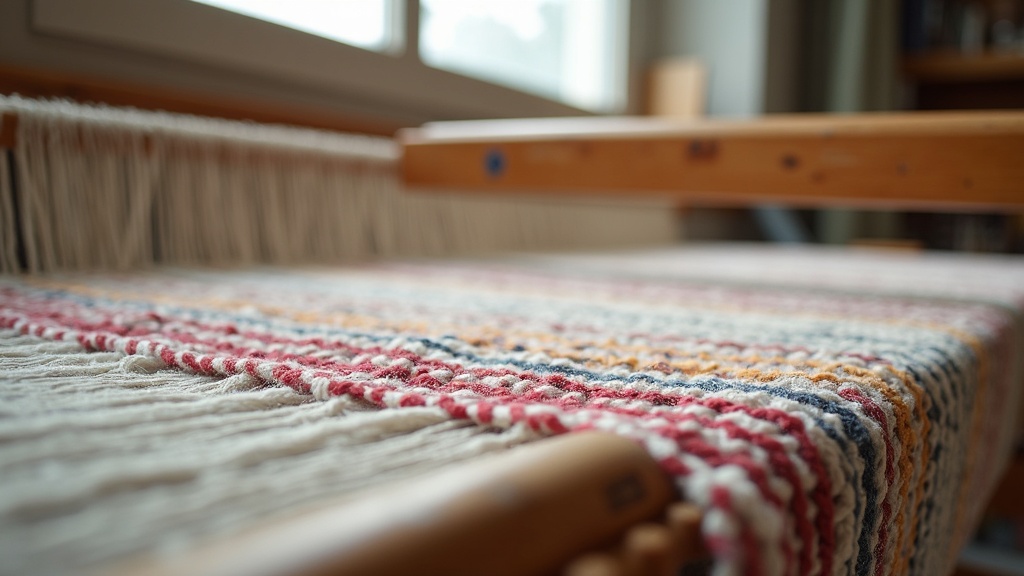
Every woven rug is built from three elements: the warp (the vertical foundation threads held under tension on a loom), the weft (the horizontal threads that pass over and under the warp to lock everything together), and the pile (the tufts or loops of yarn knotted or woven in to create the surface you walk on). Flatweaves like kilims skip the pile entirely and rely on weft alone for pattern. Understanding how these three parts interact explains why a rug feels the way it does, why it wears the way it does, and why some cleaning methods that are perfectly safe on one rug will ruin another.
The three-part structure, in plain terms
Picture a loom strung top to bottom with parallel threads under tension — that’s the warp. It never shows on the surface of a finished rug except at the ends, where it becomes the fringe. The weft threads run left to right, woven through the warp row by row, and in a pile rug they’re beaten down between rows of knots to hold everything in place. The pile is the third layer: individual short lengths of yarn tied around pairs of warp threads (the knot), then cut to an even height. Density, tightness, and the material of each of these three parts together determine how a rug looks, feels, drapes, and ages.
Warp: the hidden skeleton
The warp is the rug’s structural skeleton, and its material matters more than most buyers realise. Cotton warp is common in mid-to-lower cost hand-knotted rugs because it’s strong, inexpensive, and doesn’t stretch much. Wool warp shows up in many older tribal and nomadic weavings and tends to be a little more elastic, which affects how the rug lies flat. Silk warp appears in fine city-workshop pieces and allows extremely high knot density because the threads can be spun so thin. When a rug won’t lie flat or has started to ripple, the problem often traces back to warp tension or foundation damage rather than the pile — a distinction covered in more detail in our piece on rug buckling and rippling causes and fixes.
Weft: what locks the structure together
The weft threads are what a weaver “throws” and beats down after every row or two of knots, compacting the structure and squaring up the design. How many passes of weft go in between knot rows affects the rug’s stiffness and its ability to hold fine curves in a pattern — a single weft pass typically gives a looser, more flexible rug, while double or triple wefting produces a denser, stiffer one often associated with certain regional traditions. This is one reason experienced appraisers turn a rug over and examine the back closely: the weft and knot structure visible there tells you far more about construction than the pile ever will. If you want to go deeper on how these traditions differ by weaving culture, the rug craft hub is the place to start.
Pile: the part everyone touches
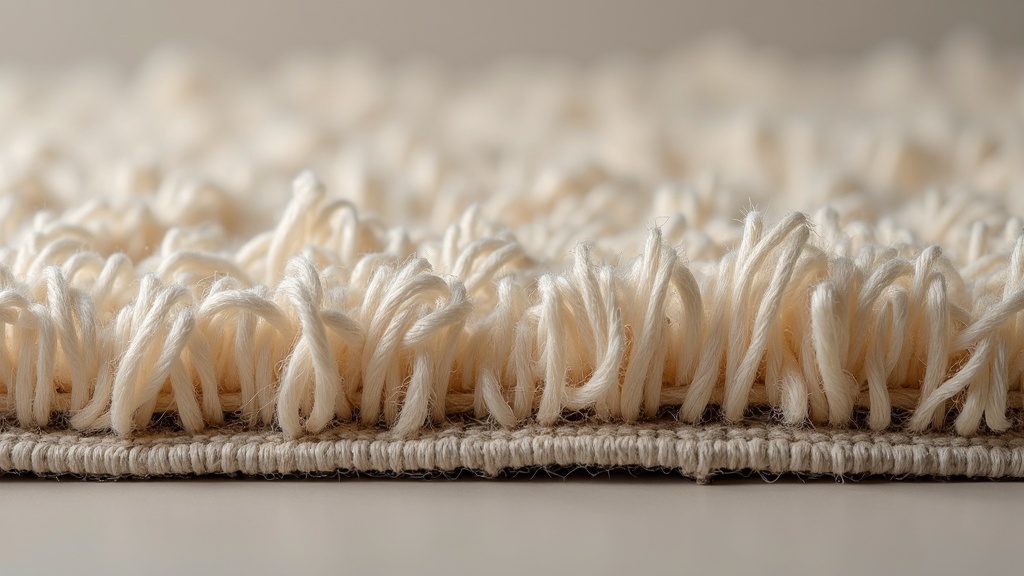
Pile is the surface layer, made by knotting yarn around the warp and trimming it to height, or in flatweaves, simply by the weft pattern itself with no pile at all. Wool is the most common pile fibre for hand-knotted rugs because it’s resilient, hides soil, and takes dye well; silk pile gives extraordinary sheen and fine detail but is soft and easily crushed or abraded; synthetic piles like polypropylene or nylon dominate machine-made rugs because they’re cheap and stain-resistant but don’t develop the same depth of colour or patina over time. Pile height and twist also matter: a low, tightly knotted pile shows pattern crisply and wears slowly, while a longer, loosely spun pile feels plush underfoot but flattens and sheds faster. The distinction between piled construction and flat weaving is explained further in flatweave vs pile rugs: which suits your room.
Why this anatomy is what appraisers actually look at
We can’t tell you what your specific rug is, where it was made, or what it’s worth from a description — that requires seeing the piece in person, and even experienced appraisers reserve judgment until they have it in hand. What we can explain is what they’re looking at when they do. Appraisers examine knot type (symmetrical versus asymmetrical) and knot density, foundation material front and back, the character of the dyes under raking light, wear patterns across the pile, and how the selvedge (the woven edge) and fringe are finished, since these are hand-finished on knotted rugs and often glued, serged, or sewn-on in machine-made ones. A perfectly uniform pile, a printed-looking pattern with no knot texture on the back, or a fringe that’s obviously stitched onto a solid edge are common signs of machine manufacture rather than hand-knotting, though the only way to know for certain what you own is an in-person look from a qualified appraiser. Our guides on telling handmade from machine-made rugs, what “hand-loomed” actually means, and whether knot density really matters walk through these clues in more depth, and higher knot counts are not automatically better — see our piece on knot count myths for why.
Why anatomy dictates how you can safely clean a rug
This is the part where anatomy stops being academic and starts protecting your rug. The foundation material — cotton, wool, or silk warp and weft — determines whether the rug can tolerate moisture at all. A wool pile rug on a cotton foundation can often be blotted with cool water and a wool-safe, pH-neutral detergent for a fresh spill, tested first on a hidden corner such as the back edge or under a piece of furniture. That same treatment is not safe on a silk rug, where water and most detergents cause staining, tide lines and fibre damage, and it’s not safe on a wool rug with unstable natural dyes, which can bleed the moment they get wet. Hot water and high-pH or alkaline cleaners will cause wool to felt, shrink and yellow regardless of how careful you are with technique, and chlorine bleach and ammonia should never touch wool or silk, or be mixed with any other cleaning product — the fumes and chemical reactions can be dangerous and the fibre damage is typically permanent. Saturating a hand-knotted rug, steam cleaning it, or running it through a washing machine can shrink the foundation unevenly and buckle the whole structure beyond simple flattening. If the rug is hand-knotted, antique, silk, or you’re not sure what the foundation or pile fibre actually is, the safest and most honest advice is to stop and call a professional rug cleaner or conservator rather than guess. Our guides on cleaning a wool rug safely and the rug care hub cover routine maintenance, and beater-bar vacuums deserve their own caution too, since they can pull at fringe and loosen pile regardless of what the rug is made from.
Reading the anatomy yourself
- Fold a corner back gently and look at the knots on the reverse — visible individual knots generally indicate hand-knotting, while a uniform woven or latex-backed surface suggests machine or tufted construction.
- Check whether the fringe is continuous with the warp (pulled through and finished by hand) or stitched onto a folded edge, a common sign of a lower-cost or machine-made piece.
- Feel the pile height and density; a tightly packed, low pile with a defined pattern on the back usually means a denser, more durable weave than a long, loose pile with a blurry reverse.
Frequently asked questions about warp, weft and pile
What’s the difference between warp and weft on a rug?
Warp threads run the length of the rug under tension on the loom and become the fringe at each end; weft threads run across, woven between rows of knots to hold the structure together. Warp forms the hidden skeleton, while weft locks the pile and pattern in place.
What does “pile” mean on a rug?
Pile is the surface layer of a rug made from individual knotted or looped yarn tufts trimmed to an even height. Flatweaves have no pile at all, while hand-knotted and tufted rugs vary widely in pile height, density and fibre, all of which affect look, feel and durability.
Why do some rugs have fringe and others don’t?
Fringe on a genuine hand-knotted rug is simply the exposed warp thread, an extension of the actual structure. Some machine-made rugs have fringe sewn onto a finished edge purely for appearance, which is one visual clue, among several, that appraisers use when assessing construction.
Is a higher knot count always a sign of better quality?
Not necessarily. Knot density affects pattern definition and durability, but wool quality, dye stability, foundation material, and finishing all matter just as much. A lower-knot-count tribal rug in good wool can outlast a very fine but poorly finished piece.
How do I know if my rug is hand-knotted or machine-made?
Check the back for individually visible knots versus a uniform woven or backed surface, look at the fringe attachment, and feel for slight irregularities in the pile that machines don’t replicate. These are useful clues, but a qualified appraiser is the only reliable way to confirm construction.
Rug Academy publishes general information about rugs and is not a dealer, appraiser, or cleaning service. Cleaning and repair methods depend entirely on fibre, dye and construction — test any treatment on a hidden corner first, and consult a professional rug cleaner or conservator before treating a hand-knotted, antique, silk, or valuable rug, as damage from cleaning is usually permanent. Any prices mentioned are illustrative examples only, and nothing here is an appraisal, an authentication, or a guarantee of a rug’s origin or value.