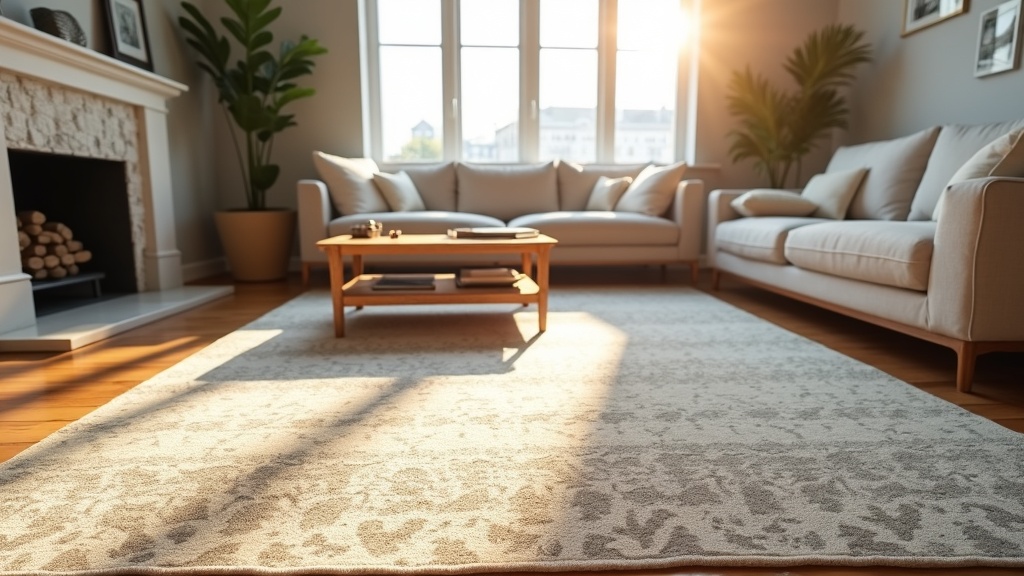
Rotating a rug means turning it 180 degrees (or occasionally 90) periodically so that sunlight, foot traffic, and furniture pressure hit different parts of the pile over time instead of always the same spot. Most rugs in an average room benefit from a rotation every six to twelve months, more often in high-sun or high-traffic areas. Skipping it doesn’t damage a rug outright, but it accelerates uneven fading, lopsided wear, and pile crushing that are far more noticeable — and far harder to reverse — than if the rug had aged evenly.
Why uneven exposure is the real problem
A rug rarely wears out all at once. It wears out in patches, and those patches form because the same section keeps getting the same treatment day after day. The end nearest a sunny window fades while the end under a bookshelf stays saturated in color. The path between the sofa and the hallway gets walked flat while the corners under a coffee table stay plush. Left in place for years, these differences become permanent and visible, especially on rugs with symmetrical medallion or border designs where one faded quarter throws off the whole piece.
Sun damage is a particular concern because ultraviolet light doesn’t just lighten dyes, it also weakens the fibre itself over time, making that section more prone to splitting and premature wear even after you finally do rotate it. If a rug sits in a room with strong natural light, pairing regular rotation with basic UV protection — window film, blinds during peak hours, or simply moving furniture off the brightest strip of floor — does more good than rotation alone. The mechanics of light damage and practical fixes are covered in more detail in our guide to protecting a rug from sun fading.
How often to rotate, realistically
There’s no single correct interval, because it depends on how the room is used, not a fixed calendar rule. A few practical benchmarks:
- High-traffic or high-sun rooms (entryways, sunrooms, living rooms with south-facing windows): every three to six months.
- Moderate-use rooms (dining rooms, bedrooms, home offices): roughly every six to twelve months.
- Low-traffic or shaded spaces (guest rooms, formal sitting rooms rarely used): once a year is usually enough.
- Rugs under furniture that never moves: rotate whenever you can, since indentation and shading build up regardless of foot traffic.
A useful trigger is simply seasonal — rotate the rug when the clocks change, or whenever you do a thorough vacuum before a change of season. Tying it to an existing habit is more reliable than trying to remember a schedule in isolation.
Symmetrical vs asymmetrical designs
Rugs with a clear directional design — a one-way scene, a border meant to face one way in the room, or a runner that reads top-to-bottom — are harder to rotate fully without the pattern looking upside down to anyone entering the room. In these cases, a 180-degree rotation may not always be practical, and shifting the rug a few inches along its length, or swapping which end sits nearest the window, can still spread out wear even if a full flip isn’t an option every time.
How to rotate a rug without causing damage
Rotation itself is low-risk compared to cleaning, but there are a few things worth doing properly:
- Lift and carry, don’t drag. Dragging a rug across a hard floor or over a rug pad can snag fringe, stress the foundation along one edge, and grind grit deeper into the pile. Two people lifting the rug, or rolling it partway to reposition, is safer for both the rug and the floor.
- Check the rug pad underneath. A pad that has hardened, shifted, or left a sticky residue should be addressed before you put the rug back down — a good pad also reduces the sliding and buckling that makes rotation feel like a chore in the first place. If you’re unsure whether your rug needs one at all, that’s covered in our guide to rug pads.
- Vacuum both sides while it’s up. This is the easiest moment to get grit and pet hair out of the backing, which matters for longevity regardless of fibre type. Use a suction-only setting or a handheld attachment rather than a beater bar on fringe or a loosely constructed pile — beater bars can fray fringe and pull at pile that isn’t firmly anchored, as explained in our piece on vacuuming a rug correctly.
- Smooth it flat before walking on it. A rug repositioned onto a hard floor or thick carpet can develop ripples or edges that don’t lie flat. If this becomes a recurring issue rather than a one-time settling, it may point to humidity, an unsuitable pad, or foundation issues worth reading up on in our guide to rug buckling and rippling.
- Inspect the underside. Rotation is a natural moment to check for moth larvae, webbing, or bald patches on the back of a wool rug, since these often go unnoticed on the topside until damage is advanced. Early signs and what can realistically be salvaged are detailed in our article on moth damage in wool rugs.
What rotation won’t fix
It’s worth being honest about the limits here. Rotation spreads out future wear; it doesn’t reverse wear that has already happened. A section of pile that’s already crushed flat by a heavy sofa leg, or a stretch of fringe already frayed by years of vacuuming, won’t recover just because the rug is turned around. Rotation is a preventive habit, not a repair. For fibre that’s already matted, or dye that’s already faded unevenly, the honest options are living with it, having a professional evaluate whether even shearing or reweaving is worthwhile, or accepting it as part of the rug’s character — a judgment call that depends heavily on the rug’s material and how it was made in the first place, topics covered across our rug care hub and in the protection and storage archive.
It’s also worth noting that rotation frequency reasonably differs by fibre and construction. A tightly woven wool pile handles repositioning and occasional flattening better than a loosely tufted or viscose-blend rug, which can shed or distort more easily when moved often. If you’re weighing durability against appearance when buying, our comparison of wool and synthetic rug lifespan goes into how fibre choice affects long-term wear patterns, including how much rotation can realistically help.
When wear patterns matter for value, not just looks
If a rug is hand-knotted, antique, or otherwise potentially valuable, wear patterns are actually part of what an appraiser examines — even, gradual wear across the pile reads very differently from a hard line of crushing where furniture sat for a decade, and both are visible clues about how a rug has lived, not just cosmetic flaws. This is not something to guess about from photos or general advice: if you’re trying to understand what a rug is worth, or whether uneven wear has affected that, an in-person appraisal from a qualified appraiser is the only reliable way to get an answer, since construction, dye character, and condition all interact in ways that are difficult to judge without handling the piece directly.
Frequently asked questions about rotating a rug
How often should you rotate an area rug?
Most rugs benefit from rotation every six to twelve months, with sunnier or busier rooms needing it closer to every three to six months. Tying it to a seasonal habit, like when you vacuum before a season change, makes it easier to remember consistently.
Does rotating a rug really prevent fading?
Yes, in the sense that it spreads sun exposure more evenly across the whole rug rather than concentrating it on one section. It doesn’t stop fading altogether, and pairing rotation with reduced direct sunlight through blinds or window film gives better long-term protection.
Can rotating a rug damage it?
Rotation itself is low-risk if you lift and carry the rug rather than dragging it, since dragging can snag fringe or stress the foundation along one edge. Two people lifting, or rolling the rug partway, is safer than pulling it across the floor.
Should you rotate a rug that’s under furniture?
Yes — rugs under furniture that never moves still develop shading and pile compression from constant pressure, even without foot traffic. Rotating when you can, or occasionally shifting furniture slightly, helps prevent a permanent indentation or discoloured patch.
Do all rugs need to be rotated the same amount?
No, fibre and construction matter. Tightly woven wool pile tolerates repositioning better than loosely tufted or viscose-blend rugs, which can shed or distort with frequent handling, so the right frequency depends partly on what the rug is made of and how it was constructed.
Rug Academy publishes general information about rugs and is not a dealer, appraiser, or cleaning service. Cleaning and repair methods depend entirely on fibre, dye and construction — test any treatment on a hidden corner first, and consult a professional rug cleaner or conservator before treating a hand-knotted, antique, silk, or valuable rug, as damage from cleaning is usually permanent. Any prices mentioned are illustrative examples only, and nothing here is an appraisal, an authentication, or a guarantee of a rug’s origin or value.