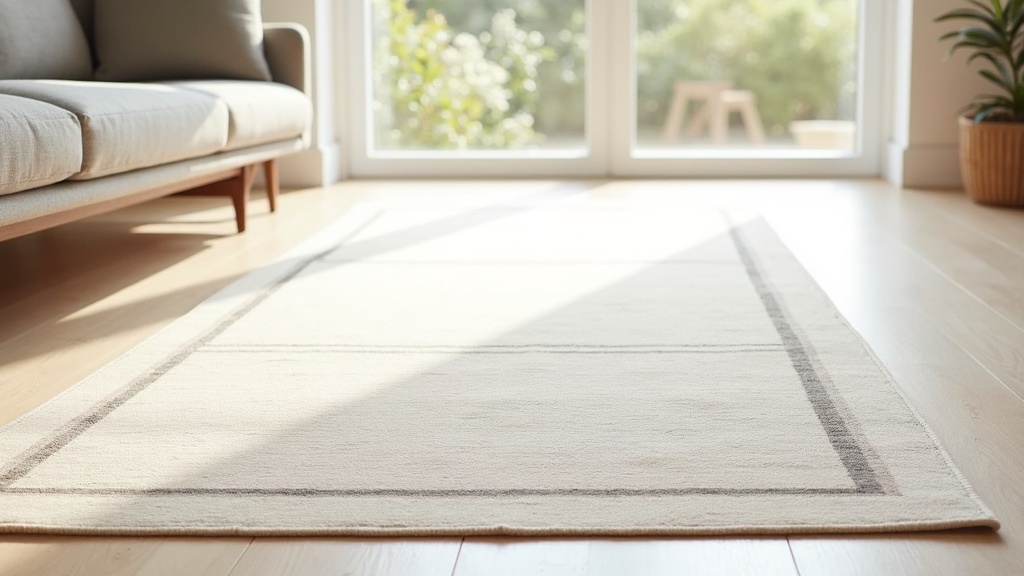
A wool-blend rug combines wool with one or more other fibres — most often nylon, polyester, viscose, or cotton — in the pile, the foundation, or both. The goal is usually to keep some of wool’s softness and resilience while lowering the price and, depending on the blend, improving stain resistance or colour vibrancy. Whether it is “worth it” depends on what you are comparing it to: a wool-blend rug is generally a reasonable middle ground between pure wool and pure synthetic, but it is rarely a substitute for a hand-knotted all-wool piece if longevity and resale value matter to you.
What “wool-blend” actually means
There is no single legal definition of a wool-blend rug, so the label covers a wide range of products. On a care label or product page, it usually means one of three things:
- Wool pile with a synthetic backing or foundation — the visible surface is wool, but the warp, weft, or backing is cotton, polyester, or a synthetic scrim, which is common in machine-made and hand-tufted rugs.
- Mixed yarn — individual strands are spun from wool fibre blended with nylon or polyester before weaving, so the blend is baked into every tuft rather than layered.
- Mixed-material pile — some areas of the design use pure wool and others use viscose or cotton for sheen or contrast, a technique common in higher-end transitional and contemporary rugs.
Construction matters as much as fibre content here. A wool-blend rug can be hand-knotted, hand-tufted, or power-loomed, and those methods behave very differently over time. If you are trying to work out which category a rug in front of you falls into, our guide to telling a handmade rug from a machine-made one walks through the tell-tale signs on the back and the fringe.
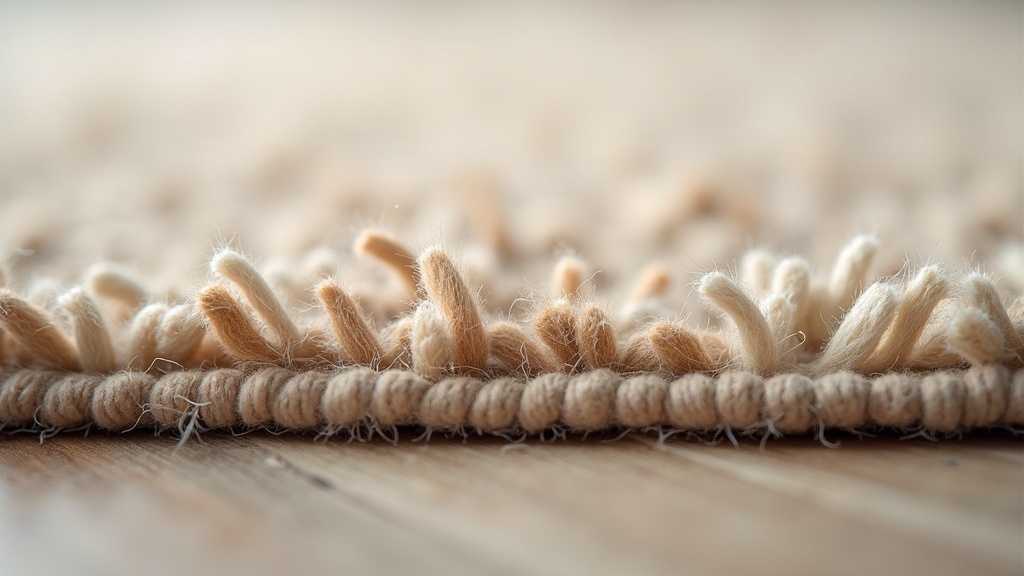
Why manufacturers blend wool in the first place
Pure new wool is expensive to source, spin, and dye, and on its own it can be more prone to crushing in high-traffic areas than people expect. Blending it with synthetic fibre lets a manufacturer:
- Lower the material cost per square metre while keeping a wool-like hand-feel on top.
- Add nylon for extra abrasion resistance in commercial or high-traffic residential settings.
- Add viscose or a similar fibre for extra sheen and colour depth, at some cost to durability — a trade-off explained in detail in our piece on why viscose rugs look great and age badly.
- Use cotton in the foundation to keep the rug flatter and cheaper to produce than a fully wool or silk foundation, a point covered further in our overview of where cotton rugs work and where they fail.
None of this is inherently deceptive. A well-made wool-blend rug is a legitimate, honestly engineered product — it is simply a different object from a 100% wool, hand-knotted rug, and it should be priced and expected to perform like one.
How wool-blend rugs perform in real rooms
| Factor | Wool-blend rug | 100% wool rug |
|---|---|---|
| Feel underfoot | Softer than pure synthetic, slightly less springy than pure wool | Dense, resilient, bounces back after furniture indentation |
| Stain resistance | Often improved if synthetic fibre is in the pile | Naturally stain-resistant due to wool’s lanolin and scale structure |
| Typical lifespan | Several years to a decade or more with normal care, depending on construction | Often decades, especially hand-knotted pieces |
| Price point | Illustrative example: a machine-made wool-blend rug in a common living-room size might sit in the low-to-mid hundreds, though size and finish vary this enormously | Illustrative example: a hand-knotted all-wool rug of similar size is often several times that, again varying enormously by origin and knot density |
| Resale/heirloom value | Minimal — largely a functional home-goods purchase | Can hold or even grow in value if hand-knotted, well-made, and well-kept |
Those price figures are only illustrative examples, not quotes — actual prices depend enormously on size, pile height, country of manufacture, and retailer. For a broader look at how fibre choice affects a rug’s practical lifespan across a whole house, our rug buying guides hub is a good starting point, and the materials and construction archive collects our fibre-specific comparisons in one place.
Is it worth it? It depends on the room
A wool-blend rug tends to make the most sense in a busy household space — a family room, a rental, a room with kids or pets — where the goal is a rug that looks good, feels reasonably soft, resists spills a little better than synthetic-only options, and can be replaced without heartbreak in five to ten years. It makes less sense as an investment piece, a family heirloom, or the centrepiece of a formal room where you want a rug to age gracefully and possibly gain value.
If longevity and resale matter more to you than upfront cost, a hand-knotted all-wool rug is usually the stronger long-term choice, even though it costs more today. If budget and low-stakes practicality matter more, a well-constructed wool-blend or synthetic rug is a sensible, honest option — just don’t buy one expecting it to behave like a museum-grade textile.
Caring for a wool-blend rug without damaging it
Because a wool-blend rug contains wool, it inherits wool’s vulnerabilities even if synthetic fibre is mixed in. Hot water and high-pH detergents can cause the wool component to felt, shrink, or yellow, so routine spot cleaning should always use cool water and a wool-safe, pH-neutral detergent, applied by blotting rather than scrubbing. Never use chlorine bleach on a wool-blend rug — it will damage the wool fibres and can strip or discolour synthetic dye as well. Avoid mixing cleaning products, particularly bleach and ammonia-based cleaners together, which produce dangerous fumes and offer no cleaning benefit that justifies the risk.
Always test any cleaning product on a hidden corner first — a corner under a sofa or along an edge that won’t be seen — and watch for colour bleeding or texture change before treating a visible stain. If the rug is hand-knotted, antique, unusually valuable, or you are not certain of its exact fibre and dye makeup, the safer route is a professional rug cleaner or textile conservator rather than a DIY attempt; this is doubly true if any part of the rug contains silk or viscose accents, which are damaged by water and most detergents. Our step-by-step guide to cleaning a wool rug without ruining it covers the safe sequence in more depth, and the rug care hub links out to cleaning, repair, and storage advice organised by problem. For routine maintenance, use a vacuum without a beater bar on wool-blend pile, especially near any fringe, to avoid pulling and fraying fibres.
Telling wool-blend from all-wool — and why it matters for value
Manufacturers are not always required to spell out exact fibre percentages clearly on a rug’s tag, and blended yarn can be hard to identify by eye or touch alone. An appraiser assessing a rug’s fibre content and authenticity typically examines the knot type and density on the back, the foundation material (cotton, wool, or synthetic), the way dye has aged and whether it shows the slight irregularity typical of natural dyes, wear patterns across the pile, and the finishing of the selvedge and fringe. Machine-made rugs commonly show a uniform, mechanically even weave on the back, a fringe sewn on separately rather than emerging from the foundation, and dye colour that is perfectly consistent across the whole field — signs worth checking against our explainer on what knot density is and whether it actually matters.
None of this can be reliably done from a photo or a general description, and no article, including this one, can tell you what a specific rug is made of, how old it is, or what it is worth. If real money is involved — buying, insuring, or selling a rug you suspect may be more than a decorative blend piece — an in-person appraisal by a qualified appraiser is the only reliable way to know. The value and authentication archive has further reading on how professionals build that assessment.
Frequently asked questions about wool-blend rugs
Is a wool-blend rug good quality?
It can be, depending on construction and the ratio of wool to synthetic fibre. A tightly woven wool-blend rug from a reputable manufacturer is a durable, practical option; a loosely tufted one with a thin latex backing will wear and shed faster regardless of the wool content.
Can you clean a wool-blend rug like a regular wool rug?
Mostly yes — treat it as wool for safety purposes, using cool water and a wool-safe detergent rather than hot water, bleach, or high-pH cleaners. Test on a hidden area first, and consult a professional if the rug is valuable, antique, or you’re unsure of its full fibre makeup.
Does a wool-blend rug shed less than pure wool?
Not necessarily — new wool rugs of any blend often shed loose fibres for the first several months regardless of synthetic content, which is normal and typically settles with regular gentle vacuuming rather than heavy scrubbing.
Is wool-blend the same as wool-look synthetic?
No. A wool-blend rug contains genuine wool fibre mixed with another material, while a “wool-look” rug is usually 100% synthetic designed to mimic wool’s appearance and texture without containing any actual wool.
How long does a wool-blend rug typically last?
It varies widely with construction and foot traffic, but a well-made wool-blend rug in a moderate-traffic room often lasts several years to a decade or more, whereas a poorly constructed one may flatten or shed noticeably sooner.
Rug Academy publishes general information about rugs and is not a dealer, appraiser, or cleaning service. Cleaning and repair methods depend entirely on fibre, dye and construction — test any treatment on a hidden corner first, and consult a professional rug cleaner or conservator before treating a hand-knotted, antique, silk, or valuable rug, as damage from cleaning is usually permanent. Any prices mentioned are illustrative examples only, and nothing here is an appraisal, an authentication, or a guarantee of a rug’s origin or value.