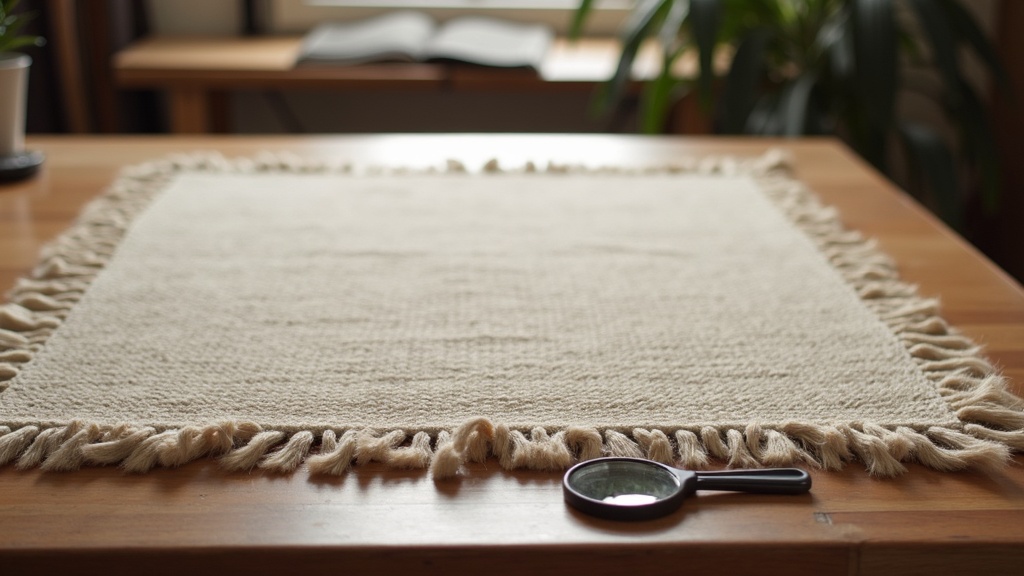
A rug appraisal is a structured examination of a rug’s materials, construction, condition and market context, carried out by a trained appraiser who documents findings in a written or verbal report. Expect measuring, close visual and sometimes microscopic inspection, questions about provenance, and a report that states a value for a stated purpose — insurance replacement, resale, estate, or donation. It is not a quick guess at a flea market table; a proper appraisal takes time and, for anything of real worth, should happen in person.
Why people get a rug appraised
Most appraisal requests fall into a handful of categories, and the reason matters because it changes what number the appraiser is actually trying to produce.
- Insurance — establishing a replacement value so a policy rider covers the rug at something close to what it would cost to replace it.
- Estate and inheritance — determining fair market value for probate, tax, or division among heirs.
- Sale or consignment — understanding what a rug might realistically bring before offering it to a dealer or auction house.
- Donation — some tax jurisdictions require a qualified appraisal for non-cash charitable gifts above a certain threshold.
- Simple curiosity — a rug inherited or found, with no paperwork, and a homeowner who wants to know what they’re looking at before deciding how to use or care for it.
These are different questions with different answers. A rug’s insurance replacement value and its resale value are rarely the same figure, and an appraiser worth hiring will ask which one you need before they start.
What an appraiser actually examines
An honest appraisal is built from physical evidence, not impression. If you want to understand the vocabulary before your appointment, the rug craft hub covers weaving techniques and regional traditions in more depth, but broadly, an appraiser will work through:
Construction and structure
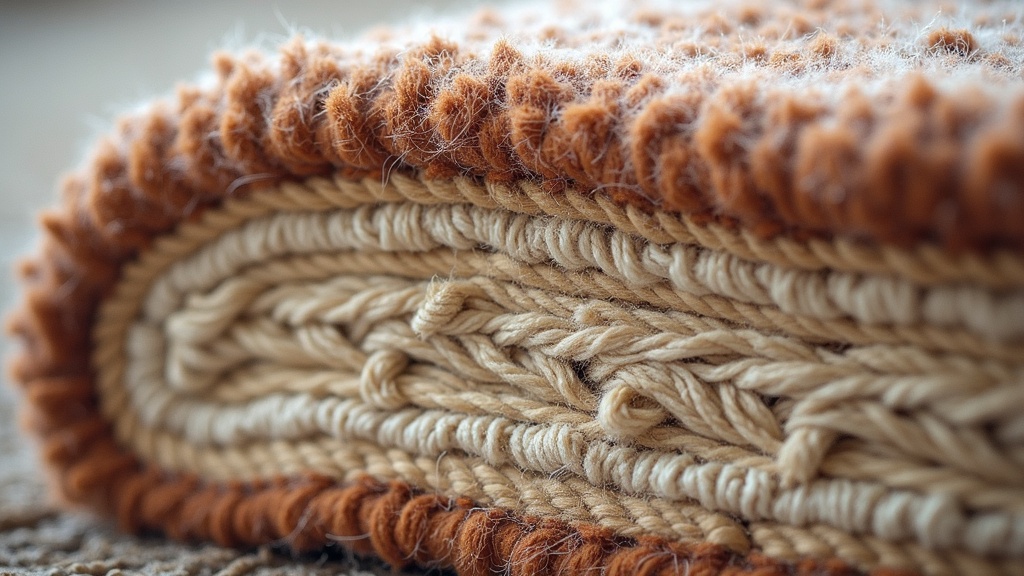
Whether the rug is hand-knotted, hand-tufted, flat-woven, or machine-made changes everything about its likely value. Appraisers check the back of the rug for visible knots, examine knot density under magnification, and look at the foundation material — wool, cotton, or occasionally silk — because warp, weft and pile tell a story about where and how a rug was made. A rug with a glued or latex-backed foundation and perfectly uniform machine-cut pile is generally a tufted or power-loomed piece, which sits in a very different value bracket than a hand-knotted equivalent, regardless of how attractive the pattern is.
Dyes and colour
Appraisers look at how colour behaves at the base of the pile versus the tips, whether there’s the gentle unevenness typical of natural versus synthetic dyes, and whether any colours look artificially aged. Knot count alone is often misread by owners; the actual pattern of knots and how tightly they’re packed is one clue among several, and higher isn’t automatically better — a point covered in more detail in the piece on knot count myths.
Wear, repairs and finishing
Selvedge (the woven edge) and fringe finishing, areas of low pile, old repairs, and reweaving all get inspected closely, because wear and repairs affect a rug’s value significantly — sometimes reducing it, sometimes barely touching it if the repair work is skilled and the rug is otherwise strong. An appraiser will usually turn the rug over entirely and look at the back, since that’s where much of the real evidence lives.
Age indicators
Consistent, gradual wear patterns, the type of foundation material, selvedge style, and certain motif and colour conventions can all point toward an approximate age or region, but no single feature proves it on its own. What actually determines value in an older piece is covered at length on what determines the value of an antique rug — it’s rarely one factor, and it’s never something that can be settled from a photo.
What happens during the appointment
A typical in-person session runs through a fairly predictable sequence:
- The rug is unrolled fully, in good natural or daylight-balanced light, and measured accurately.
- The appraiser examines the front and back, sometimes with a loupe or portable microscope, checking knot structure, pile material, and foundation.
- They look for repairs, moth damage, colour run, sun fading, and structural issues like buckling.
- They ask about provenance — where you got it, whether there’s a receipt, prior appraisal, or family history attached to it.
- They research comparable examples, considering size, condition, and current demand for that type of rug.
- They produce a report: a written appraisal will state the rug’s dimensions, construction, materials, condition, the value type requested, and the value figure with a date.
For anything with genuine financial or sentimental stakes, this in-person step is the part that can’t be replaced by an email exchange with photos. Photographs flatten texture, mask true colour, and hide the back of the rug entirely — exactly the details that matter most.
What tends to separate a valuable rug from a reproduction
Owners are often surprised at how much value hinges on construction rather than pattern. A few general signs an appraiser watches for when distinguishing a handmade piece from a machine-made or reproduction one:
- Perfectly regular, machine-uniform knots on the back usually indicate power-loomed or tufted construction rather than hand-knotting.
- A soft cotton or synthetic mesh backing glued to the pile, rather than a woven foundation, points to hand-tufting, not hand-knotting.
- Deliberately faded, unevenly worn-looking colour applied uniformly across a rug (rather than following actual traffic patterns) can indicate an “antique-wash” or distressed finish rather than genuine age — a distinction explored further in the piece on antique-wash and distressed rugs.
- Fringe that’s sewn on separately, rather than being the continuous end of the foundation’s warp threads, is a strong sign the piece is machine-made.
None of these signs work in isolation, and none of them are something Rug Academy can confirm for a specific rug sight unseen. This is genuinely an area — covered further at the value and authentication archive — where an experienced eye in the room with the actual object outperforms any checklist.
Costs, timing, and paperwork
Appraisal fees vary by region, by the appraiser’s credentials, and by whether the report is verbal or written. As a rough illustration only — not a quote — a simple verbal opinion on a single rug might sit in the low tens of dollars, while a formal written appraisal suitable for insurance or estate purposes, with photographs, comparables and a signed report, could run into the low hundreds; costs rise from there for larger collections or more complex pieces. Ask upfront whether the fee is flat or a percentage of value — a percentage fee is a conflict of interest most reputable appraisers avoid.
Bring anything you have: prior receipts, any earlier appraisal, family history of purchase, and photos of the rug in its original context if available. None of this guarantees a higher value, but it helps the appraiser build an accurate picture faster.
Should you clean the rug before an appraisal?
Generally, no — not on your own, and not right before an appointment. A light, dry surface vacuuming with the beater bar switched off is usually fine for a sturdy pile rug (see vacuuming a rug correctly for how to avoid catching fringe), but anything beyond that carries real risk right before a valuation. Wet cleaning, spot treatment, or attempting to lift a stain yourself can permanently alter dye, felt wool fibres, or loosen a fragile foundation — and that damage is visible to an appraiser and can affect the reported condition and value. If a rug is hand-knotted, antique, silk, or you’re unsure of its construction, leave cleaning to a professional rug cleaner or conservator, ideally after the appraisal rather than before. The rug care hub and the cleaning and stains archive cover safe, fibre-specific methods if cleaning does turn out to be needed.
Frequently asked questions about getting a rug appraised
How much does it cost to get a rug appraised?
Costs vary widely by region and appraiser credentials. As an illustrative range only, a brief verbal opinion might cost less than a formal written report used for insurance or estate purposes, which typically involves more research and documentation.
Do I need to bring the rug in person, or can I send photos?
For anything with real financial stakes, an in-person appraisal is the only reliable option. Photos can’t show the back of the rug, true colour, or fine knot structure clearly enough for an appraiser to give a confident, defensible valuation.
Will cleaning my rug first increase its appraised value?
Not reliably, and self-cleaning can backfire by damaging dye or fibres, which lowers value. Light dry vacuuming is generally safe; anything beyond that is best left to a professional, and ideally done after the appraisal, not before it.
What’s the difference between an insurance appraisal and a resale appraisal?
An insurance appraisal estimates replacement cost — what it would take to buy an equivalent rug today. A resale or fair-market appraisal estimates what a buyer would realistically pay for that specific rug now, which is often a lower figure.
Can an appraiser tell me if my rug is a genuine antique?
A qualified appraiser can assess construction, materials, dye characteristics and wear patterns that support or undermine an age claim, but confirming age and origin conclusively usually requires in-person, hands-on examination rather than a description or photo alone.
Rug Academy publishes general information about rugs and is not a dealer, appraiser, or cleaning service. Cleaning and repair methods depend entirely on fibre, dye and construction — test any treatment on a hidden corner first, and consult a professional rug cleaner or conservator before treating a hand-knotted, antique, silk, or valuable rug, as damage from cleaning is usually permanent. Any prices mentioned are illustrative examples only, and nothing here is an appraisal, an authentication, or a guarantee of a rug’s origin or value.