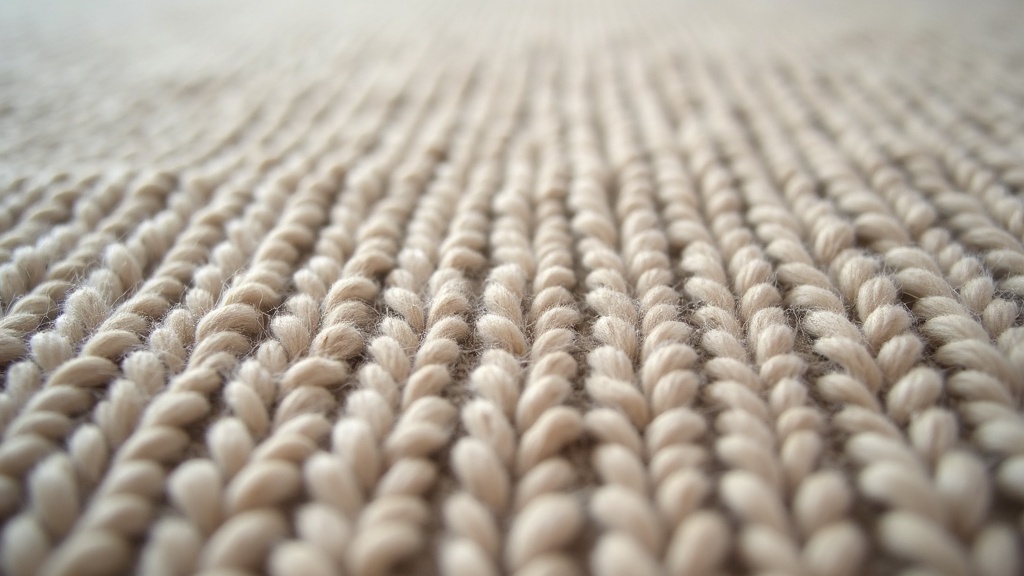
Hand-knotted rugs take so long because every single knot is tied by hand around the warp threads, one at a time, in rows that can number in the thousands across a single piece. A modest 6-by-9-foot rug in a mid-range knot density might contain well over a million individual knots, and a skilled weaver ties them at a rate measured in the thousands per day, not per hour. Add in hand-spinning or hand-dyeing the wool, setting up the loom, and finishing the ends, and a single rug can occupy a weaver — or several working side by side — for months to well over a year.
What “hand-knotted” actually means
In a hand-knotted rug, the pile is built by tying short lengths of yarn around pairs of warp threads, row after row, then trimming the ends to form the surface you walk on. Between each row of knots, the weaver passes one or more strands of weft yarn and beats it down to lock the row in place. This is different from a flatweave, where there is no pile at all, and very different from tufting, where a gun punches loops of yarn through a backing fabric in seconds. If the difference between warp, weft and pile isn’t already familiar, it’s worth understanding before anything else, since it explains almost every quirk of how these rugs are made, worn, and repaired — the anatomy is laid out in detail on the site’s guide to rug anatomy, and the mechanics of the loom itself are covered in how a rug loom works.
Because every knot is a discrete, individual action, there is no shortcut. A machine can weave a carpet-like structure in minutes; a person tying wool around warp threads by hand cannot be sped up past a certain physical limit without knots getting sloppy or uneven. That limit is really the whole story.
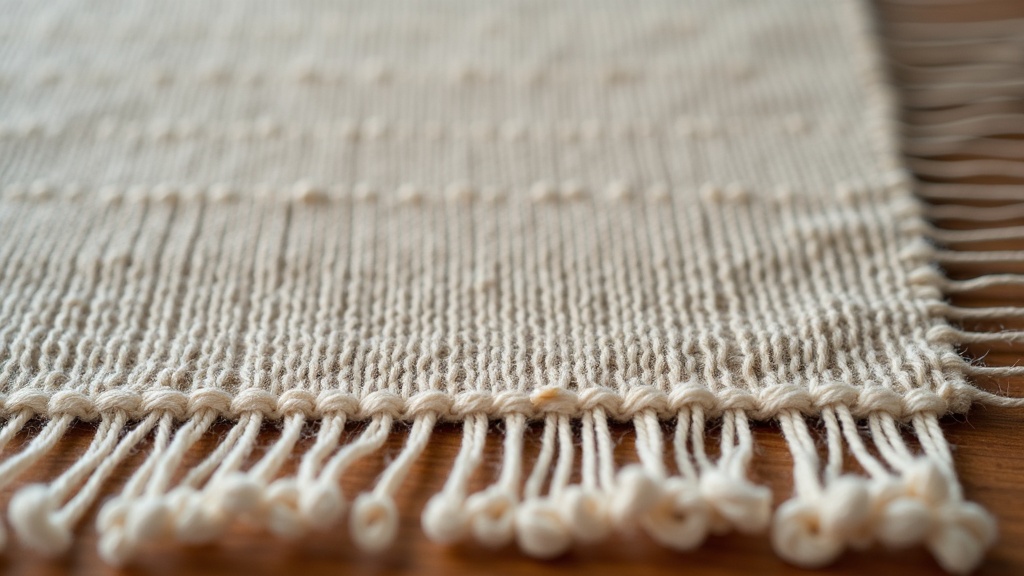
The knot-by-knot math
Knot density is usually described in knots per square inch (KPSI), and it varies enormously between traditions and grades. A coarser tribal or village rug might run somewhere around 40 to 100 knots per square inch; a fine city workshop piece, particularly in silk, can run several hundred or, in exceptional cases, over a thousand. The table below is illustrative only — actual output depends on the weaver’s skill, the pattern’s complexity, the yarn, and how many people are working the loom at once — but it shows why density and time scale together so directly.
| Approximate knot density | Rough rows tied per day (one weaver) | Time for a 6×9 ft rug (illustrative) |
|---|---|---|
| Coarse, ~60 KPSI | Several thousand knots | 2–4 months |
| Medium, ~150 KPSI | Roughly half that pace | 5–8 months |
| Fine, ~300+ KPSI | Slower still, more precise | 10 months–2 years+ |
These figures move around a lot in practice — pattern complexity, curved motifs, multiple colors per row, and whether two or three weavers share a wide loom all change the arithmetic. What doesn’t change is the underlying reality: more knots per square inch means more individual hand actions per square inch, and there is no way to compress that.
What happens before a single knot is tied
The knotting itself is only part of the timeline. Wool typically has to be sheared, cleaned, carded, and spun — by hand in many traditional workshops — before it can be dyed. Natural dyeing, where it’s still practiced, involves preparing dye baths from materials like madder root, indigo, or walnut husk and simmering yarn in small batches, since large lots dye unevenly. Even with commercial dyes, colors are matched and tested before a full lot is committed, because a batch that runs slightly off can throw the whole design out. Only then is the loom warped: strong, evenly tensioned threads are strung top to bottom, a slow, exacting job in itself, since uneven tension in the warp shows up as rippling in the finished rug for its entire life.
All of that preparation can add weeks or months before the visible weaving even starts — time that never shows up when someone unrolls a finished rug in a showroom, but that is baked into why the piece cost what it cost and looks the way it looks.
Why finer and more complex rugs take longer
Density is the biggest driver of time, but pattern matters too. Curvilinear floral designs and finely rendered medallions require more color changes per row and more precise counting than a bold geometric repeat, which is one reason certain regional styles are prized for their intricacy. The vocabulary of motifs — medallions, the boteh, the herati pattern — is worth knowing on its own terms, and it’s covered in the site’s guide to common rug motifs. Silk pile, when used, is slower still to knot than wool because the fiber is finer and less forgiving of an uneven pull. And some flatwoven and tapestry-woven techniques, like soumak, add wrapped or brocaded elements on top of a plain weave, which is a different kind of slow entirely — see what a soumak weave is for how that construction differs from knotted pile.
Regional traditions shape the timeline too
How a rug is made, and how long it takes, is inseparable from where it comes from. Village and nomadic weavers historically worked rugs sized to a household’s needs on portable looms, often finishing a piece across a single season around other work. Urban workshop production, by contrast, has long involved multiple weavers on a single large loom working from a plotted design, which speeds up big pieces without changing the knots-per-hour math for any one person. These differences are part of what separates traditions as distinct as Caucasian village weaving from Chinese and Tibetan court and workshop rugs, both covered in more depth in the site’s rug craft section, which is the hub for weaving techniques, regional traditions, and how value gets assessed.
How the time investment shows up in price — and how it doesn’t
Labor hours are a real cost driver, but they’re not the only one, and two rugs that look similar side by side can differ hugely in price for reasons that have nothing to do with how long either took to knot — material quality, dye type, age, and where the rug was actually made all factor in, as explored in why two similar-looking rugs can differ hugely in price. As a rough illustration only, a small hand-knotted wool rug from a village workshop might sit in the low hundreds of dollars, while a large, finely knotted silk piece from an urban workshop tradition can run into the thousands — but construction, size, condition, and market all move that number, and no number here should be read as a current price for any specific rug.
Telling hand-knotted from machine-made
Because hand-knotting is so labor-intensive, it’s the main reason hand-knotted rugs cost more than machine-made or hand-tufted equivalents — and it’s also why misrepresenting a rug’s construction is a real risk in the market. An appraiser looking at a rug examines the back for individual knots versus a uniform machine grid, checks whether the fringe is an extension of the actual foundation warp or sewn on separately, and looks at selvedge finishing, wear patterns, and dye characteristics under magnification. None of that can be done reliably from a photo or a quick glance, which is exactly why the difference between genuine hand-knotting and other labels gets explained carefully rather than assumed — see what “hand-loomed” actually means for how that term differs from hand-knotted. If you’re trying to establish what a specific rug actually is, or what it might be worth, an in-person evaluation is the only reliable route; the site’s guide to getting a rug appraised walks through what a qualified appraiser actually checks and why it can’t be done at a distance.
Given how much time and skill sits inside a hand-knotted rug, protecting that investment day to day matters too — routine care like gentle vacuuming without a beater bar on loose pile, and rotating the rug periodically, does more to extend its life than any occasional deep clean, and general upkeep guidance lives in the site’s rug care hub for anyone starting from scratch.
Frequently asked questions about why hand-knotted rugs take so long to make
How long does it take to make one hand-knotted rug?
It depends heavily on size and knot density, but anywhere from a couple of months for a small, coarser rug to well over a year for a large, finely knotted piece is common. Multiple weavers working one wide loom can shorten the calendar time without changing the per-person knotting speed.
Why are hand-knotted rugs so much more expensive than other rugs?
The price largely reflects labor: thousands of individually tied knots per square foot, plus hand-spinning and hand-dyeing in many traditions, versus a machine that can replicate a similar look in minutes. Material quality, origin, and age also affect price, but the knotting labor is usually the biggest single factor.
Can you tell how long a rug took to make just by looking at it?
You can estimate roughly from knot density and pattern complexity, but not precisely — weaver speed, loom width, and how many people worked on it all change the actual hours involved, and none of that is visible from the finished object alone.
Does a higher knot count always mean a better rug?
Not automatically. Higher density generally means finer detail and more labor, but wool quality, dye quality, evenness of weave, and the skill behind the design all affect how good and how durable a rug actually is, independent of the raw knot count.
Why do some hand-knotted rugs take years instead of months?
Very fine knot density, silk pile, large size, intricate curvilinear patterns, and hand-spun or naturally dyed yarn all slow the process down individually, and they often overlap in the same rug — which is why the most elaborate workshop pieces can take a couple of years or more from warping the loom to trimming the final pile.
Rug Academy publishes general information about rugs and is not a dealer, appraiser, or cleaning service. Cleaning and repair methods depend entirely on fibre, dye and construction — test any treatment on a hidden corner first, and consult a professional rug cleaner or conservator before treating a hand-knotted, antique, silk, or valuable rug, as damage from cleaning is usually permanent. Any prices mentioned are illustrative examples only, and nothing here is an appraisal, an authentication, or a guarantee of a rug’s origin or value.