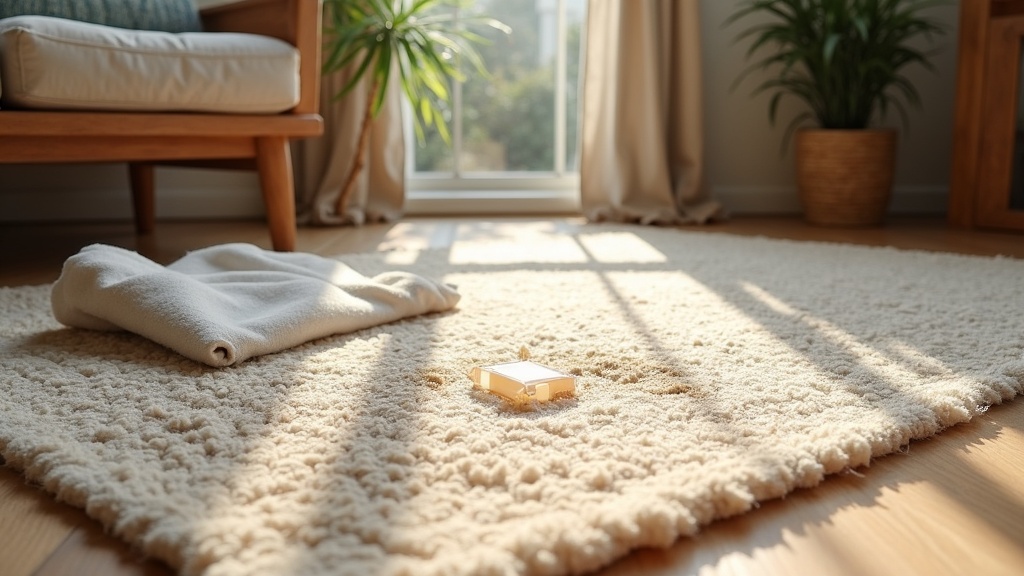
The moment something spills on a rug, speed matters more than product. Blot the liquid immediately with a clean, dry, white cloth or paper towel — press down, don’t rub — working from the outside of the spill inward so you don’t spread it. Get up as much liquid as possible before it soaks into the pile or foundation, then figure out what fibre you’re dealing with before you reach for any cleaner. What you do in the first two minutes usually matters more than anything you buy afterward.
The first 60 seconds: blot, don’t rub
Rubbing pushes liquid deeper into the pile and can distort or fuzz the fibres, especially on wool and silk. Instead, lay a folded absorbent cloth or a stack of paper towels over the spill and press firmly with flat palms or a heavy book — not a scrubbing motion. Repeat with fresh dry cloth until no more liquid transfers. For anything runny (wine, coffee, juice), this alone removes most of the volume and dramatically reduces staining risk, because dye and pigment travel with the liquid, not through it once it’s gone.
If the spill is solid or semi-solid — food, wax, pet waste — scrape off the excess gently with a dull edge (a spoon or the back of a butter knife) before you introduce any moisture. Adding water to a solid mess first just spreads it further into the pile.
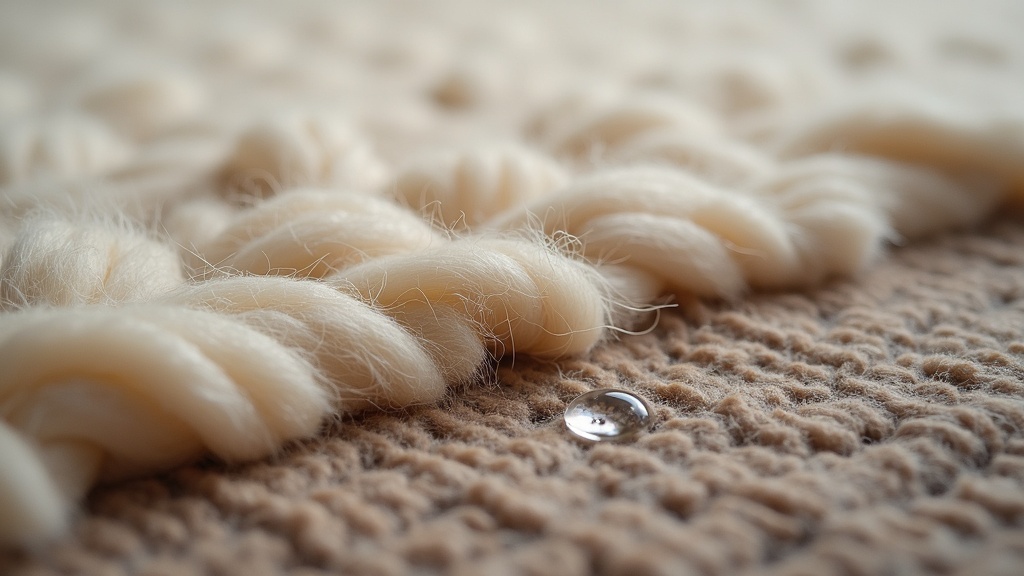
Identify the fibre and construction before you treat anything
This is the step people skip, and it’s the one that causes the most damage. A treatment that’s perfectly safe on a synthetic, tightly tufted rug can ruin a hand-knotted wool or silk piece. Before choosing a cleaner, try to establish:
- Fibre: wool, silk, cotton, jute/sisal, or a synthetic like polypropylene, viscose, or nylon. Check a label if there is one, or look at the sheen and hand-feel — the differences are covered in more depth on Rug Fibres Compared.
- Construction: hand-knotted, hand-tufted (with a latex-backed canvas underside), flatwoven, or machine-made. This affects how much moisture the piece can tolerate and whether the foundation can shrink or the backing can loosen.
- Age and value: an inherited or purchased antique, or a rug you’re simply unsure about, changes the calculus entirely — err on the side of caution and professional help.
If you genuinely don’t know what you’re looking at, the safest assumption is to treat it as a hand-knotted wool rug: minimal water, no heat, no harsh chemicals, and a hidden-corner test before anything else. The rug care hub and the materials and construction archive are good starting points for narrowing this down.
What not to do
A few instincts feel helpful but tend to make things worse:
- Don’t scrub. Vigorous rubbing distorts pile, breaks fibre tips, and can create a permanent fuzzy or bald patch, particularly on wool and silk.
- Don’t use hot water. Heat opens wool’s scale structure and can cause felting, shrinkage, and yellowing that no amount of later cleaning reverses.
- Don’t reach for chlorine bleach. It destroys the protein structure of wool and silk outright and can strip or shift dye on almost any natural-fibre rug.
- Don’t mix cleaning chemicals. Combining bleach with ammonia, or with most other household cleaners, produces toxic fumes — there’s no stain worth that risk, and it isn’t necessary for effective spot treatment anyway.
- Don’t use a hairdryer or direct heat to speed drying. Rapid heat-drying can set stains permanently and stress natural fibres.
- Don’t run for the steam cleaner. Steam and saturation can shrink a hand-knotted foundation and cause it to buckle or ripple; this is explored further in the archive on cleaning and stains.
A fibre-safe first response, by material
Once the liquid is blotted up, here’s the general logic for what’s safe to try next — always after testing on a hidden corner such as the underside of a fringe area or a spot under furniture.
| Fibre / construction | Safe first response | Avoid |
|---|---|---|
| Wool, hand-knotted or machine-made | Blot; if needed, dab with cool water and a small amount of pH-neutral, wool-safe detergent, then blot dry | Hot water, alkaline cleaners, bleach, scrubbing |
| Silk or silk-blend | Blot only; do not introduce water or detergent | Any home spot-treatment — take it to a professional |
| Cotton flatweave | Blot; cool water with a mild detergent, sparingly | Saturating the weave, high heat drying |
| Jute or sisal | Blot immediately and thoroughly; these fibres absorb liquid fast and stain permanently if left wet | Any water beyond light dabbing — moisture can cause discolouration and weakening |
| Synthetic (polypropylene, nylon, tufted with latex backing) | Blot; mild dish soap diluted in cool water is generally tolerant | Excess water pooling near a latex backing, which can degrade over time — see the note on tufted rugs and latex backing |
Even within this table, dye behaviour is the wildcard. Natural dyes and some early synthetic dyes can bleed or migrate when wet, regardless of fibre, which is exactly why the hidden-corner test isn’t optional — dab a damp white cloth on an inconspicuous spot and watch for any colour transfer before treating the visible stain.
Specific spills worth knowing about
Different substances call for slightly different follow-up once the initial blotting is done. Red wine, for instance, benefits from a particular sequence covered in detail at getting a red wine stain out of a rug. Grease and oil don’t respond to water-based treatment at all and need an absorbent powder step first, discussed at removing grease and oil stains from a rug. Pet accidents carry an odour component that plain blotting won’t solve, which is addressed at removing pet stains and odour from a rug. In every case, the immediate step is the same: get the liquid or solid off the surface before it sets, then match the follow-up treatment to the fibre.
When to stop and call a professional
Some situations genuinely call for a specialist rather than a home remedy, and this isn’t excessive caution — it’s recognising that cleaning damage on a good rug is usually permanent and can affect an object worth a great deal. Call a professional rug cleaner or conservator when:
- The rug is hand-knotted, antique, or you’re not certain of its construction.
- It’s silk or has silk highlights.
- The stain is large, set, or from something with strong dye (wine, ink, dye-based cosmetics).
- You’ve already tried something and see colour bleeding, a texture change, or the pile flattening unevenly.
The difference between a cleaner and a conservator matters here too — a conservator is trained to stabilise and treat rare or valuable textiles without altering their structure, while a general cleaner is suited to routine maintenance. That distinction is laid out at what a rug conservator does that a cleaner doesn’t. If in doubt, a quick phone call describing the fibre, the stain, and the rug’s age or origin (as best you know it) will usually get you a clear answer about whether it’s safe to handle yourself.
After the spill: drying and follow-up
Once you’ve blotted and, if appropriate, spot-treated, let the area air dry fully before walking on it or replacing furniture. A fan or open window speeds this along without adding heat. Check the rug’s underside too — liquid can travel through to the backing or pad, and a rug pad that’s stayed damp can encourage mould or a musty smell if it isn’t lifted and dried. Vacuuming afterward should wait until the pile is completely dry, and if the rug has fringe, use a vacuum without an active beater bar, since beater bars catch and fray fringe and loose pile — more on that at vacuuming a rug correctly.
Frequently asked questions about spills on rugs
How long do I have before a spill on a rug stains permanently?
It varies by liquid and fibre, but most staining risk climbs sharply after the first 10–15 minutes as liquid soaks into the pile and foundation. Blotting immediately, even before you know exactly what to do next, meaningfully reduces the chance of a lasting mark.
Can I use club soda on a rug stain?
Club soda is mild and sometimes used for blotting, but plain cool water with a small amount of pH-neutral detergent is generally more reliable and predictable across fibres. Always test on a hidden area first, since carbonation and additives can behave differently on wool versus synthetic pile.
Is it safe to use a hairdryer to dry a wet rug faster?
No — direct heat can set a stain permanently and stresses natural fibres like wool and silk. Air drying with a fan or open window is slower but far safer for the fibre and for any dye that hasn’t fully stabilised.
What should I do if I don’t know what my rug is made of?
Treat it cautiously: blot only, use cool water and a small amount of neutral detergent at most, test on a hidden corner, and avoid heat and bleach entirely. If the stain is stubborn or the rug looks old, hand-knotted, or valuable, a professional assessment is the safer next move.
Will a rug pad protect against spills soaking through to the floor?
A rug pad can slow moisture reaching hardwood or tile, but it isn’t a substitute for prompt blotting, and a soaked pad can trap moisture against the rug’s backing. Lifting the rug to check and dry both sides after a large spill is worth the effort.
Rug Academy publishes general information about rugs and is not a dealer, appraiser, or cleaning service. Cleaning and repair methods depend entirely on fibre, dye and construction — test any treatment on a hidden corner first, and consult a professional rug cleaner or conservator before treating a hand-knotted, antique, silk, or valuable rug, as damage from cleaning is usually permanent. Any prices mentioned are illustrative examples only, and nothing here is an appraisal, an authentication, or a guarantee of a rug’s origin or value.