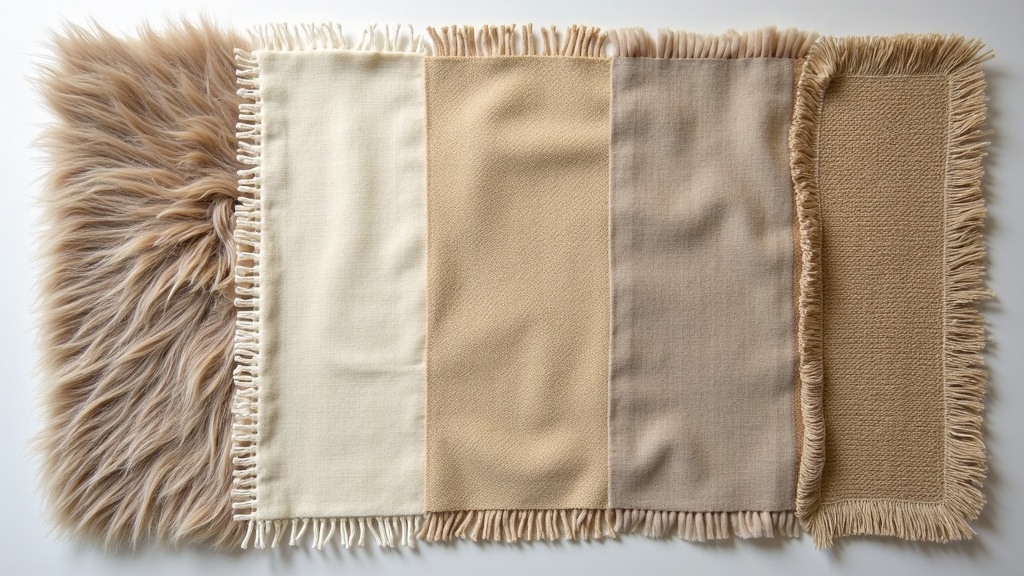
Wool offers the best all-round balance of durability, resilience and affordability for most homes. Silk is the most luxurious and the most fragile, prized for sheen rather than foot traffic. Cotton is common in the foundation of hand-knotted rugs and in flatweaves, but wears faster underfoot. Jute is soft and eco-friendly but weak against moisture. Synthetics trade some hand-feel and longevity for low cost and stain resistance. Which one suits you depends less on which fibre is “best” and more on where the rug will live and how it will be treated.
What the fibre actually changes
Before comparing materials, it helps to separate two things people often conflate: the fibre (what the yarn is spun from) and the construction (how it’s woven — hand-knotted, hand-tufted, flatwoven, or machine-made). A wool rug can be a hand-knotted heirloom or a mass-produced tufted piece with a latex backing, and those two wool rugs behave completely differently when it comes to cleaning, shedding and lifespan. Fibre tells you about feel, resilience and how the material reacts to water, sunlight and chemicals. Construction tells you about how it’s built and how it will age. Both matter, and the rug buying guides hub covers the construction side in more depth than we can here.
Wool
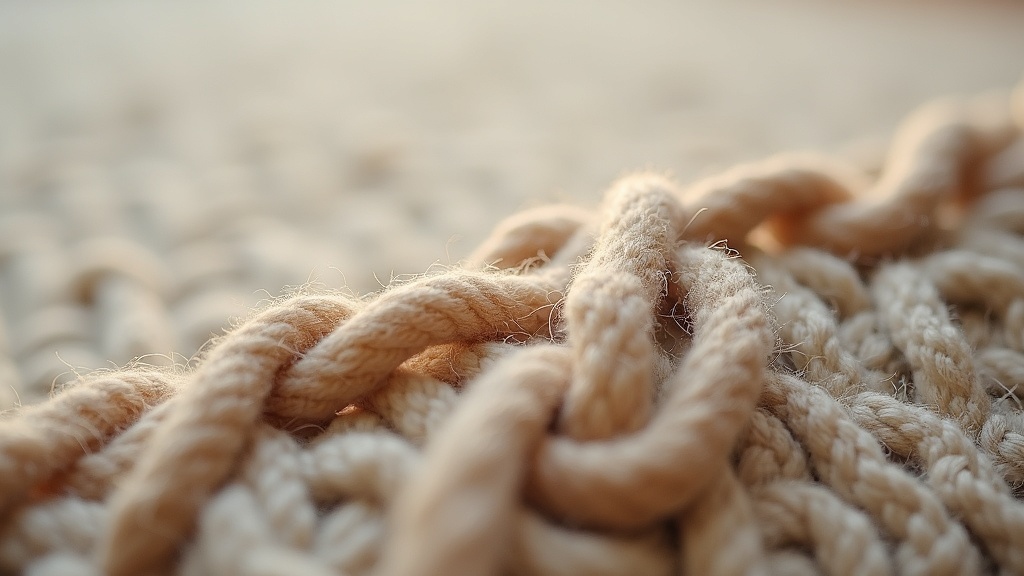
Wool is the default fibre for hand-knotted rugs from Iran, Turkey, Afghanistan, India and Pakistan, and for most quality machine-made rugs sold in stores. Its structure is naturally springy — each fibre has a slight crimp that lets pile bounce back after being walked on, which is why a good wool rug can look fresh for decades while a synthetic one flattens. Wool also has a natural, if imperfect, resistance to soiling because of its lanolin content, and it takes dye beautifully, which is part of why antique and tribal wool rugs hold such rich, complex colour.
The trade-off is sensitivity to water chemistry and heat. Hot water and alkaline or high-pH cleaners cause wool to felt, shrink and yellow, and chlorine bleach will destroy it outright. A wool rug should generally be cleaned with cool water and a wool-safe, pH-neutral detergent, applied by blotting rather than saturating. Cleaning a wool rug safely is its own topic with more detail on technique. For anything hand-knotted, antique, or simply valuable to you, a professional rug cleaner or conservator is the safer route than a DIY attempt, because a mistake in water temperature or chemistry is not something you can undo.
Silk
Silk rugs — whether pure silk or silk-highlighted wool pieces — are woven for sheen and fine detail rather than for withstanding traffic. The fibre is exceptionally fine, which lets weavers achieve very high knot counts and crisp, almost painterly motifs, but that same fineness makes silk weak when wet and easily abraded underfoot. Water can cause silk to lose strength and stain permanently, and most detergents are too harsh for it. Silk rugs are widely misunderstood in exactly this way — people assume “delicate” means “don’t step on it,” when the bigger risk is actually cleaning it incorrectly.
If a silk or silk-blend rug is spilled on, the safest immediate step is to blot — never rub — with a plain, dry, absorbent cloth and stop there. Do not apply water or any detergent yourself. This is a genuine case where waiting and calling a specialist beats acting fast with the wrong product.
Cotton
Cotton shows up in two very different roles. In hand-knotted rugs it’s most often the foundation — the warp and weft threads the pile is knotted onto — where it provides a stable, even structure at lower cost than a silk foundation. As a pile fibre in its own right, cotton appears in flatweave dhurries, kilim-style rugs and casual area rugs, valued for being washable-feeling, breathable and inexpensive. Where cotton rugs work and where they fail largely comes down to traffic: cotton pile crushes and dulls faster than wool under heavy foot traffic and doesn’t have wool’s natural bounce-back, so it suits low-traffic spots, layered looks, or rooms where a casual, flat profile is wanted over plush depth.
Cotton is more tolerant of water than wool or silk, which is why some cotton flatweaves can be laundered at home — but only if the rug is genuinely all-cotton, colourfast, and small enough to handle without distorting its shape. Even then, natural and some early synthetic dyes can bleed and migrate when wet, so testing an inconspicuous corner with a damp white cloth first is worth the two minutes it takes.
Jute and other plant fibres
Jute, along with sisal and seagrass, gives a warm, matte, natural texture that suits casual and coastal-leaning interiors, and it’s usually the most budget-friendly natural fibre on this list. The drawback is durability against moisture: jute fibres weaken and can develop a musty smell or discolouration when they stay damp, and they don’t respond well to wet cleaning methods at all. Jute in a living room has real pros and cons worth weighing before you commit, especially in humid climates or homes with young kids and pets. Spills should be blotted immediately with a dry cloth, and a jute rug should never be steam cleaned or soaked — dry or very lightly damp methods are the only safe options.
Synthetic fibres
Nylon, polypropylene (olefin), polyester and viscose (rayon) are grouped as “synthetic” but behave quite differently from one another. Nylon is the most resilient and often used in better machine-made and tufted rugs. Polypropylene resists stains and moisture well, making it a common choice for outdoor and high-traffic indoor rugs, but it doesn’t recover its texture after crushing the way wool or nylon can. Polyester sits in between on price and performance. Viscose is the outlier: it’s plant-derived (often from wood pulp) and prized for a silk-like sheen at a fraction of silk’s price, but it’s genuinely fragile — it weakens dramatically when wet and crushes permanently underfoot, which is why viscose rugs tend to look spectacular new and age badly compared with wool or nylon equivalents.
Synthetics generally tolerate more aggressive cleaning than wool or silk — many can handle a mild detergent and water without felting or bleeding — but always check the manufacturer’s care label first, since backing materials like latex can be damaged by heat or saturation even when the pile itself is fine.
Quick comparison
| Fibre | Feel & look | Durability | Water sensitivity | Typical price position |
|---|---|---|---|---|
| Wool | Springy, matte-rich colour | High, with proper care | Moderate — avoid hot/alkaline | Mid to high |
| Silk | High sheen, very fine detail | Low for foot traffic | High — avoid water entirely | High to very high |
| Cotton | Flat, breathable, casual | Moderate | Low to moderate | Low to mid |
| Jute | Coarse, natural, matte | Moderate, weak wet | High — avoid moisture | Low |
| Synthetic | Varies widely by type | Moderate to high | Usually low | Low to mid |
As an illustrative example only, a small machine-made synthetic-blend rug might sit in the low hundreds while a comparable hand-knotted wool piece could run several times that — construction, origin and size drive the real number far more than fibre alone, so treat any figure here as a rough sense of positioning rather than a quote.
Cleaning safety: the one rule that covers every fibre
Whatever the fibre, three habits protect a rug’s value: test any product on a hidden corner first, avoid mixing cleaning chemicals (never combine bleach and ammonia-based products, since the fumes are genuinely hazardous and neither belongs on a rug anyway), and use a beater-bar vacuum only on flatwoven or very sturdy rugs, since it can tear fringe and pull loose pile on hand-knotted or worn rugs. Beyond that, the safe method depends entirely on fibre and construction, which is why the rug care hub breaks cleaning advice down by situation rather than offering one universal method. When a rug is hand-knotted, antique, silk, or you simply aren’t sure what it’s made of, the responsible move is a professional cleaner or conservator rather than a guess — because cleaning damage to a rug is almost always permanent, and it’s the kind of mistake that can’t be reversed by a second attempt.
What this means when you’re buying
Fibre alone won’t tell you whether a rug is hand-knotted or machine-made, old or new, valuable or not — an appraiser weighs knot type and density, foundation material, dye characteristics, wear patterns, and how the selvedge and fringe are finished, all together. A rug labelled “wool” could be a hand-knotted heirloom or a tufted piece with a limited lifespan; wool versus synthetic lifespan genuinely depends on both fibre and how it’s built. If you’re weighing a purchase or wondering about an inherited piece’s worth, the only reliable answer for anything with real money at stake is an in-person appraisal by a qualified appraiser — fibre knowledge helps you ask better questions, but it isn’t a substitute for one.
Frequently asked questions about rug fibres
Is wool or synthetic better for a rug with pets?
Wool tends to resist soiling and odour better and lasts longer visually, but synthetics like nylon or polypropylene are often cheaper to replace and more tolerant of spills and stronger cleaning products, so the “better” choice depends on your budget and tolerance for eventual replacement.
Can you clean a silk rug at home?
It’s not recommended. Silk loses strength when wet and most detergents are too harsh for it, so the safest home response to a spill is blotting dry with a clean cloth and then taking the rug to a professional who specialises in silk or fine antique textiles.
Why does my jute rug smell musty?
Jute absorbs moisture readily and dries slowly, which allows mildew and musty odours to develop, especially in humid rooms or after a damp cleaning attempt; keeping it dry and well-ventilated, and avoiding wet cleaning altogether, prevents most of the problem.
What’s the difference between viscose and silk?
Silk is a natural protein fibre from silkworm cocoons; viscose is a manufactured fibre usually made from wood pulp, engineered to mimic silk’s sheen at lower cost. Viscose looks similar new but crushes and yellows faster and is even more vulnerable to water damage.
Does fibre alone tell me if a rug is valuable?
No. Fibre is one factor among several — knot density, foundation, dye quality, age and condition all matter, and a wool or silk rug can be mass-produced just as easily as it can be a fine hand-knotted piece, so value questions really need an in-person appraisal.
Rug Academy publishes general information about rugs and is not a dealer, appraiser, or cleaning service. Cleaning and repair methods depend entirely on fibre, dye and construction — test any treatment on a hidden corner first, and consult a professional rug cleaner or conservator before treating a hand-knotted, antique, silk, or valuable rug, as damage from cleaning is usually permanent. Any prices mentioned are illustrative examples only, and nothing here is an appraisal, an authentication, or a guarantee of a rug’s origin or value.