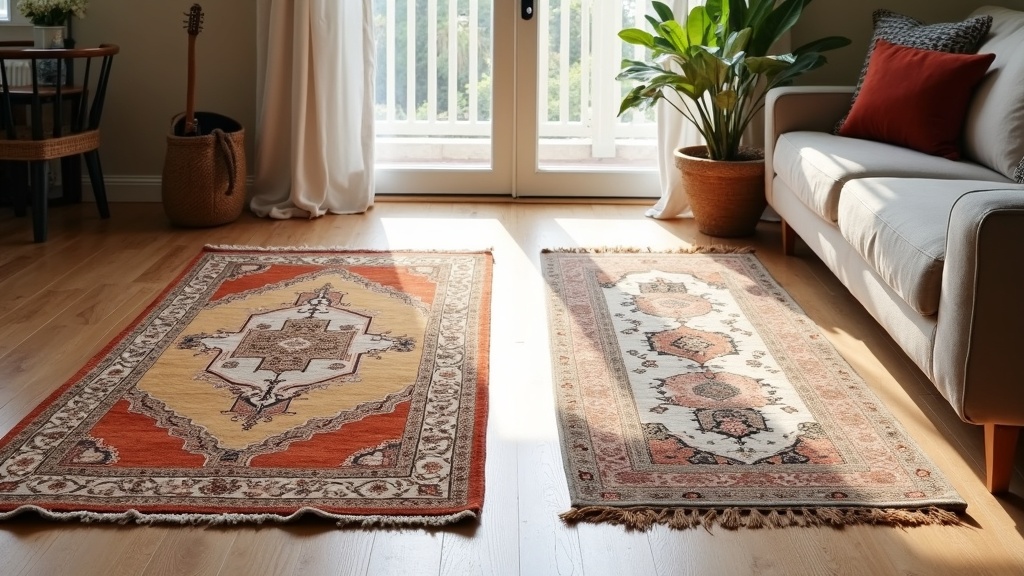
The most reliable way to tell a Turkish rug from a Persian rug is the knot: Turkish weavers traditionally tie a symmetrical knot wrapped around two warp threads, while Persian weavers typically use an asymmetrical knot open on one side. Beyond that technical detail, Turkish rugs tend toward bold, geometric, symmetrical patterns, while Persian rugs more often show curvilinear, floral, and medallion-based designs with a wider color palette. Neither rule is absolute — regions, workshops, and centuries of trade have blurred the lines — which is exactly why looking at construction matters as much as looking at style.
This distinction sits inside a bigger, messier vocabulary problem. “Oriental,” “Persian,” and “Turkish” get used loosely in the trade and in casual conversation, and it’s worth reading Persian vs Oriental Rugs: What the Terms Actually Mean if you want the full picture of how those words overlap and where they diverge.
Where the two traditions come from
“Persian rug” refers to hand-knotted rugs woven in Iran, historically across regional centers like Tabriz, Kashan, Kerman, and Heriz, each with its own design conventions and materials. “Turkish rug” (sometimes called Anatolian) covers rugs woven across Turkey, with regional traditions of its own — Hereke, Konya, and Milas among them. Both traditions are centuries old, both were shaped by trade routes, court patronage, and nomadic weaving, and both have influenced each other constantly, especially in border regions and through migration. If you want a deeper regional breakdown on the Persian side specifically, A Beginner’s Guide to Persian Rug Regions walks through the major weaving centers and what typically distinguishes them.
The knot: the most technical, most reliable tell
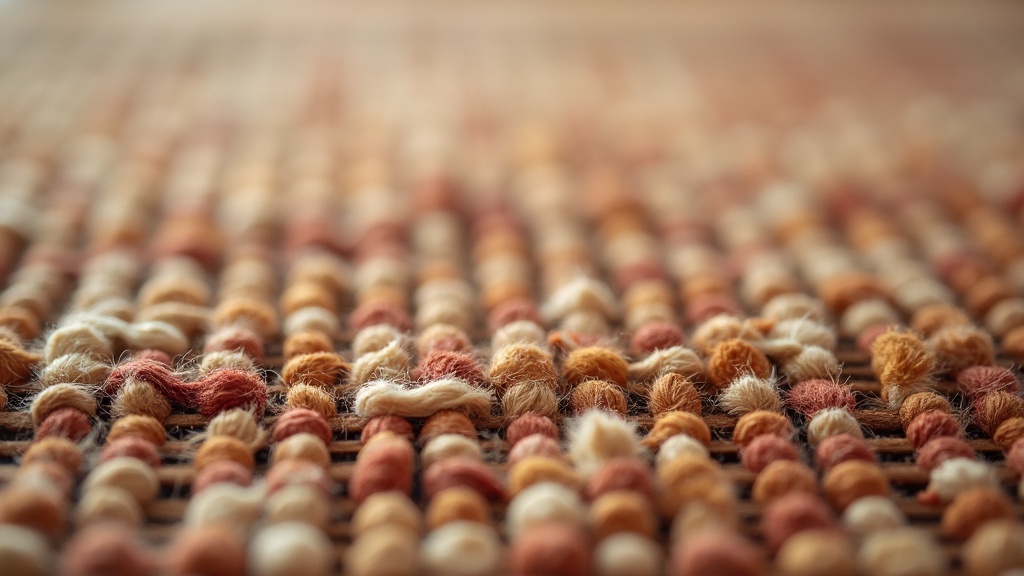
Flip a hand-knotted rug over and look at the back, or part the pile at the base, and you can usually see the knot structure with a loupe or strong light.
- Turkish (symmetrical/Ghiordes) knot: the yarn wraps around two adjacent warp threads and comes up between them, forming a symmetrical loop. This knot tends to produce a slightly more rigid, geometric pile structure, which is part of why Turkish patterns lean angular.
- Persian (asymmetrical/Senneh) knot: the yarn wraps fully around one warp thread and only partially around its neighbor, open to one side. This asymmetry allows for finer detail and smoother curves, which is part of why Persian florals can look so fluid.
This is a strong indicator but not an infallible label of origin — asymmetrical knots are also used in India, Pakistan, China, and parts of the Caucasus, and Turkish workshops have at times produced asymmetrical-knot rugs for export markets. Knot type tells you about technique, not automatically about geography. For more on why knot structure matters beyond identification, see What Is Knot Density and Does It Actually Matter?, which covers how knots per square inch relates to durability and design resolution, not just origin.
Design and motif differences
Once you’re past the knot, pattern language is the next clue, though it’s a softer one because styles travel and get copied.
Typical Persian characteristics
- Central medallion with flowing corner pieces (“Ferahan” style) or all-over repeating florals
- Curvilinear vines, palmettes, and botanical detail rendered with fine gradation
- Wider, more layered color palettes, often with a dominant field color and multiple accent tones
Typical Turkish characteristics
- Geometric medallions, stepped diamonds, and stylized hooked motifs
- Prayer rug formats (a mihrab or arch shape) are historically common in Anatolian weaving
- Bolder, more saturated, often warmer color contrast with less gradation
Treat these as tendencies, not rules. Nomadic and village weaving in both countries frequently produces geometric work, and commercial workshops in either country have copied the other’s popular designs for export. Pattern alone should never be the deciding factor.
Materials, dyes, and finishing clues
Foundation material is another data point: Persian city workshop rugs often use cotton foundations for stability, while village and nomadic pieces (both Persian and Turkish) may use wool foundations throughout. Silk appears in both traditions for fine pieces, particularly associated with Hereke in Turkey and Qum or Kashan in Iran, but silk rugs require far more caution in identification and in care, since silk fiber is damaged by water and most detergents and should generally be left to a professional conservator rather than tested at home.
Dye character is a useful supporting clue too. Older pieces from either tradition may use natural dyes (madder red, indigo blue, walnut brown), which typically show gentle, uneven color variation called abrash across a field — a sign of hand-dyed wool dyed in small batches. Bright, perfectly uniform color across a large field often points to synthetic dye and more modern or commercial production. Selvedge (the wrapped edge) and fringe finishing also differ by region and workshop: some traditions finish the edge with wool overcasting in a particular color sequence, others plait or knot the warp ends in distinctive patterns. These finishing habits are genuinely useful clues, but they vary enormously by workshop and era, so they support an identification rather than confirm one on their own.
What separates handmade from machine-made — regardless of country
Before you even get to Turkish-versus-Persian, it’s worth confirming a rug is hand-knotted at all, since power-loomed rugs are sold under both labels in casual marketing. The clearest signs of machine production are a uniform, mechanical knot pattern visible on the back, a perfectly even fringe that is sewn on rather than being the continuous warp of the rug, and a stiff, glued-feeling foundation. How to Tell If a Rug Is Handmade or Machine-Made covers this in detail, and it’s a useful first filter before you spend time trying to place a rug’s country of origin.
Why this matters for value — and its limits
Country of origin, knot type, and age all factor into how a rug is valued, alongside knot density, wool or silk quality, dye type, condition, and the skill evident in the weaving. An appraiser looks at all of these together, plus wear patterns and structural condition, before forming any opinion. Whether a specific rug is Turkish or Persian, hand-knotted or reproduction, antique or contemporary, and what it might be worth, is a judgment that requires physically examining the piece — this article, or any article, cannot make that determination from a description or a photo. If you’re trying to understand what actually drives value once origin is established, What Determines the Value of an Antique Rug? breaks down the main factors appraisers weigh. For anything with real money at stake — insurance, resale, inheritance — an in-person appraisal by a qualified rug appraiser is the only reliable answer, and the Value & Authentication archive has further reading on how that process works. The broader Rug Craft hub is a good starting point if you want to go deeper into weaving techniques and regional history generally.
Caring for either tradition without guessing
Turkish and Persian rugs are both typically wool, sometimes with silk highlights or full-silk construction, and both are hand-knotted on a foundation that can shrink or buckle if it gets too wet. Regardless of which tradition a rug comes from, routine care should stay conservative: vacuum without a beater bar to protect pile and fringe, blot fresh spills promptly with a clean cloth rather than rubbing, and avoid hot water, steam cleaning, or high-pH detergents, all of which can cause wool to felt, shrink, or yellow. Chlorine bleach should never touch wool or silk rugs under any circumstances, and household chemicals should never be mixed when treating a stain — if you’re tempted to reach for ammonia or bleach on a stubborn mark, that impulse is exactly the moment to stop and test a milder approach on a hidden corner first. Because cleaning damage to a hand-knotted rug is usually permanent, any rug that is antique, silk, or of uncertain construction is worth taking to a professional rug cleaner rather than treating at home. The Cleaning & Stains archive and the broader Rug Care hub cover safe routine maintenance and what to do (and avoid) with specific stains.
Frequently asked questions about Turkish vs Persian rugs
How can I tell if my rug is Turkish or Persian just by looking at it?
Look at the knot on the back if you can see it, note whether the pattern is geometric or curvilinear, and check the color palette. These are helpful clues, but overlap is common, so treat them as indicators rather than proof of origin.
Is a Persian rug always more valuable than a Turkish rug?
No. Value depends on knot density, materials, dye quality, condition, and craftsmanship within each tradition, not on country alone. A fine Turkish piece can exceed a lower-quality Persian one, and vice versa.
Do Turkish and Persian rugs use the same materials?
Both traditions use wool pile most commonly, with cotton or wool foundations and silk in finer pieces from both countries. Material alone won’t confirm origin, since both use similar fibers across different quality tiers.
What’s the easiest way to spot a machine-made rug labeled as Turkish or Persian?
Check the back for a perfectly uniform, mechanical pattern, look for fringe that’s sewn on rather than part of the woven warp, and feel for a stiff, glued foundation — all signs of power-loom production rather than hand-knotting.
Should I clean a Turkish or Persian rug differently?
Not fundamentally — both are typically wool or wool-and-silk and both need gentle, low-moisture care regardless of origin. The bigger factor is fiber and construction, so identify those first and consult a professional for anything antique or silk.
Rug Academy publishes general information about rugs and is not a dealer, appraiser, or cleaning service. Cleaning and repair methods depend entirely on fibre, dye and construction — test any treatment on a hidden corner first, and consult a professional rug cleaner or conservator before treating a hand-knotted, antique, silk, or valuable rug, as damage from cleaning is usually permanent. Any prices mentioned are illustrative examples only, and nothing here is an appraisal, an authentication, or a guarantee of a rug’s origin or value.