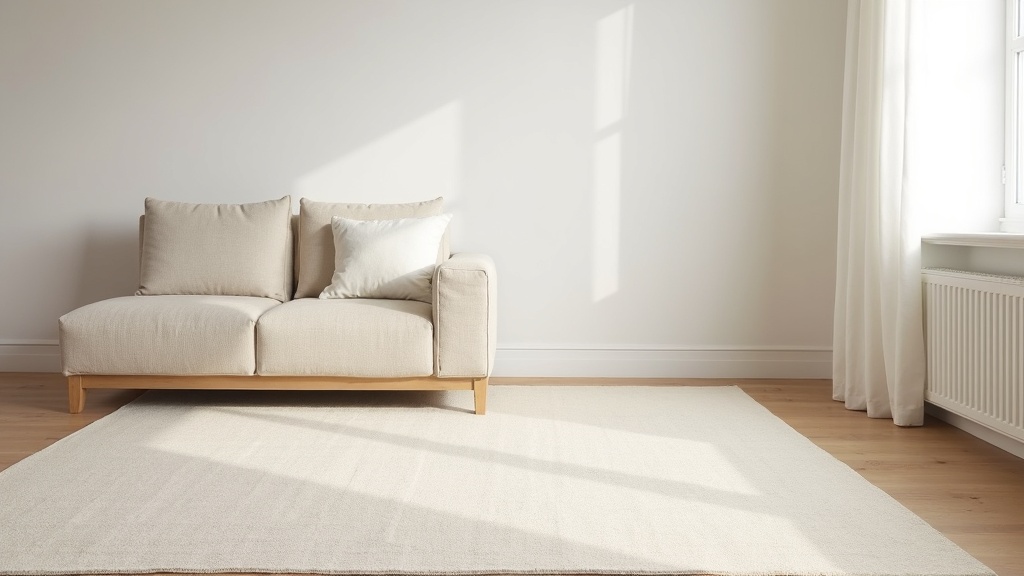
A rug for a minimalist room works best when it adds texture and warmth without adding visual noise: a single natural colour or a very close tonal pair, a restrained weave (flatweave, low pile, or a subtle self-pattern), and a size and shape that respects the room’s existing lines rather than competing with them. The goal is a rug you feel before you notice it.
What “restraint” actually means here
Restraint is not the same as blandness. A minimalist room still needs contrast, depth and a bit of tactile interest — it just gets those things from texture and proportion instead of from colour or pattern. A flatwoven wool rug in undyed ivory, a soumak weave with a faint geometric ghost, or a plain low-pile wool-blend in warm grey can all do this. What they share is a lack of competing focal points: no busy medallion, no high-contrast border, nothing that pulls the eye away from the furniture and light the room is actually built around.
This is a design decision, not a rule about fibre or origin. Handmade and machine-made rugs can both be restrained; the difference lies in how the piece is designed and woven, not in a label. If you want to understand the mechanics of how pattern and weave interact before you shop, the rug buying guides hub is a useful starting point, and the dedicated piece on choosing between a patterned and a solid rug goes further into when each works.
Material first, then everything else
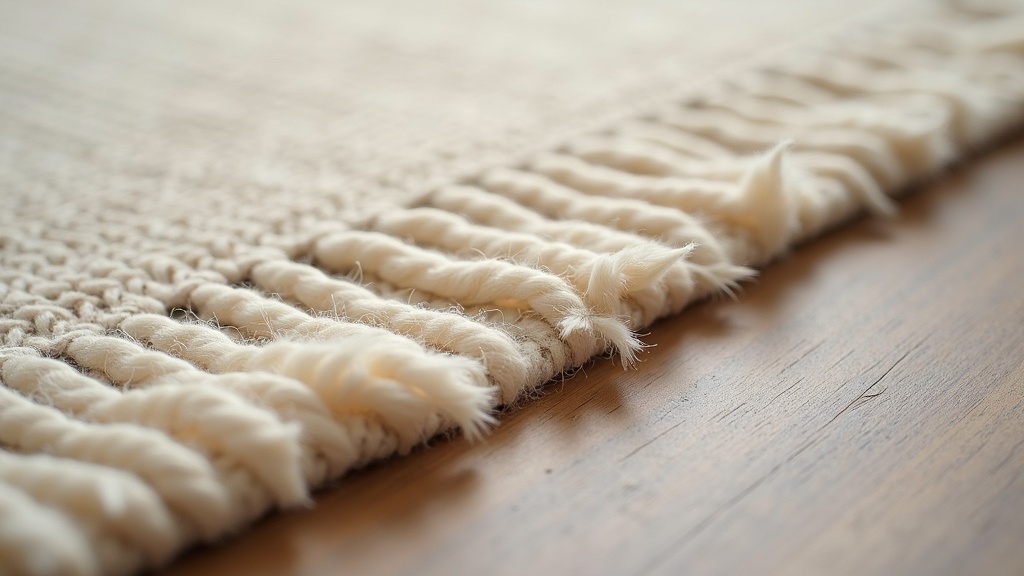
In a pared-back room, the rug’s material does more visual work than usual because it isn’t hidden under pattern. Wool has a natural sheen variation and a slightly irregular surface that reads as quality even in a plain weave — light catches it differently as you walk past, which is part of why plain wool rugs rarely look flat or cheap. Cotton flatweaves are crisper and more matte, good for a Scandinavian or Japandi look but less forgiving of heavy foot traffic. Sisal and other plant fibres bring a warm, grainy texture that suits minimalist rooms with a lot of wood and light, though they have real durability trade-offs worth reading about before committing, particularly around moisture and comfort underfoot — see sisal and seagrass rugs: durability and drawbacks.
Synthetic and wool-blend options can mimic the plain, tonal look of a natural-fibre rug at a lower price point — a machine-made wool-blend rug in a common room size might sit somewhere in the low hundreds, while a comparable hand-knotted wool piece could run several times that, though construction, size and where it’s sold all move this enormously and these figures are only illustrative. The trade-offs between the two are covered in detail in wool vs synthetic rugs: lifespan, and the broader materials and construction archive has fibre-by-fibre comparisons if you’re choosing between several options.
Colour and pattern discipline
The safest colour strategy for a minimalist room is to stay within one or two steps of your wall and floor tone — a rug that’s slightly lighter or slightly darker than the surrounding surfaces, rather than one that jumps to a different colour family. This is what keeps a room feeling calm rather than merely empty. If you want the rug to read as a deliberate layer rather than an afterthought, a subtle weave texture (a soumak line, a herringbone flatweave, a tone-on-tone stripe) gives the eye something to settle on without introducing colour contrast. The article on choosing a rug colour that won’t date is directly relevant here, since neutral, tonal choices are also the ones least likely to look wrong in five years.
Where minimalist rooms go wrong most often is not with plain rugs but with plain rugs that are the wrong plain — stark white against warm oak, or a cool grey that clashes faintly with warm linen furniture. Bring a sample swatch home and look at it in the room’s actual light at different times of day before buying full size.
Weave, pile height and how they read visually
Pile height changes how “quiet” a rug looks as much as colour does. A flatweave sits close to the floor, casts almost no shadow, and tends to disappear into the room in the way minimalist spaces reward. A cut-pile rug, even in a single colour, has more visual weight because of the shadow lines its pile creates — it can still work, but it reads as more of a statement than a flatweave does. If you’re deciding between the two, flatweave vs pile rugs: which suits your room? breaks down the practical and visual differences, including how each handles wear and cleaning over time.
Some minimalist interiors borrow from Moroccan weaving traditions — deep, soft pile in undyed wool, with only a light abstract pattern — because that combination of plain colour and generous texture suits open, uncluttered rooms particularly well. If that’s a direction you’re considering, Moroccan rugs: Beni Ourain and beyond explains what distinguishes genuine pieces from reproductions in construction terms, without putting a figure on any specific rug — that judgment call belongs to an in-person appraisal, not a general guide.
Size and placement without clutter
Minimalist rooms tend to have less furniture, which makes rug sizing more exposed — there’s nothing to visually break up an awkwardly sized rug the way a cluttered room might. Err generous rather than skimpy: a rug that’s too small in a spare room looks like an accident, while a rug that runs under the front third of the main seating anchors the space properly. If your layout is open-plan, the sizing calculations are slightly different again, and how to choose a rug size for an open-plan space covers how to size for zones rather than a single boxed-in room.
Whatever size you land on, a rug pad matched to your floor type is worth the modest extra cost — it prevents slipping and the buckling that comes from a rug being walked on unevenly, both of which are more visible against a bare, minimal floor than in a busier room. Rug pads by floor type covers what to use under hardwood, tile and carpet.
Caring for a plain rug without drama
Plain, pale rugs show stains and dulling faster than patterned ones simply because there’s nowhere for a mark to hide, so routine care matters more than usual. For most wool flatweaves and low-pile wool rugs, regular vacuuming without a beater bar, prompt blotting of spills with a clean white cloth, and an occasional light clean with cool water and a small amount of wool-safe detergent will keep the surface even — always test on a hidden corner first, since some natural dyes can migrate or bleed when wet even in small amounts. Never use chlorine bleach or ammonia on a wool or silk rug, and don’t combine cleaning products in an attempt to boost the effect — bleach in particular breaks down protein fibres like wool and silk and the damage does not reverse.
Hot water and high-pH or alkaline cleaners cause wool to felt, shrink or yellow, so stick to cool water and mild, wool-appropriate products for anything beyond light dust. If your rug is hand-knotted, silk, antique, or you’re simply unsure of its construction, the safer route is a professional rug cleaner rather than any home treatment, since saturating a hand-knotted foundation can shrink and buckle it permanently. The rug care hub and the cleaning and stains archive both go deeper into fibre-specific methods, and it’s worth reading before you reach for anything stronger than a damp cloth.
Frequently asked questions about minimalist rugs
What size rug is best for a minimalist living room?
Size for the seating group rather than the room: the rug should reach at least under the front legs of your main sofa and chairs, and generous sizing tends to look calmer than a small rug floating in the middle of an open floor.
Should a minimalist rug be patterned or plain?
Plain or near-plain usually suits minimalist rooms better because pattern draws the eye and adds visual weight; a subtle tonal weave or texture gives interest without disrupting the calm a plain colour palette is built around.
What material rug is warmest but still looks minimal?
Wool, particularly a deeper flatweave or low-pile weave in undyed or lightly dyed tones, tends to give the most warmth for the least visual noise; cotton and sisal are cooler and flatter in feel but suit a crisper, more spare look.
Is a cheap plain rug as good as an expensive one for a minimalist look?
Visually, a well-chosen machine-made wool-blend rug can look just as calm as a costlier hand-knotted piece; the real differences show up over years in durability, how the colour ages, and how the pile recovers, not in the first impression.
How do I keep a plain light-coloured rug looking clean?
Vacuum regularly without a beater bar, blot spills immediately with a clean cloth, rotate the rug periodically so wear and any fading is even, and have it professionally cleaned on a schedule appropriate to its fibre rather than waiting until it looks obviously dirty.
Rug Academy publishes general information about rugs and is not a dealer, appraiser, or cleaning service. Cleaning and repair methods depend entirely on fibre, dye and construction — test any treatment on a hidden corner first, and consult a professional rug cleaner or conservator before treating a hand-knotted, antique, silk, or valuable rug, as damage from cleaning is usually permanent. Any prices mentioned are illustrative examples only, and nothing here is an appraisal, an authentication, or a guarantee of a rug’s origin or value.