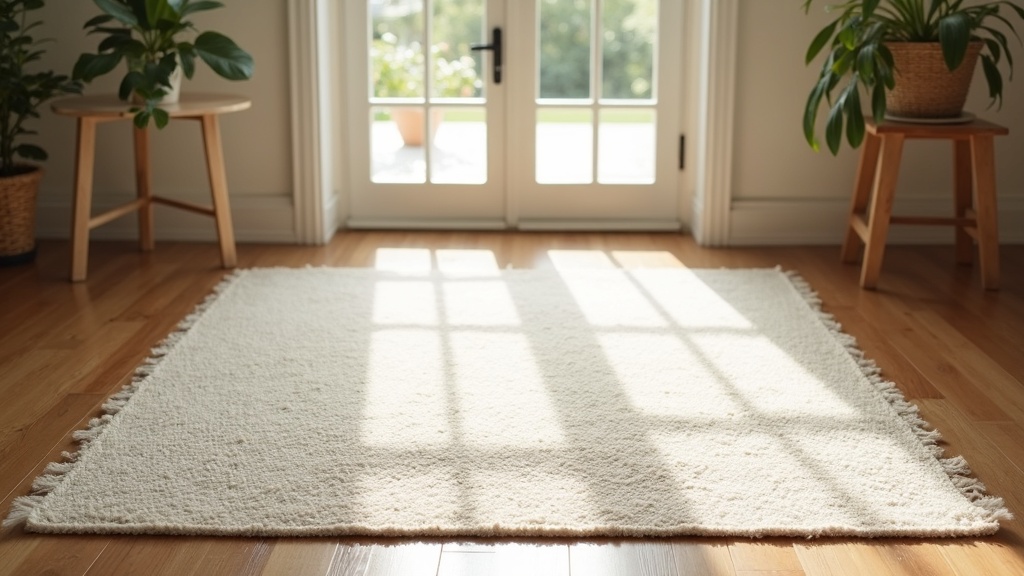
Cotton rugs work well in low-traffic, moisture-tolerant spots where washability and a flat, casual texture matter more than durability — think kitchens, entryways, kids’ rooms, and layered looks over a larger jute or sisal base. They fail in heavy-traffic zones, damp climates, and anywhere you want a rug to last decades, because cotton pile crushes, the fibre holds moisture and can mildew, and dyes are more prone to bleeding than wool. It is a practical, affordable fibre with real limits, not a lesser version of wool.
What “cotton rug” actually means
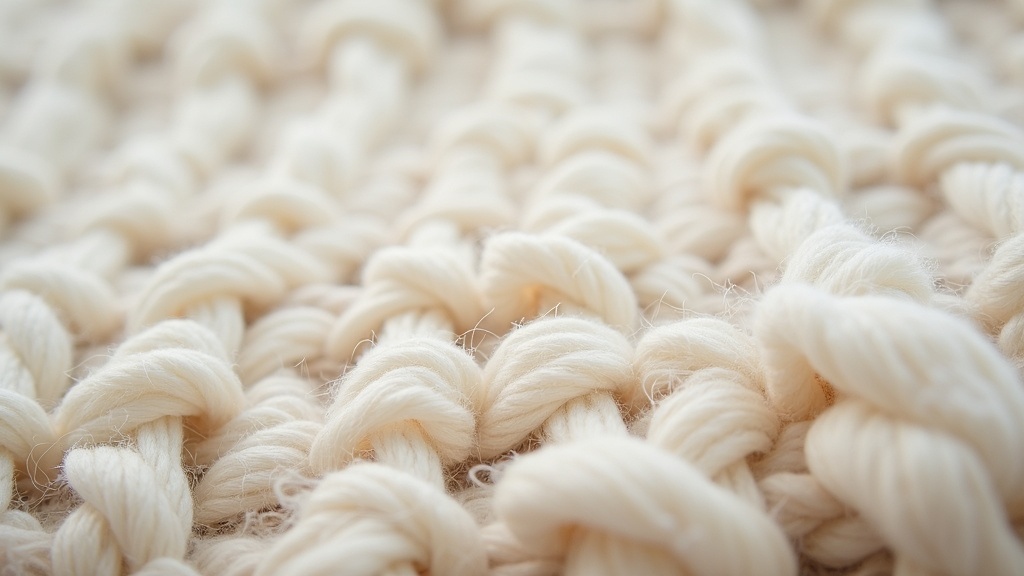
Cotton rugs come in several different constructions, and the construction matters more than the fibre name on the tag. Flatwoven cotton dhurries and rag rugs are thin, reversible, and typically machine-washable in small sizes. Woven cotton chenille rugs have a soft, looped texture but little structural depth. Machine-made cotton-blend rugs, often power-loomed, are usually cotton foundation with a synthetic or wool face yarn — the cotton is doing structural work, not showing on the surface. Understanding which type you have changes almost everything about how it should be cleaned and where it belongs in a home, and it’s a distinction covered in more depth in the site’s rug buying guides hub, particularly the material and construction pages.
Cotton is also the standard foundation material in many hand-knotted wool rugs — the warp and weft you never see, hidden under the pile. That’s a different use case entirely from an all-cotton flatweave, and it’s one reason cotton content alone tells you very little about a rug’s durability or value. For more on how foundation fibre relates to a rug’s structure, see the materials and construction archive.
Where cotton rugs genuinely work
- Kitchens and mudrooms. Cotton dhurries and rag rugs tolerate spills, splashes, and frequent washing better than wool or silk, and a flat weave doesn’t trap grit the way a deep pile can.
- Layering. A cotton flatweave over a jute or sisal rug adds pattern and softness underfoot without the cost or fragility of a hand-knotted piece — a combination discussed alongside natural-fibre trade-offs in the piece on whether a jute rug is a good idea for a living room.
- Kids’ rooms and playrooms. Machine-washable cotton rugs in smaller sizes can go through a washing machine on cool, gentle cycles far more easily than wool, though always check the specific rug’s care label first.
- Budget and seasonal refreshes. Cotton rugs are inexpensive relative to wool or silk, so swapping colours or patterns seasonally is more affordable — a small cotton runner in a common size might sit somewhere in the low tens of dollars, but size, weave density and brand vary enormously, so treat any figure as illustrative only.
- Bedrooms as accent layers. A soft cotton chenille rug beside the bed adds texture without the weight or cost of wool — useful context is in the guide on whether a rug should go under the bed or beside it.
Where cotton rugs fail
Cotton’s weaknesses are structural, not cosmetic, and they show up fastest in the rooms people actually live in hardest.
- Heavy foot traffic. Cotton fibre has less natural resilience than wool — it doesn’t spring back after being crushed the same way, so pile flattens permanently in hallways, in front of sofas, and under dining chairs far sooner than a wool equivalent. The comparison is laid out directly in wool vs synthetic rugs: which lasts longer.
- Moisture and humidity. Cotton absorbs and holds water readily, which means slow drying, a higher risk of mildew and musty odour in humid climates or damp basements, and a tendency to shrink or pucker if it’s ever fully soaked and not dried quickly and evenly.
- Colour bleeding. Many cotton rugs, especially inexpensive ones dyed with less stable processes, will bleed dye when wet, which can transfer onto flooring or onto an adjacent rug during cleaning or in a flood.
- No pad, no grip. Flatwoven cotton rugs are notorious for sliding and for curling at the corners, since they have little weight or structure to hold them flat — a rug pad addresses both, and it’s worth reading do you really need a rug pad and how to stop a rug from curling at the corners before assuming the rug itself is defective.
- Longevity as an investment. A cotton rug is not going to become a family heirloom the way a hand-knotted wool or silk piece might. If you want something with long-term value retention, cotton is the wrong material to start from.
Cleaning a cotton rug safely
Cotton’s washability is one of its selling points, but “washable” doesn’t mean “treat it like a bath towel,” and the right method depends heavily on construction.
- For a small, flatwoven cotton rug or rag rug with no rubber backing, many can go into a washing machine on a cold, gentle cycle with a mild, pH-neutral detergent, then air-dried flat — check the manufacturer’s care label first, since dyes and backings vary.
- For larger cotton rugs or anything too big for a machine, blot spills immediately with a clean white cloth and cool water; for a set-in stain, test a mild, colourfast, pH-neutral detergent on a hidden corner first, since some cotton dyes are not fully colourfast and will migrate or fade with rubbing or heat.
- Avoid hot water on cotton rugs with any wool or synthetic face yarn woven in — heat and high pH can affect the non-cotton fibres even where the cotton foundation itself would tolerate it.
- Never use chlorine bleach on a rug that has any wool, silk, or unknown fibre content, and never combine bleach with ammonia or other household cleaners — the fumes are genuinely dangerous, and the chemical damage to fibre and dye is separate from that risk entirely.
- Steam cleaning can shrink or distort cotton, particularly rugs with a cotton foundation under a wool or synthetic pile, and the details of when steam helps versus harms are covered in can you steam clean a rug: when it helps or ruins it.
- If the rug is hand-loomed, antique, has a mixed or uncertain fibre content, or has any real sentimental or monetary value to you, skip the DIY approach and take it to a professional rug cleaner — damage from an incorrect cleaning method is usually permanent, and it is far cheaper to get a professional opinion first than to restore a ruined rug afterward. The general cleaning and stain principles for different fibres are gathered in the site’s rug care hub.
Cotton, machine-made, and how appraisers tell fibre and construction apart
Because so many inexpensive cotton rugs are machine-made, people sometimes ask whether their rug is “real” or has any resale value. An appraiser looking at this question examines several physical details rather than the fibre content alone: the regularity of the knots or weave (perfectly uniform stitching usually indicates a machine loom), the foundation material and how it’s finished at the edges, the presence and construction of fringe (sewn-on fringe is a strong sign of machine manufacture, since hand-knotted fringe is the extended warp itself), and wear patterns that develop unevenly across handmade pieces versus uniformly across machine-made ones. These same principles are explained in detail in how to tell if a rug is handmade or machine-made. None of this can be reliably assessed from a photo or a general description, and if real money is at stake — insurance, resale, inheritance — an in-person appraisal from a qualified appraiser is the only reliable answer.
Frequently asked questions about cotton rugs
Can cotton rugs be machine washed?
Small, flatwoven cotton rugs without rubber backing often can, on a cold gentle cycle with mild detergent, then air-dried flat. Always check the care label first, since dye stability and backing materials vary between products.
Do cotton rugs shrink?
Yes — cotton fibre can shrink when exposed to hot water, high heat drying, or aggressive machine washing, which is why cool water and air-drying are recommended over hot cycles or tumble drying on high heat.
Are cotton rugs good for high traffic areas?
Not really. Cotton pile flattens faster than wool under repeated foot traffic because it lacks wool’s natural resilience, so cotton rugs suit low-traffic spots like entryways or kitchens rather than hallways or living room walkways.
Why does my cotton rug keep sliding and curling?
Flatwoven cotton rugs are lightweight and have little structure to hold them flat, so they slide on hard floors and curl at the corners. A quality rug pad sized to the rug usually solves both problems.
Is a cotton rug worth anything as an antique?
Generally cotton flatweaves and rag rugs are utilitarian, low-cost pieces rather than collectible antiques, though age, regional origin, and hand-weaving can change that. A qualified appraiser is the only reliable way to confirm value.
Rug Academy publishes general information about rugs and is not a dealer, appraiser, or cleaning service. Cleaning and repair methods depend entirely on fibre, dye and construction — test any treatment on a hidden corner first, and consult a professional rug cleaner or conservator before treating a hand-knotted, antique, silk, or valuable rug, as damage from cleaning is usually permanent. Any prices mentioned are illustrative examples only, and nothing here is an appraisal, an authentication, or a guarantee of a rug’s origin or value.