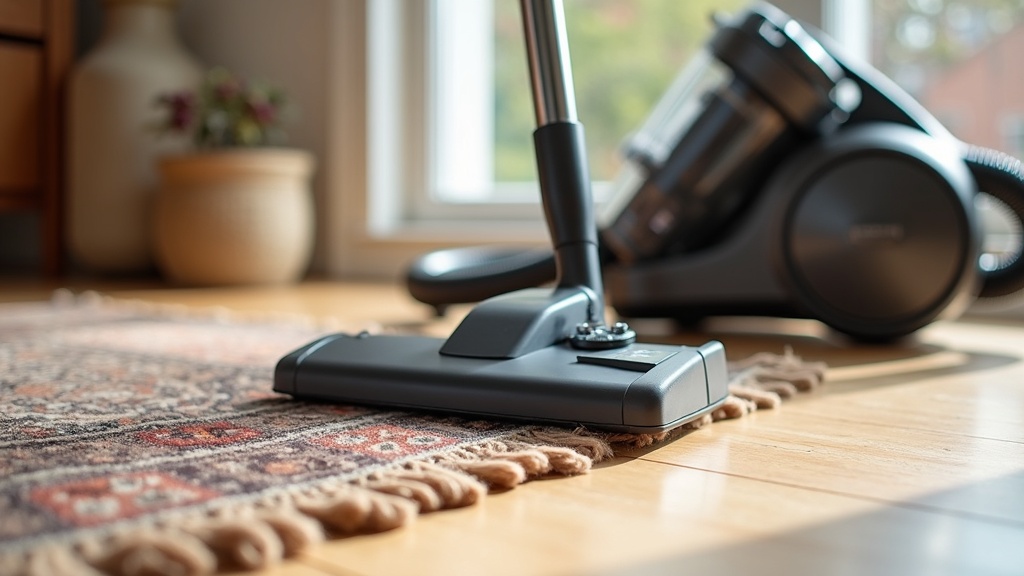
Vacuum most flatweaves and machine-made rugs weekly with a suction-only or gentle rotating-brush setting, moving in the direction of the pile. Switch off the beater bar (rotating brush) entirely near fringe and on hand-knotted, silk, viscose, or loosely woven rugs, since the bar’s spinning bristles snag and shred yarn ends and loose foundation threads. Frequency should follow foot traffic, not a fixed calendar: high-traffic runners and living room rugs need vacuuming two to three times a week, while rugs in low-traffic guest rooms can go every week or two.
Vacuuming is the single most repeated action performed on any rug, which makes it also the most common source of avoidable damage. Grit ground into a pile abrades fibres from the inside, so vacuuming genuinely protects a rug — but the wrong attachment, the wrong direction, or careless handling of fringe can do more harm over a year than an occasional spill.
Why the beater bar is the real issue
A beater bar (also called a rotating brush or “power head”) is designed for cut-pile carpet that is glued or tufted into a backing strong enough to withstand repeated agitation. Hand-knotted and hand-tufted rugs are different: the pile is held in by knots or adhesive on the back, and the surface yarn ends — especially in silk, viscose, or older wool with brittle foundation threads — can be pulled, split, or torn loose by rotating bristles. Fringe is even more vulnerable, because it is unsecured yarn with nothing but a few rows of weaving holding it in place; a beater bar can catch it, wind it around the roller, and rip it out at the base.
Suction-only settings (most upright vacuums have a switch, and canister vacuums with a hose attachment are naturally suction-only) pull dirt out of the pile without any mechanical agitation on the surface. This is the safer default for almost any rug you are not certain about, and it is the only setting that should ever touch fringe.
When a beater bar is acceptable
- Low-pile, tightly woven synthetic or wool-blend rugs with no fringe, used in high-traffic zones where deep grit removal matters more than surface protection.
- Machine-made rugs with a woven-in or serged edge rather than applied fringe.
- Only on the field of the rug, never within a few inches of any edge, fringe, or embellishment.
If you cannot tell whether your rug is hand-knotted or machine-made, treat it as fragile until you know. The distinction affects far more than vacuuming — it determines value, repair options, and cleaning method — and the guide on how to tell if a rug is handmade or machine-made walks through the visual and backing clues appraisers look for, including knot structure, fringe construction, and foundation material.
Protecting fringe specifically
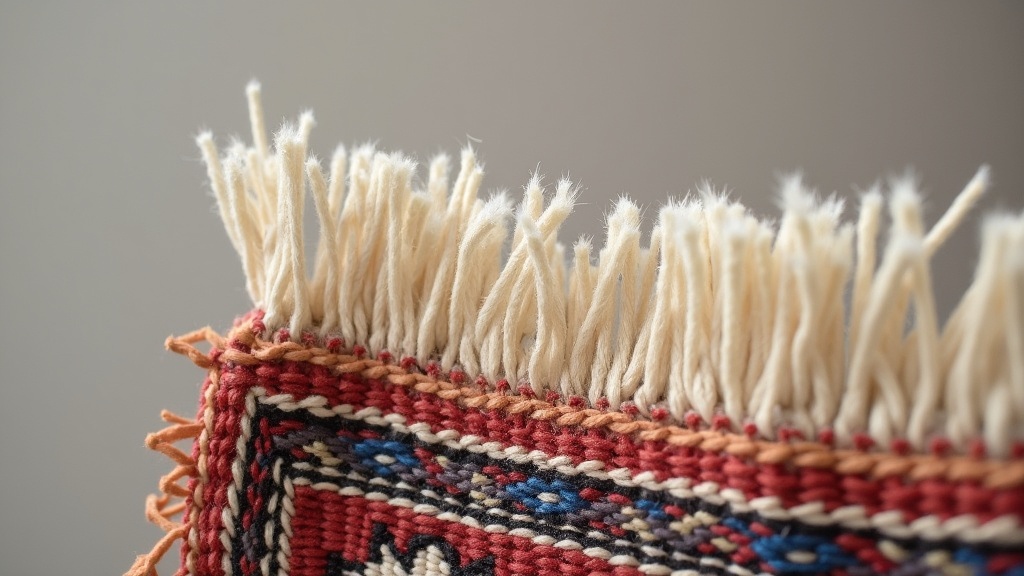
Fringe is often the original warp threads of the rug, turned under and finished, not a decorative add-on — which is exactly why it cannot be run through rollers or agitated. To vacuum fringe safely:
- Use the hose attachment with a soft brush or upholstery nozzle, never the beater-bar head.
- Vacuum in the direction the fringe lays naturally, with light suction, rather than dragging across it.
- If fringe is already frayed, matted, or pulling apart, vacuum it even more gently, or skip it and address the fraying directly — the article on how to fix frayed rug fringe covers combing, sealing, and when re-knotting by a professional is worth the cost.
- Never use a stiff brush attachment or a carpet rake designed for shag pile on delicate silk or viscose fringe; the fibres are weaker wet or dry and shed easily under friction.
How often to vacuum, realistically
Frequency depends on traffic and fibre, not a fixed rule:
| Situation | Suggested frequency | Notes |
|---|---|---|
| Entryway or hallway runner | 2–3 times per week | Grit here is abrasive sand and road salt residue; frequent light vacuuming matters more than deep cleaning |
| Living room, under seating | Weekly | Rotate the rug periodically so wear and sun exposure are even |
| Bedroom or low-traffic room | Every 1–2 weeks | Less grit, but dust and pet dander still settle into pile |
| Fringe and edges on any rug | Same frequency as the field, suction-only | Skipping fringe entirely lets grit build up at the weakest structural point |
| Antique, silk, or fragile rugs | Light suction only, as needed | Consider a screen attachment or reduced suction; ask a conservator if unsure |
Vacuuming does not replace periodic deep cleaning. Even a well-vacuumed rug accumulates oils, dust, and allergens below the surface that only washing removes, which is why most fibre types still benefit from a professional clean on a longer cycle — the reasoning behind that interval, and how it differs for wool versus synthetic construction, is explained in how often should you professionally clean a rug.
Rugs that need extra caution
Viscose (often sold as “art silk”) mats and crushes under any mechanical agitation and loses its sheen where fibres are roughed up, a problem covered in more depth in viscose rugs: why they look great and age badly. True silk rugs should generally be vacuumed only with the lowest suction setting and a soft attachment, and any deeper cleaning question should go to a specialist rather than a home remedy — see silk rugs: beautiful, fragile, and often misunderstood for why silk resists the same treatments that are safe on wool. For hand-knotted wool rugs generally, vacuuming direction and pressure matter alongside the cleaning steps described in how to clean a wool rug without ruining it, since wool felts and can distort under heat and high-pH products even when the vacuuming itself has been gentle.
A rug pad also affects vacuuming outcomes: a good pad keeps the rug from shifting and buckling under the vacuum head, which reduces the tugging that damages edges over time. If you are deciding whether one is worth adding, do you really need a rug pad covers the trade-offs for different floor types.
A safe general routine
- Shake out or gently sweep loose surface debris from small rugs before vacuuming, reducing the work the vacuum has to do.
- Vacuum the field of the rug in the direction of the pile, using suction-only or a beater bar only if the rug is sturdy, low-pile, and fringe-free.
- Switch to a hose and soft attachment for fringe, edges, and any area of visible wear or looseness.
- Flip lightweight flatweaves occasionally and vacuum the reverse side to pull out embedded grit that surface vacuuming misses.
- Test any unfamiliar attachment or new vacuum on a small hidden corner first, checking afterward for pulled yarns or loosened knots before running it across the whole rug.
For anything hand-knotted, antique, silk, or of uncertain origin and meaningful value, treat vacuuming as routine maintenance only, and leave deeper cleaning, stain removal, and any structural repair to a professional rug cleaner or conservator — the hub for rug care and the cleaning and stains archive both go into which situations call for expert hands versus safe home upkeep.
Frequently asked questions about vacuuming a rug
Is it OK to vacuum a rug with fringe using a regular vacuum?
Only if you switch off the beater bar or use the hose attachment near the fringe. The rotating brush on a standard upright can catch loose fringe threads and pull them out at the base, so keep that setting for the rug’s field and away from any edge.
Can vacuuming damage a hand-knotted rug?
Yes, if a beater bar is used, since the rotating bristles can loosen knots and shred surface yarn that isn’t backed the way machine-made carpet is. Suction-only vacuuming, moving with the pile direction, is the safer routine for hand-knotted construction.
How often should I vacuum an area rug?
High-traffic rugs like entryway runners benefit from two to three light vacuums a week, while rugs in bedrooms or formal rooms can usually go one to two weeks between vacuuming, adjusted for pets, allergies, and how much grit tracks in from outside.
Should I vacuum the back of my rug too?
For lightweight flatweaves and kilims, occasionally flipping and vacuuming the back helps dislodge grit that has worked through the weave, which surface vacuuming alone won’t remove. Heavier pile rugs are harder to flip safely and usually don’t need it as often.
What vacuum setting is safest for a silk or viscose rug?
Use the lowest suction level with a soft brush or upholstery attachment, never a beater bar, since both fibres crush and lose their sheen under mechanical agitation. If you’re unsure how a specific vacuum will behave, test on a small hidden corner first or ask a professional cleaner familiar with delicate fibres.
Rug Academy publishes general information about rugs and is not a dealer, appraiser, or cleaning service. Cleaning and repair methods depend entirely on fibre, dye and construction — test any treatment on a hidden corner first, and consult a professional rug cleaner or conservator before treating a hand-knotted, antique, silk, or valuable rug, as damage from cleaning is usually permanent. Any prices mentioned are illustrative examples only, and nothing here is an appraisal, an authentication, or a guarantee of a rug’s origin or value.