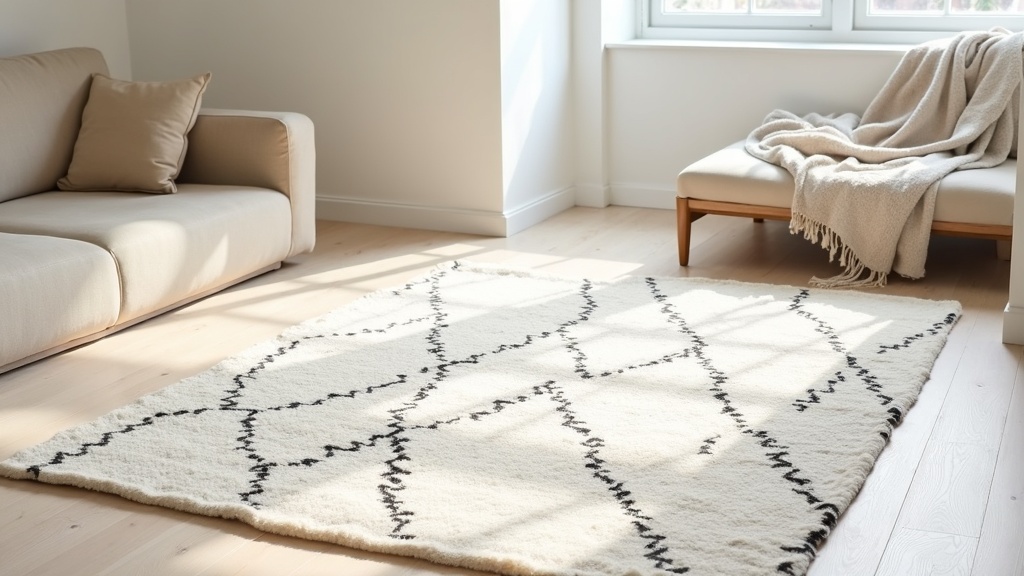
“Moroccan rugs” is an umbrella term for weavings from many different Berber (Amazigh) tribal groups across the Middle and High Atlas, and Beni Ourain is only one of them — the plush, ivory-and-black diamond rugs that became a design-world staple. Beyond Beni Ourain sit flatter, more colourful traditions like Boujad, Azilal, and the recycled-textile Boucherouite rugs, each tied to a different region, material, and household use rather than one single “Moroccan style.” Knowing which family a rug belongs to matters for how it should be cleaned, how it wears, and what it might reasonably be worth.
Where the Beni Ourain look comes from
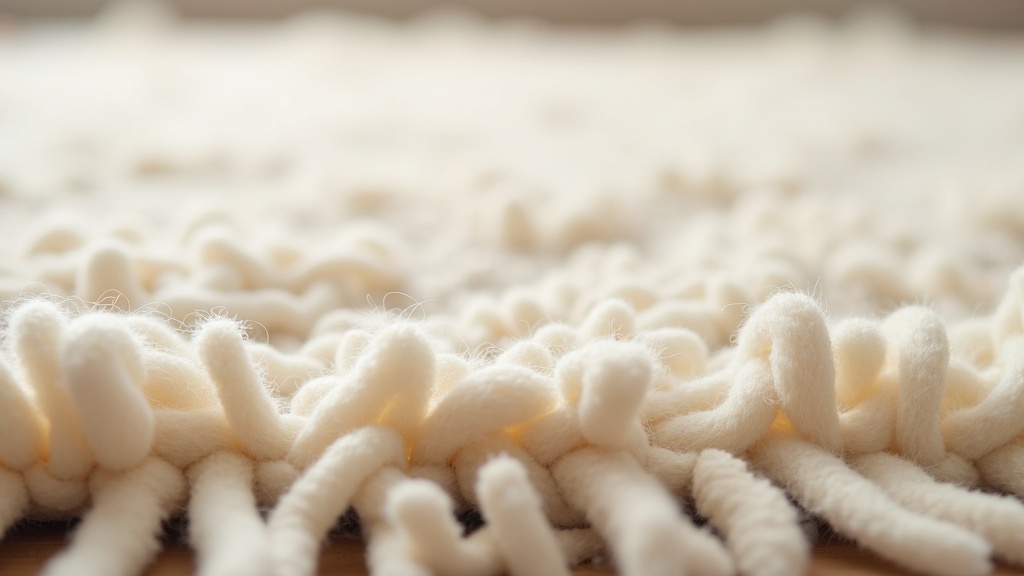
The Beni Ourain are a confederation of Berber tribes from the Atlas Mountains who traditionally wove thick, undyed wool rugs as bedding and floor insulation against cold mountain winters, not as decorative statements. That practical origin explains the look: minimal geometric line-work in natural black or brown wool against undyed ivory, a deep pile for warmth, and a loose, low-key handle rather than a tightly finished, formal carpet. Original pieces were made for use inside the home, which is part of why authentic vintage examples often show soft wear, slight irregularities in the knotting, and asymmetric field patterns that a machine-made reproduction rarely replicates convincingly.
Because demand for the Beni Ourain look far outpaces the supply of genuine antique and semi-antique examples, the market now includes a wide range: old tribal pieces, newly hand-knotted rugs made in the same villages using the same wool and motifs, and mass-produced machine-made or hand-tufted rugs sold purely as decor. None of these is inherently “wrong” to buy, but they are different products with different lifespans and different price logic, and conflating them is the most common mistake buyers make.
The other Moroccan traditions worth knowing
Treating every Moroccan rug as a Beni Ourain flattens a much richer craft picture. A few other groups show up regularly in the market:
- Boujad rugs — from the plains around Boujad, typically wool with vivid pinks, oranges and purples from both natural and synthetic dyes, looser and more painterly in composition than Beni Ourain pieces.
- Azilal rugs — from the Azilal province in the High Atlas, often combining a pale wool ground with bold, almost abstract linework in saturated colour, prized in the same design circles as Beni Ourain but visually bolder.
- Boucherouite rugs — made from recycled cotton, wool, and synthetic fabric scraps rather than spun wool from fleece; these are flatter, lighter, and inexpensive by nature since they were originally a resourceful use of textile offcuts, not a luxury product.
- Zemmour and Zayane weaves — denser, more structured geometric rugs from the Middle Atlas, closer in feel to other Berber tribal work than to the loose Beni Ourain shag.
Many of these traditions also produced flatwoven pieces alongside pile rugs; if you are trying to work out whether something described as Moroccan is a pile rug or a flatweave, the general distinctions covered in the rug craft hub and in the wider regional and antique rugs archive are a useful starting point before narrowing in on Morocco specifically.
Construction and materials to look for
Most traditional Moroccan pile rugs are hand-knotted wool on a wool or cotton foundation, using a coarser knot and lower knot count than, say, a fine Persian city rug — this is a feature of the style, not a defect, since a dense, low-pile carpet was never the goal. Dyes in older pieces are frequently a mix of natural plant and mineral dyes and early synthetic dyes, which is one reason colour can look slightly uneven from row to row; understanding the visual cues that separate natural dye variation from synthetic uniformity is covered in more depth on the natural vs synthetic dyes page. Knot count itself is a poor way to judge a Moroccan rug, since these were never meant to compete on fineness the way a Tabriz or Kashan does — the knot density myths that trip up buyers of finer rugs are addressed directly on the knot density page.
Cleaning and caring for a Moroccan wool rug
Almost all traditional Moroccan pile rugs are hand-knotted wool, and wool responds well to gentle, low-moisture care but poorly to heat, high pH, and saturation. For routine maintenance, vacuum without a beater bar, or with the bar raised, since the long, loose pile and any fringe on these rugs is easily pulled and torn by rotating brushes — the mechanics of this are explained on the beater bar and fringe page. For a fresh spill, blot immediately with a clean white cloth and, if needed, a small amount of cool water with a wool-safe, pH-neutral detergent, working from the outside of the spill inward; never rub, and never use hot water, since heat combined with agitation is what causes wool to felt and shrink. Chlorine bleach and ammonia-based cleaners should never touch a wool rug — bleach breaks down the wool fibre itself, and mixing it with other household chemicals can also produce dangerous fumes for no cleaning benefit.
Because many Moroccan pile rugs use natural or early synthetic dyes that can bleed when wet, always test any liquid on a hidden corner of the rug first and watch for colour transfer onto your cloth before treating a visible area. The shaggy, low-twist wool typical of Beni Ourain and Azilal rugs is also more vulnerable to matting from over-wetting than a tightly woven pile, so it is worth reading the fuller wool-cleaning guidance on how to clean a wool rug without ruining it before attempting anything beyond blotting a fresh spill. If a rug is heavily soiled, has an odour, has been in storage, or is old and valuable to you, the safer route is a professional rug cleaner experienced with hand-knotted wool, rather than a DIY deep clean or a home steam cleaner, since saturating the foundation can shrink and buckle it in ways that are not reversible.
Authenticity, age, and value: what you can assess yourself
It is reasonable to want to know whether a Moroccan-labelled rug is genuinely hand-knotted tribal work, a newer commercial reproduction from the same region, or a machine-made import — but no article, and no photo sent to a dealer, can reliably tell you that or put a figure on it. What you can do is look at the things appraisers actually examine: the back of the rug for irregular, slightly uneven knots versus a perfectly uniform machine-made grid; the fringe, to see whether it is a continuation of the foundation warp threads (hand-knotted) or sewn on separately (often, though not always, a sign of machine production or later repair); the presence of natural wear and slight asymmetry in the pattern, which tends to indicate age and hand production rather than a printed or power-loomed copy; and the wool itself, which in genuine tribal pieces is often less processed and slightly greasy or lanolin-rich compared to the more uniform, bright wool used in commercial reproductions. The general markers separating handmade from machine-made construction are laid out on the handmade vs machine-made page, and are directly applicable to Moroccan rugs alongside any other type.
None of this substitutes for an in-person appraisal. If you are buying a Moroccan rug described as antique or vintage tribal work at a price that matters to you, or you have inherited one and want to know what it is actually worth, the only reliable route is a qualified textile or rug appraiser who can examine the knotting, foundation, dyes and wear firsthand. As a rough illustration only, a new machine-made rug in a Beni Ourain pattern might sit in the low hundreds for a mid-size room, while a genuinely hand-knotted, older tribal piece in good condition can run into the low thousands — but construction, age, condition, size and the specific market at the time of sale drive this enormously, and these figures are examples, not valuations of anything you own.
Frequently asked questions about Moroccan rugs
What is the difference between a Beni Ourain rug and other Moroccan rugs?
Beni Ourain rugs are a specific Atlas Mountain tribal tradition known for thick undyed ivory wool with sparse black or brown geometric lines, while other Moroccan traditions like Boujad or Azilal use bolder colour and different motifs and construction.
Are Moroccan rugs handmade or machine-made?
Both exist in the market: traditional Beni Ourain, Boujad, Azilal and related rugs are hand-knotted, but the style’s popularity has also produced many machine-made and hand-tufted copies, which are worth less and wear differently over time.
How do you clean a Moroccan wool rug at home?
Vacuum gently without a beater bar, blot fresh spills with cool water and a wool-safe detergent, and test any product on a hidden corner first; avoid hot water, bleach, and saturating the rug, and use a professional cleaner for anything beyond light surface care.
Why are Beni Ourain rugs so expensive?
Prices reflect scarcity of genuine older tribal pieces, the labour of hand-knotting thick pile, and strong design demand outstripping supply; newer hand-knotted versions and machine-made reproductions are priced very differently, so “expensive” depends heavily on which type you are looking at.
Can you tell if a Moroccan rug is real by looking at photos online?
Not reliably — knot structure, foundation material, wool quality and dye characteristics are usually only visible clearly in person, so photos alone cannot confirm authenticity or age; a qualified in-person appraisal is the only dependable answer when real money is involved.
Rug Academy publishes general information about rugs and is not a dealer, appraiser, or cleaning service. Cleaning and repair methods depend entirely on fibre, dye and construction — test any treatment on a hidden corner first, and consult a professional rug cleaner or conservator before treating a hand-knotted, antique, silk, or valuable rug, as damage from cleaning is usually permanent. Any prices mentioned are illustrative examples only, and nothing here is an appraisal, an authentication, or a guarantee of a rug’s origin or value.