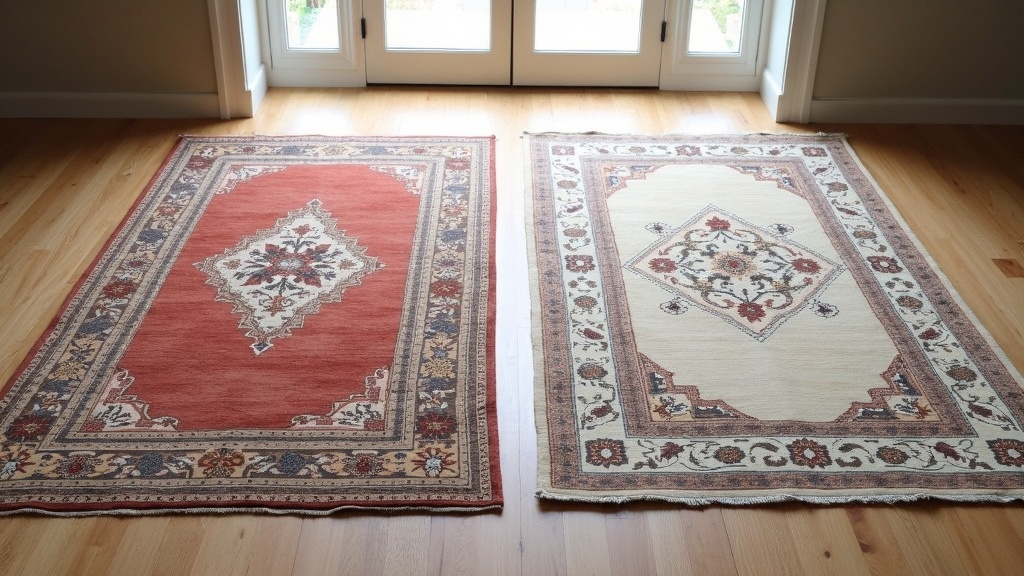
Two rugs can share a pattern, a colour palette, even a size, and still be worlds apart in price because price is driven by what you cannot see from across a room: how the rug was made, what it is made of, and how much handwork went into it. A hand-knotted wool rug with a hundred knots per square inch takes weeks or months longer to produce than a machine-made lookalike, and that labour, along with material quality and condition, is where the real cost sits.
Construction is the single biggest factor
The most consequential difference between two similar-looking rugs is almost always how the pile is attached to the foundation. A handmade vs machine-made rug comparison explains this in depth, but the short version is that hand-knotted rugs are built one knot at a time on a loom, hand-tufted rugs have pile punched through a fabric backing and glued in place, and machine-made rugs are woven on power looms at industrial speed. All three can be styled to look like a traditional Persian or tribal design. Only one of them represents the hundreds of hours of skilled labour that traditional rug pricing reflects.
This is also why appraisers and serious buyers turn a rug over before anything else. The back of a hand-knotted rug shows the individual knots and the pattern echoed faintly through the foundation; a tufted rug shows a canvas or scrim backing, often with visible glue; a machine-made rug shows a uniform, almost printed-looking underside with no knot structure at all. The rug craft hub covers how looms, knots and weaving techniques combine to produce these differences, and it’s worth reading before you shop if price surprises you.
A rough illustrative comparison
The figures below are only examples to show the scale of difference construction can make — actual prices depend heavily on size, material, age, and where a rug is sold, so treat these as illustrative ranges rather than anything you should quote back to a seller.
| Construction type | Typical labour involved | Illustrative price range, medium area rug |
|---|---|---|
| Machine-made | Hours, largely automated | Low hundreds |
| Hand-tufted | Days | Low to mid hundreds |
| Hand-knotted, village or workshop production | Weeks to months | Mid hundreds to several thousand |
| Hand-knotted, fine or antique | Months to years | Several thousand and up, highly variable |
Knot count matters, but not the way people assume
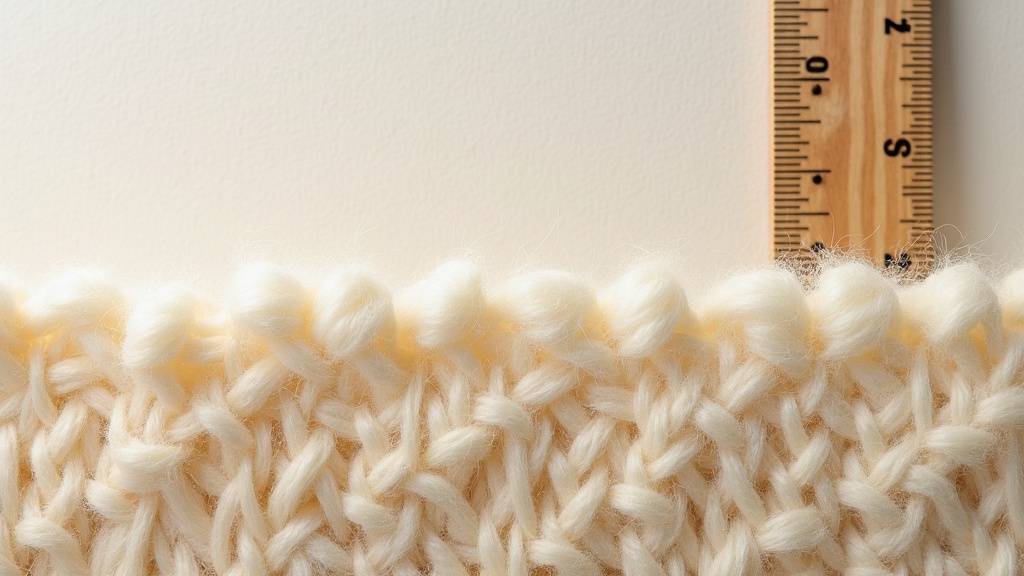
It is tempting to treat knot count as a simple proxy for quality, and higher density usually does mean finer detail and more labour. But the relationship is not linear, and a very high knot count in a coarse wool with muddy colour can be worth less than a moderate knot count in fine wool with vivid, well-executed dyework. Our piece on knot count myths goes into why “higher is always better” oversimplifies things dealers and appraisers actually weigh knot count alongside the fineness of the yarn, the tightness of the weave, and how cleanly the pattern resolves, not as a number in isolation.
Materials and dyes quietly move the price
Fibre choice affects both cost and longevity. Hand-spun wool from certain sheep breeds, silk, and natural dyes derived from plants and insects all cost more to produce than machine-spun wool, wool-silk blends, or synthetic dyes. Our guide to natural vs synthetic dyes explains how to spot the visual differences, such as subtle colour variation (abrash) within a single dye lot that is characteristic of natural dyeing and hand-spinning, versus the flatter, more uniform colour typical of synthetic dyes and machine yarn. Neither is inherently “better” for everyday living, but they are priced differently, and a rug described as silk or wool-silk should be handled very differently when it comes to cleaning, since silk is easily damaged by water and most detergents and generally belongs with a professional conservator rather than a home cleaning attempt.
Condition and history change the number dramatically
Even identical rugs from the same workshop can diverge in price once wear enters the picture. Original selvedge and fringe finishing, even pile height, and the absence of moth damage all support value; heavy wear through to the foundation, replaced fringe, or amateur repairs typically reduce it. Our article on how wear and repairs affect a rug’s value walks through what appraisers actually look at, including whether a repair was done by reweaving (matching original technique) or patching (a faster, less integrated fix). A rug that has been aggressively “restored,” over-cleaned, or chemically washed to fake an aged look can also lose authenticity value even if it looks appealing on the showroom floor; the signs are covered in our piece on signs a rug has been chemically washed or painted.
Why two nearly identical listings can still differ
Buyers are often confused when two rugs that look the same in photos are priced hundreds or thousands of dollars apart online. Usually one or more of the following is at play: a subtle construction difference not obvious in a photo, a size or shape variance, dye quality invisible on screen, or condition issues like foundation wear or old repairs that only show up on close inspection or in raw, unedited photos. Retailer margin and where the rug was sourced play a role too, but they explain smaller gaps, not the difference between a few hundred dollars and several thousand.
None of this means you should try to determine authenticity or value from an article, including this one. If real money is at stake, an in-person appraisal by a qualified, credentialed appraiser is the only reliable way to know what you actually have; our overview of getting a rug appraised explains how that process works and what to bring.
What this means for cleaning and care decisions
Because construction and fibre so strongly affect what a rug is worth, they should also dictate how you clean it — a mistake that would be a minor annoyance on a synthetic machine-made rug can be permanent and expensive on a hand-knotted wool or silk piece. Always test any treatment on a hidden corner first, and when a rug is hand-knotted, antique, silk, or of uncertain construction, the safest choice is a professional rug cleaner or conservator rather than a home attempt. The rug care hub covers cleaning, storage and repair topics in more depth if you want to understand your options before something goes wrong.
Frequently asked questions about rug pricing differences
Why is one hand-knotted rug so much cheaper than another that looks the same?
Wool quality, dye type, knot fineness, and where it was produced all vary even within hand-knotted rugs. A village-made rug in coarser wool with synthetic dyes will typically cost less than a finely knotted piece in premium wool or silk with natural dyes, even if the pattern looks similar from a distance.
Does a higher knot count always mean a more expensive rug?
Not automatically. Knot count matters alongside yarn fineness, dye quality, and how cleanly the design resolves. A dense but coarsely spun rug can be worth less than a moderately dense rug made with finer materials and better colour execution.
How can I tell if a rug is machine-made or hand-knotted before buying?
Check the back: hand-knotted rugs show individual knots and the pattern faintly repeated through the foundation, while machine-made rugs have a uniform, almost printed underside with no knot structure and often a straight, mechanical fringe attached rather than woven through.
Does cleaning or restoration affect what a rug is worth?
Yes, in both directions. Careful, professional restoration that matches original technique can preserve value, while aggressive chemical washing, bleaching, or amateur repairs can visibly and permanently reduce it, sometimes more than the wear they were meant to fix.
Is it worth getting a rug appraised before I sell or insure it?
If the rug is hand-knotted, older, or you suspect it has real value, yes — an in-person appraisal from a qualified appraiser is the only reliable way to establish condition, authenticity and current worth, since none of that can be determined accurately from photos alone.
Rug Academy publishes general information about rugs and is not a dealer, appraiser, or cleaning service. Cleaning and repair methods depend entirely on fibre, dye and construction — test any treatment on a hidden corner first, and consult a professional rug cleaner or conservator before treating a hand-knotted, antique, silk, or valuable rug, as damage from cleaning is usually permanent. Any prices mentioned are illustrative examples only, and nothing here is an appraisal, an authentication, or a guarantee of a rug’s origin or value.