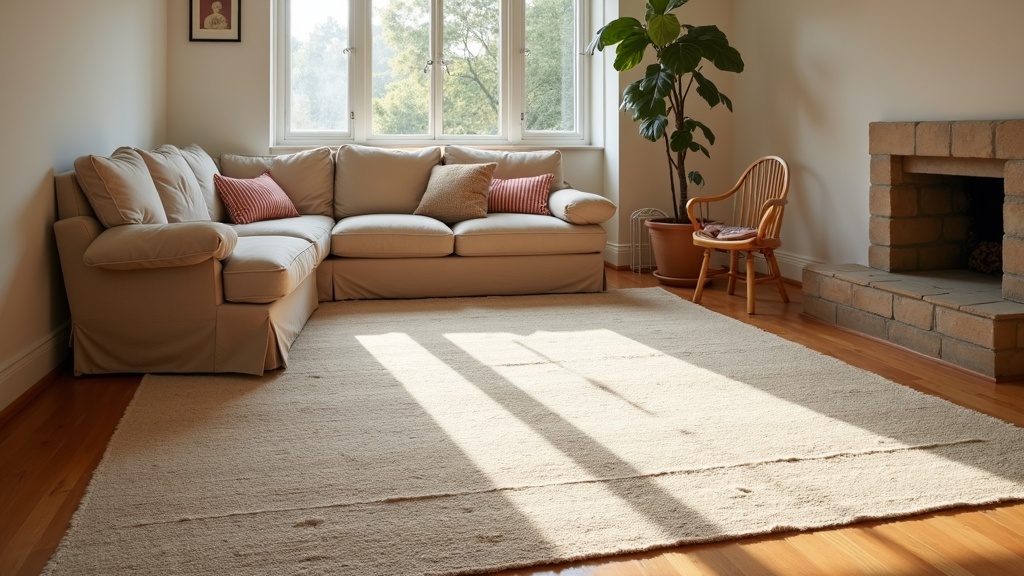
No, a rug does not have to match the shape of the room it sits in. What matters far more is how the rug relates to the furniture grouping, traffic paths and proportions within that space. A rectangular room can hold a round rug beautifully, and an oddly angled or open-plan room often works better with a rug shape chosen for the seating arrangement rather than for the walls.
This is one of those questions where the instinct — “square room, square rug” — feels logical but leads people astray. Rooms are static containers; the way you actually live in them is not. A rug’s job is to anchor activity, not to trace architecture.
Why room shape and rug shape are different decisions
A room’s shape is fixed by its walls. A rug’s shape should be driven by the furniture zone it needs to unify — a seating group, a dining table, a bed, a hallway path. Because those two things rarely line up perfectly, treating them as separate decisions usually gives a better result than forcing the rug to echo the room’s outline. This is one of the core ideas in our rug buying guides hub, and it holds true whether you’re working with a simple rectangle or a room full of odd angles.
The practical test is this: stand where you’ll sit or where you’ll enter the room, and look at what the rug needs to visually hold together. If a round coffee table and two chairs sit in the middle of a rectangular room, a round or square rug under that grouping can look more intentional than a rectangular one stretched to match the walls.
Rectangular and square rooms
These are the easiest cases, and also where the “match the room” instinct happens to be mostly harmless — a rectangular living room usually does suit a rectangular rug, simply because most seating arrangements are rectangular too. But even here, exceptions are common. A near-square room with a sectional sofa often looks better with a large rectangular rug set on the diagonal-feeling long axis of the seating, not the room. Our guide to rug placement for a living room with a sectional goes through this in more detail, including how much rug should sit under the front legs of each piece.
A genuinely square room can take a square rug, but round and octagonal rugs also work well in square spaces because they soften hard corners rather than reinforcing them.
Open-plan and irregular spaces
Open-plan rooms are where shape-matching breaks down completely, because there often isn’t one room shape to match — there’s a living zone, a dining zone, and sometimes a walkway between them, all inside one continuous footprint. In these layouts the more useful question is how to size and shape a rug (or rugs) so each zone reads as its own area. Our piece on choosing a rug size for an open-plan space walks through zoning by furniture group rather than by architecture, and if you’re considering two separate rugs for two zones, mixing two rugs in one open-plan room covers how to keep the pairing visually coherent rather than accidental.
Awkward architectural shapes — an L-shaped living-dining room, a room with a chimney breast eating into one corner, a loft with angled walls — almost never have a rug shape that mirrors them, and trying to custom-cut a rug to a room’s exact perimeter is rarely worth it structurally or financially. A conventional rectangle, round, or runner, placed to serve the furniture rather than the walls, will nearly always look more settled.
Round rooms, bay windows and other genuine curves
True curved architecture — a bay window nook, a turret room, a round breakfast area — is the one place where a rug echoing the room’s curve can look deliberate rather than forced, because the eye is already primed to expect roundness there. Even then, the rug doesn’t need to fill the curve exactly; a round or oval rug sized to the seating inside the bay, with a visible margin of floor around it, generally reads better than one cut to the wall line.
Hallways and narrow spaces
Corridors and entry halls are really the one room type where shape and rug shape are meant to correspond — a long narrow space calls for a runner, not because “shape should match shape” as a general rule, but because a runner’s proportions solve the specific problem of guiding foot traffic down a constrained path. Getting the width and length right matters more than the fact that it’s a runner at all; our guide to runner rug sizes and hallway proportions has the sizing detail.
What actually matters more than shape
- Furniture zone coverage. At minimum, the front legs of major seating pieces should sit on the rug; ideally all four legs do in larger rooms.
- Consistent floor margin. A visible, even border of bare floor around the rug (commonly 8–18 inches depending on room size) reads as intentional, regardless of rug shape.
- Traffic paths. A rug shouldn’t force people to step on and off it constantly along the main walking route through a room.
- Sightlines from the entry. The first impression of a room’s proportions often comes from the doorway, and a well-placed rug shape can visually correct a room that feels too long, too square, or oddly divided.
If you’re working within a deliberately spare scheme, restraint in shape choice matters as much as restraint in pattern — see minimalist rooms and choosing a rug with restraint for how fewer, more considered shape decisions tend to outperform an attempt to match everything precisely.
Can you cut a rug to fit an odd-shaped room?
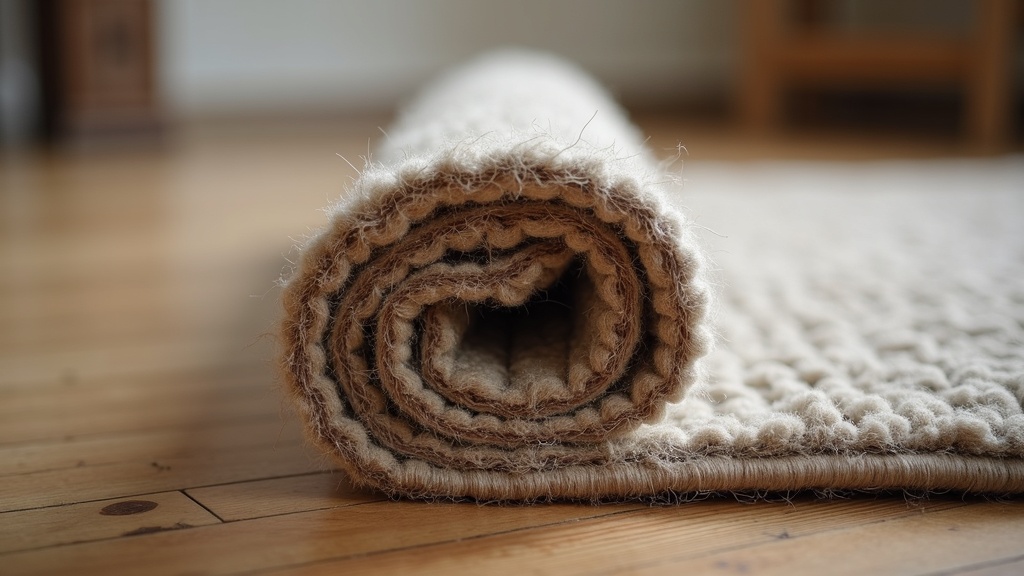
Physically, yes — but it comes with real trade-offs worth knowing before you do it. Machine-made rugs with synthetic or latex backing can sometimes be trimmed and bound along a new edge without catastrophic unravelling, though the result is a permanent alteration. A hand-knotted rug is a different matter entirely: its structure depends on continuous warp and weft threads running the full width and length, and cutting into that foundation to chase a room’s angle will cause the edge to unravel unless it’s carefully finished by hand, and it will also permanently change the piece from original to altered. That distinction matters for anyone who cares about a rug’s long-term value, since collectors and appraisers weigh originality heavily — our article on how wear and repairs affect a rug’s value explains how alterations like this are typically assessed. If a rug has any age, hand-knotted construction, or unclear origin, it’s worth getting an opinion from a qualified appraiser or conservator before altering it, rather than assuming a size mismatch with the room is a simple fix.
Quick reference: room shape vs. typical rug shape choices
| Room shape | Rug shapes that usually work | Why |
|---|---|---|
| Rectangular living room | Rectangular, occasionally round under a central grouping | Matches typical rectangular seating layouts |
| Square room | Square, round, octagonal | Round shapes soften corners; square echoes the room without emphasising it |
| Open-plan L-shape | One large rectangle per zone, or two coordinated rugs | Zoning by furniture group matters more than the room’s outline |
| Hallway or corridor | Runner | Solves the traffic-path problem the space actually presents |
| Bay window or curved nook | Round or oval, undersized relative to the curve | Echoes the architecture without fighting for exact fit |
For a deeper dive into how shape interacts with layering multiple rugs in one space, layering rugs: sizes and proportions that work covers the sizing math when you’re combining two pieces rather than choosing one.
Frequently asked questions about rug shape and room shape
Does a round rug work in a rectangular room?
Yes, particularly under a round table, a circular seating arrangement, or as a contrast piece near a rectangular sofa. What matters is that the rug’s diameter comfortably covers the furniture footprint with an even margin of visible floor around it, not that it mirrors the room’s rectangular walls.
Should a rug in an open-plan room match the whole floor’s shape?
No — treat each furniture zone (living, dining, walkway) as its own decision. A single giant rug shaped like the overall floor plan usually looks less intentional than well-proportioned rugs sized to each seating or dining group individually.
Can I cut a rug to fit an oddly shaped room?
You can, but hand-knotted rugs depend on continuous foundation threads, so cutting requires professional edge-finishing to prevent unravelling, and it permanently alters the piece. For anything hand-knotted, antique, or of uncertain value, get an appraiser’s or conservator’s opinion before cutting.
What shape rug is best for a hallway?
A runner is almost always the right choice for a hallway, regardless of the corridor’s exact proportions, because its narrow, elongated shape solves the practical problem of guiding foot traffic without forcing people on and off the rug repeatedly.
Does rug shape affect how big a room looks?
Yes — a rug’s shape and placement can visually stretch, shorten or square off a room’s apparent proportions from the doorway. A long rectangular rug can make a narrow room feel longer, while a round rug in the same space can break up that elongated feeling.
Rug Academy publishes general information about rugs and is not a dealer, appraiser, or cleaning service. Cleaning and repair methods depend entirely on fibre, dye and construction — test any treatment on a hidden corner first, and consult a professional rug cleaner or conservator before treating a hand-knotted, antique, silk, or valuable rug, as damage from cleaning is usually permanent. Any prices mentioned are illustrative examples only, and nothing here is an appraisal, an authentication, or a guarantee of a rug’s origin or value.