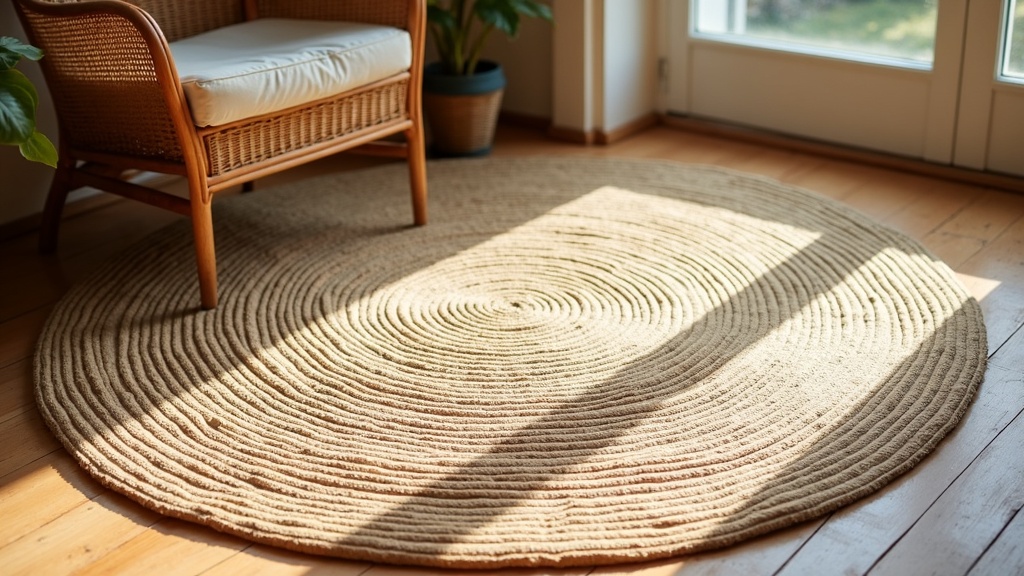
Clean a jute or sisal rug with dry methods first: vacuum often without a beater bar, blot spills immediately with a barely damp cloth, and use as little water as possible on any stain. Both fibres are cellulose plant materials that weaken, stain, and yellow when they get properly wet, so the goal is always to remove dirt and moisture fast rather than to “wash” the rug the way you might a synthetic or even a wool piece. If a stain has already set, dried, or spread, or if the rug is antique, hand-knotted with a plant-fibre foundation, or of uncertain construction, treat this as a job for a professional rather than a DIY project.
Why jute and sisal behave differently from wool or silk
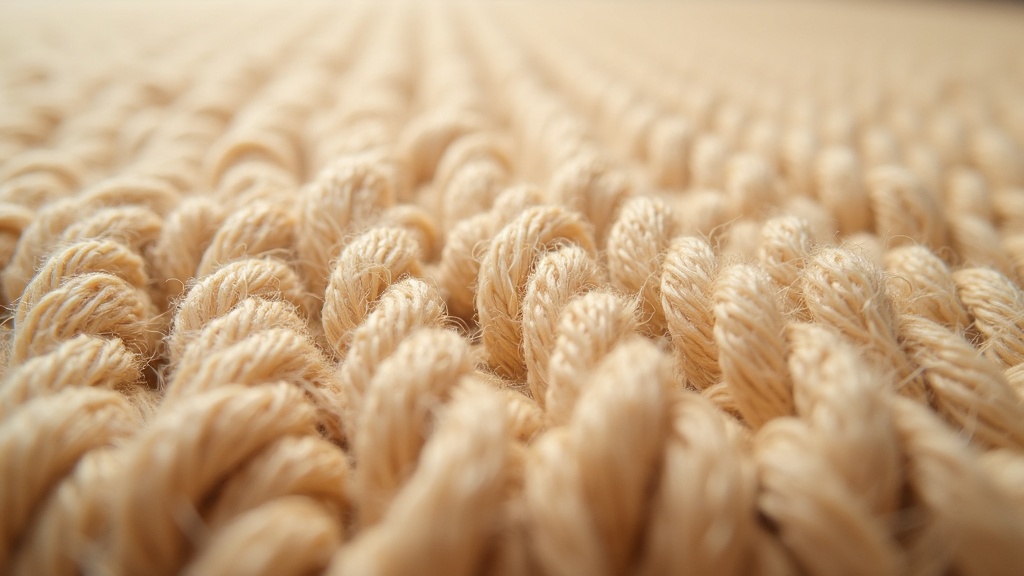
Jute and sisal are bast and leaf fibres respectively, closer in behaviour to cardboard or raffia than to wool. They have almost no natural resistance to water: fibres swell when wet, lose strength, and can develop brown “watermark” rings as tannins and impurities migrate to the surface as moisture evaporates. Because these rugs are usually flatwoven with visible, absorbent fibres and no lanolin or protective oils, water sits and spreads rather than beading and rolling off. This is the opposite problem to wool, where the concern is felting and shrinkage from hot alkaline water, or silk, which is damaged by almost any wet cleaning. If you’re unsure what you’re actually dealing with, our overview of rug fibres compared is a useful starting point before you touch a stain.
Construction matters too. A pure jute or sisal rug with no binding is one thing; many have cotton or wool-blend borders, latex backing, or are layered over a woven cotton scrim. Each material in that assembly can react differently to moisture, so a cleaning approach that’s fine for the field of the rug may not be fine for its edge. If you’re deciding whether one of these rugs suits your space at all, the trade-offs are covered in our piece on sisal and seagrass rugs’ durability and drawbacks, and separately in jute rugs in a living room: pros and cons.
Routine cleaning: vacuuming and dust removal
Regular vacuuming is the single most effective thing you can do for a jute or sisal rug, because ground-in grit abrades the fibres and dulls the surface over time. Use suction only, never a rotating beater-bar head, which can snag, fray, or pull loose the coarse, exposed fibres of a flatweave. Go over the rug in both directions at a moderate pace, and vacuum the underside occasionally too if you can lift it, since dust and grit settle beneath as well as on top. For more detail on why beater bars are a poor match for natural-fibre and loose-pile rugs generally, see our note on vacuuming rugs with beater bars and fringe.
Between vacuuming sessions, a stiff (not wire) brush can help lift dust from the weave, and shaking a small rug outdoors periodically removes surface grit that vacuuming alone can miss.
Spot-cleaning spills and stains
Speed matters more than product here. As soon as a spill happens:
- Blot immediately with a clean, dry white cloth or paper towel, pressing rather than rubbing, to lift as much liquid as possible before it soaks in.
- If needed, dampen a cloth very lightly with plain cool water and dab the stained area, working from the outside in so you don’t spread it further.
- Dry the area quickly and thoroughly — a fan, open window, or hair dryer on a cool setting all help — since lingering moisture is what causes browning and odour, not the stain itself.
- Avoid saturating the fibres at any point. A little water goes a long way on jute and sisal; a soaked patch is very hard to dry evenly and often leaves a visible ring.
For a general first-response routine that applies across fibre types, our guide on what to do immediately after a spill on a rug covers the same speed-over-product principle in more depth.
For oil-based marks specifically, blot first, then apply a dry absorbent — cornstarch or plain talc, left to sit and then vacuumed away — rather than any liquid cleaner, since oils on jute and sisal are best lifted dry wherever possible.
What not to do
- Never use chlorine bleach. It degrades cellulose fibres, weakening and discolouring jute and sisal permanently, in the same way it destroys wool and silk.
- Never mix cleaning chemicals, and be wary of reaching for ammonia-based glass cleaners or all-purpose sprays on these rugs. Combining bleach with ammonia or acidic cleaners produces toxic fumes, and even used alone, high-pH or heavily perfumed household cleaners can leave residue that attracts dirt or discolours plant fibres.
- Never steam clean or machine wash a jute or sisal rug. Steam introduces sustained heat and moisture that these fibres cannot tolerate without shrinking, distorting, or browning; if you’re tempted, our piece on steam clean rug risks explains why this method is a poor fit for natural fibres generally.
- Never saturate the rug or hose it down to “deep clean” it, and don’t leave a wet cloth or damp mop sitting on the fibres — pooled moisture is the direct cause of the brown ring stains that plague these rugs.
Whatever product you do use, test it on a hidden corner or the underside first and let it dry completely before judging the result. Dyes on inexpensive jute and sisal rugs can be unstable, and a test patch is the only way to catch bleeding or discolouration before it happens across the whole rug.
Musty smells, mildew, and general upkeep
Because jute and sisal absorb moisture readily and dry slowly, they’re prone to a musty smell if kept somewhere humid, cleaned with too much water, or left damp after a spill. Good airflow underneath the rug, avoiding placement in consistently damp rooms, and prompt drying after any wet cleaning all help prevent this. If a musty smell has already set in, our dedicated guide on how to deal with a rug that smells musty walks through safe options in more detail. Direct sun and fluctuating humidity also affect these fibres over time, which our article on sun, humidity and rugs addresses for natural-fibre floor coverings generally.
When to call a professional
A plain, inexpensive machine-made jute or sisal rug with a light stain is a reasonable DIY job using the dry-first approach above. But you should stop and bring in a specialist if the rug is hand-knotted or hand-loomed, has an unusual or antique-style construction, carries a wool or silk border, has an already-set or large stain, or simply has enough value to you that a mistake would be costly. Water damage and browning on plant fibres are notoriously difficult to reverse once they’ve set, and a professional rug cleaner has extraction equipment and drying methods that avoid the saturation problem entirely. Our explainer on what a rug conservator does that a cleaner doesn’t is worth reading if you’re trying to work out which kind of professional you actually need, and the broader rug care hub and its cleaning and stains archive cover safe methods for other fibres if your household has a mix of rug types.
Frequently asked questions about cleaning jute and sisal rugs
Can you wet clean a jute rug?
You can use a very small amount of water to spot-clean a fresh stain, but jute should never be soaked or heavily wetted. Excess moisture causes browning, weakens the fibres, and dries slowly, so blot, use minimal water, dry fast, and avoid saturating the weave at any point.
Why does my sisal rug have brown stains after cleaning?
Brown rings usually appear when moisture spreads through the fibre and evaporates slowly, pulling natural impurities to the surface as it dries. It’s a common result of using too much water or not drying the area quickly enough, and it’s much easier to prevent than to remove afterward.
Can you vacuum a jute rug normally?
Yes, but use suction only and avoid a rotating beater-bar head, which can snag and fray the coarse exposed fibres. Regular vacuuming in both directions is genuinely the most effective routine care step for these rugs.
Is it safe to shampoo a sisal rug?
Generally no. Shampoo systems introduce more water than these fibres can handle safely, and residue left behind can attract dirt over time. Dry compound cleaning or a very light, carefully dried damp-cloth approach is safer for DIY use.
How do you get odour out of a jute rug?
Improve airflow underneath the rug, keep it out of consistently humid rooms, and avoid over-wetting it during cleaning, since trapped moisture is usually the source of musty smells. A light sprinkle of a dry absorbent, left to sit and then vacuumed off, can help with mild cases.
Rug Academy publishes general information about rugs and is not a dealer, appraiser, or cleaning service. Cleaning and repair methods depend entirely on fibre, dye and construction — test any treatment on a hidden corner first, and consult a professional rug cleaner or conservator before treating a hand-knotted, antique, silk, or valuable rug, as damage from cleaning is usually permanent. Any prices mentioned are illustrative examples only, and nothing here is an appraisal, an authentication, or a guarantee of a rug’s origin or value.