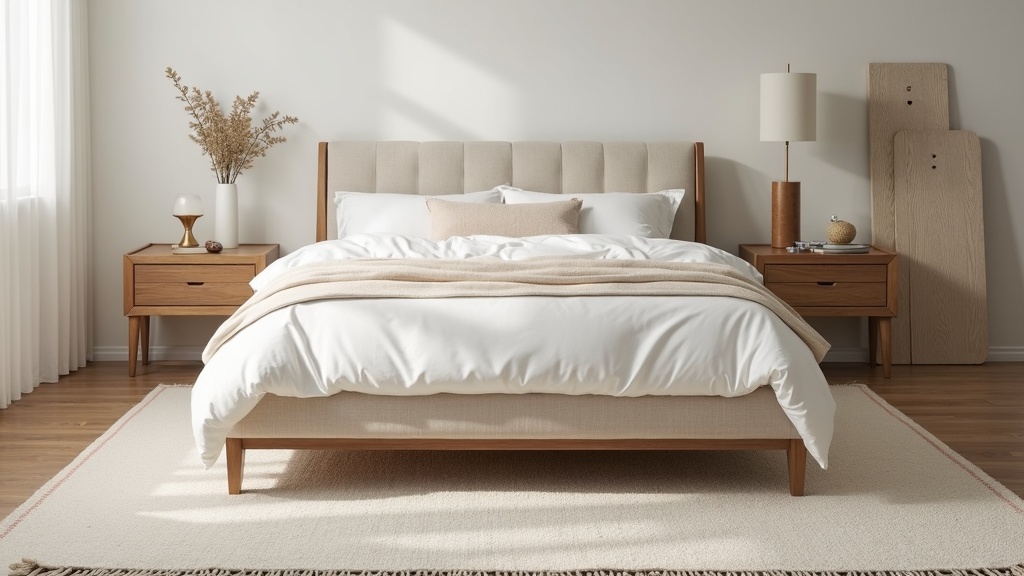
A rug can work either way, and the right choice depends on the size of your bed, the size of the rug, and how much floor you want to cover. As a rule of thumb: a rug large enough to run under the bed and extend 18-24 inches beyond the sides and foot reads as intentional and grounds the whole room, while a rug that’s too small to reach under the mattress looks better placed entirely beside or at the foot of the bed instead of half-tucked under it. There’s no single correct answer — only a size-to-room-fit question with a few genuinely wrong answers to avoid.
The short answer
If your rug is large enough that the bed only covers roughly the front third to half of it, put it under the bed. If the rug is smaller — a 2×3 or a runner, say — skip the under-bed placement altogether and lay it beside the bed, or use two runners flanking either side. The mistake to avoid is a rug that’s just barely too small, tucked so that only a sliver shows at the foot and sides; that reads as an accident rather than a design choice, and it’s the single most common placement error in bedrooms.
Why placement depends on bed size and rug size
Bedroom rug sizing is really a math problem before it’s an aesthetic one. A queen or king bed frame typically runs 60-80 inches wide and 80 inches long including the footprint of a footboard or bench, so a rug meant to go under it needs to be considerably larger than the mattress itself to leave a visible margin. This is the same underlying logic covered on our living room rug sizing guide, just applied to a different footprint: a rug that stops exactly at the edge of the furniture almost always looks undersized once it’s in the room, because the eye reads the furniture’s edge as the rug’s edge too.
For a queen bed, a rug in the 8×10 or 9×12 range usually gives enough overhang on the sides and foot to look deliberate. For a king, 9×12 or 10×14 is more typical. These are illustrative sizing ranges, not fixed rules — a narrow bedroom may force a smaller rug regardless of the ideal, and that’s a legitimate reason to switch strategies entirely rather than force an oversized rug into a cramped footprint. The rug buying guides hub and its sizes and placement archive both go deeper into room-by-room sizing math if you’re furnishing more than one space at once.
The case for tucking the rug under the bed
A full under-bed rug does a few things a bedside runner can’t. It visually anchors the bed as the room’s focal point, it warms the whole floor rather than just the strip you step onto, and it tends to make a room look larger, since a large unbroken expanse of rug reads as more spacious than several smaller pieces. It also means less exposed cold floor around the perimeter of the room, which matters more in bedrooms with hardwood or tile than almost anywhere else in the house, since bare feet meet that floor first thing in the morning.
The trade-off is wear. The section of rug under the bed frame gets compressed under the weight of the frame and mattress, sometimes for years without moving, while the exposed sections get foot traffic, sun exposure, and the occasional dropped drink. That uneven wear is cosmetic rather than structural in most cases, but it’s worth knowing about before you commit a good rug to permanent partial coverage.
The case for placing rugs beside the bed only
Runners or small area rugs placed just beside the bed — sometimes one on each side, sometimes a single rug at the foot — solve a different problem. They’re cheaper to buy in good material, since you need far less square footage; they’re easier to rotate for even wear, since nothing is pinned under furniture; and they let you use a genuinely nicer rug than you might justify for a full 9×12 under-bed piece. This approach also suits smaller bedrooms where a full under-bed rug would leave almost no exposed floor to actually anchor.
The visual trade-off is that the room reads as more segmented — a rug here, a gap there, another rug there — rather than as one continuous surface. In a small room this usually isn’t noticeable. In a large bedroom with a lot of open floor, several disconnected small rugs can look more like an afterthought than a plan, which is the main argument for going with one larger piece instead.
Material and construction matter as much as placement
Whichever layout you choose, the fibre and construction of the rug should match how it will actually be used in that spot. A section of rug that lives permanently under bed legs is under sustained point pressure, and a dense wool pile recovers from that kind of compression far better over time than many synthetic piles, which can crush and struggle to spring back — a difference covered in more detail in our comparison of wool versus synthetic rug lifespan. If the exposed portion gets direct morning sun, fading resistance matters more than it would in a north-facing room, and some natural dyes shift or mellow with sustained light exposure over years, which isn’t necessarily a flaw but is worth expecting.
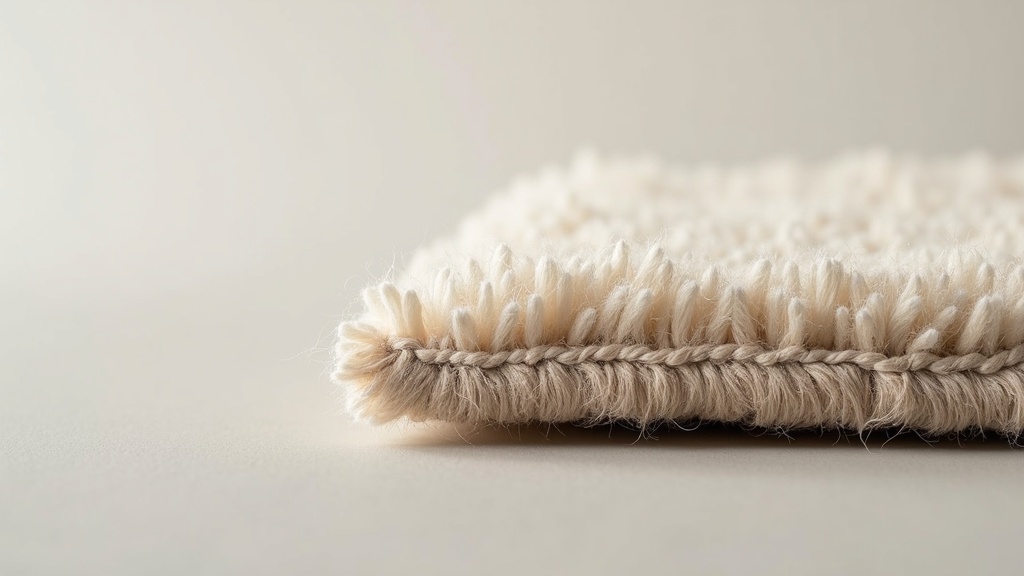
Construction affects the decision too. A hand-tufted rug relies on a layer of latex adhesive to hold its pile in place, and constant compression under furniture legs can eventually cause that adhesive to break down faster than in a hand-knotted piece, where the pile is secured by the knot structure itself rather than glue. If you’re unsure which type you own, our guide to telling a handmade rug from a machine-made one and the companion piece on hand-knotted versus hand-tufted construction walk through the visual clues — fringe that’s sewn on versus woven through, a backing that’s a separate fabric versus the rug’s own foundation, and knot patterns visible on the reverse.
Placement affects wear, cleaning, and long-term care
Bedrooms accumulate a specific mix of dust, skin cells, and the occasional spilled coffee or nail polish, and a rug’s position changes how it collects all of it. A rug fully under the bed is shielded from the household’s general foot traffic but collects dust undisturbed under the frame for long stretches; one beside the bed gets more foot traffic and more chance of spills but is also easier to vacuum on all sides and to check periodically for moth activity, which favours dark, undisturbed spots like under a bed frame.
For routine care, a wool rug can generally be vacuumed with a suction-only attachment or a vacuum with the beater bar switched off, since a rotating brush can pull and fray fringe and loose pile over time. For a wool pile rug that’s colorfast, spot treatment with a cool-water, wool-safe detergent and a blotting motion — never scrubbing, and never hot water, which can cause wool to felt and shrink — is the safer approach detailed in our guide to cleaning a wool rug without ruining it. Silk rugs and rugs of uncertain fibre should not be treated at home at all; silk in particular is easily damaged by water and most detergents, and is best handled by a professional. Chlorine bleach and ammonia should never be used on wool or silk, and should never be combined with other cleaning products regardless of fibre, since mixing household chemicals can produce dangerous fumes as well as ruin the rug. Whatever the fibre, test any product on a hidden corner first, and for anything hand-knotted, antique, or otherwise valuable, a professional rug cleaner or conservator is the safer call than a home remedy — the rug care hub and its cleaning and stains archive cover fibre-specific care in more depth.
If the rug is old or valuable, placement decisions carry more weight
An heirloom or hand-knotted rug placed under a bed frame is subject to sustained compression and, in carpeted rooms, to friction against a bed’s metal or wood feet that can wear the foundation faster than open-floor foot traffic would. If you suspect the rug in question might be old, hand-knotted, or otherwise valuable, it’s worth having it assessed before deciding where it lives long-term. An appraiser examines things like knot type and density, the foundation material front and back, the character of the dyes, wear patterns consistent with age, and how the selvedge and fringe are finished — uniform, machine-straight fringe and a printed or fused backing typically point to a machine-made piece, while irregular knotting and hand-finished edges point the other way, though only an in-person appraisal can actually confirm origin, age, or value. Our rug craft hub and its value and authentication archive, along with our piece on what “Persian” and “Oriental” actually mean, go into the terminology and criteria in more detail. As a rough illustration only, a machine-made wool-blend rug in a bedroom size might sit in the low hundreds, while a genuinely hand-knotted rug of the same dimensions can run many times that — but construction, condition, age, and current demand drive this enormously, and no online description substitutes for a qualified appraiser looking at the actual piece.
Frequently asked questions about bedroom rug placement
Does a rug need to go all the way under the bed?
No. A rug only needs to go fully under the bed if it’s large enough to leave a visible margin on the exposed sides — roughly 18-24 inches. If it’s too small for that, it looks better placed entirely beside the bed instead of half-tucked underneath it.
What size rug do I need to put under a bed?
For a queen bed, 8×10 or 9×12 typically leaves enough overhang on the sides and foot. For a king, 9×12 or 10×14 usually works better. Room size and layout can change this, so measure the actual floor space before choosing.
Can you just put a rug next to the bed instead of under it?
Yes — runners or small rugs placed beside the bed are a common and practical choice, especially in smaller rooms where a full under-bed rug wouldn’t leave much exposed floor. It’s a matter of preference and space, not a rule you’re breaking.
Do rugs under beds get ruined by furniture legs?
Sustained weight can compress and crush pile under bed legs over time, more noticeably in synthetic piles than dense wool ones. It’s usually cosmetic rather than damaging to the rug’s structure, but rotating the rug periodically helps even out the wear.
Is it bad to put an antique rug under a bed?
It’s not inherently bad, but sustained compression and friction against furniture feet can wear an old foundation faster than open floor traffic would. If the rug is genuinely antique or valuable, it’s worth getting it assessed and cared for by a professional before committing it to that spot long-term.
Rug Academy publishes general information about rugs and is not a dealer, appraiser, or cleaning service. Cleaning and repair methods depend entirely on fibre, dye and construction — test any treatment on a hidden corner first, and consult a professional rug cleaner or conservator before treating a hand-knotted, antique, silk, or valuable rug, as damage from cleaning is usually permanent. Any prices mentioned are illustrative examples only, and nothing here is an appraisal, an authentication, or a guarantee of a rug’s origin or value.