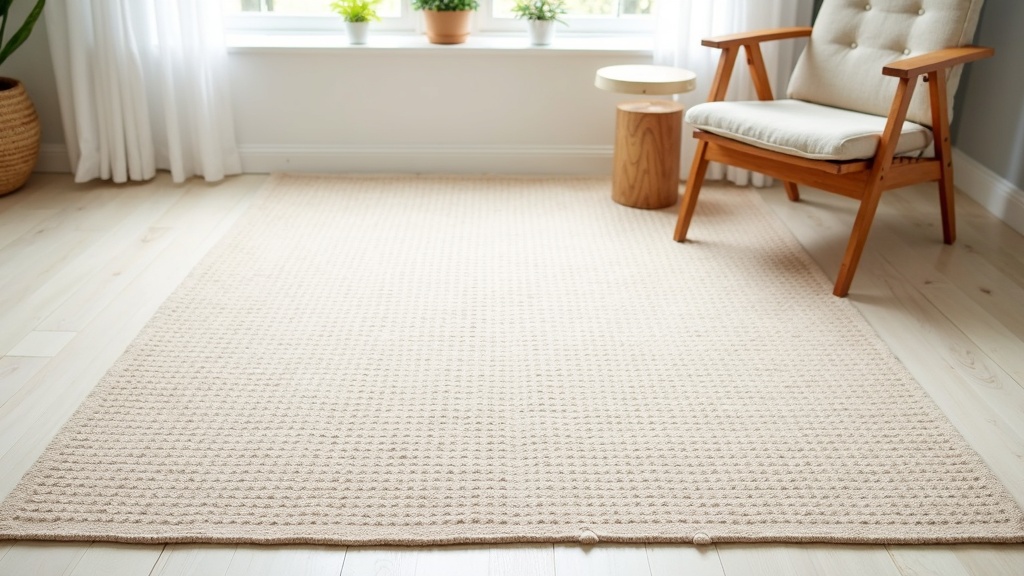
Machine-made rugs are produced on computer-controlled power looms (or, for a related category, tufted with a handheld or automated tufting gun) that weave or punch yarn into a backing at high speed, using synthetic or wool-blend fibres. What you get is a rug with a consistent, repeatable pattern, a lower price than a hand-knotted equivalent of similar size, and a construction that trades the irregularities and longevity of hand work for speed, affordability and uniformity. The trade-offs matter more than the label “machine-made” alone suggests, and they show up in how the rug wears, how it should be cleaned, and what it will be worth down the line.
How a power loom actually works
A power loom is, in essence, an industrial version of the mechanism described on our page about how a rug loom works — warp threads held under tension, weft passed through, pile formed at each pass. The difference is scale and control. A computer file drives thousands of needles or hooks to insert yarn in an exact, repeating sequence, row after row, at a speed no human hand could match. Where a hand-knotted rug might take a weaver many months to finish, as explained in our piece on why hand-knotted rugs take so long to make, a power loom can produce a rug of comparable size in a matter of hours.
This is why machine-made rugs are almost perfectly symmetrical, why the pattern repeats with no drift, and why the back of the rug looks flat and mechanically even rather than showing the individual knot bumps of a hand-tied piece. Density and pattern resolution are set by the loom’s gauge, not by a weaver’s skill, so two rugs off the same production run will be virtually identical — a hallmark that itself is one of the clues an appraiser looks for, covered in more depth in our rug craft hub.
Tufted rugs: a related but different process
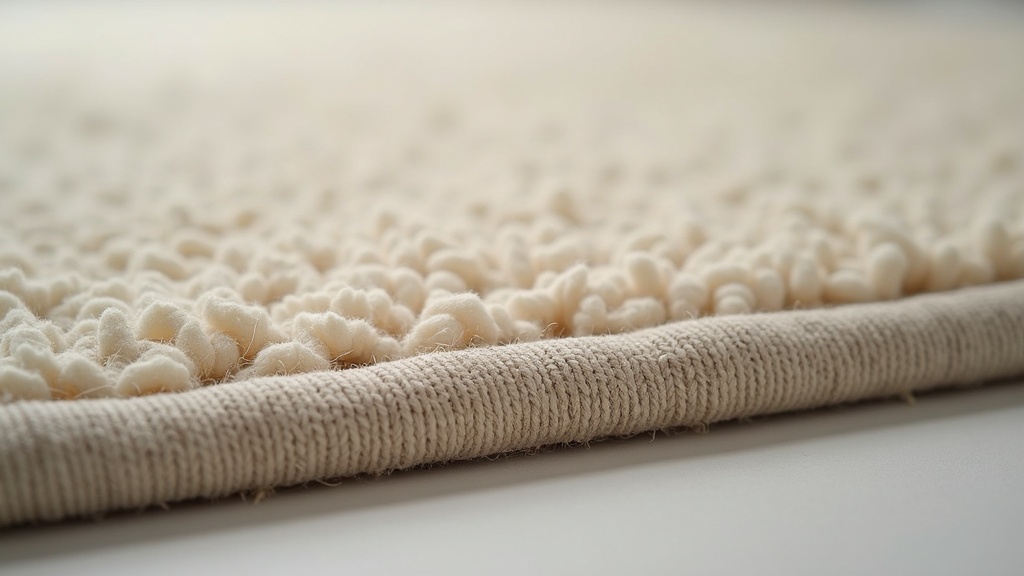
Tufted rugs are sometimes lumped in with “machine-made” but they are a distinct construction. A tufting gun punches yarn through a stretched primary backing from above, and a second backing (often latex-coated cotton or synthetic scrim) is glued on to hold the tufts in place. There’s no interlocking foundation the way a woven rug has one. That glued backing is convenient and cheap to produce, but it is also the weak point: as detailed in our article on tufted rugs and latex backing, the adhesive dries out and cracks over years, and the whole pile can eventually shed or separate from the backing. Power-loomed rugs, by contrast, have pile woven directly into the structure, which generally holds up longer under normal use.
What materials are involved
Machine-made rugs are produced in a range of fibres, and the fibre matters far more to durability and cleaning than most shoppers expect:
- Polypropylene (olefin): inexpensive, resists staining and fading reasonably well, but flattens under heavy foot traffic and doesn’t recover its texture.
- Polyester: can be very soft and colourful, but tends to shed and flatten faster than wool.
- Nylon: more resilient and springy, common in commercial-grade machine-made carpet and rugs.
- Viscose (bamboo silk): looks lustrous like silk at a fraction of the cost, but is notably weak when wet and scars easily underfoot.
- Wool and wool-blend: power-loomed wool or wool/synthetic blends bring more of wool’s natural resilience and soil resistance, at a higher price point than pure synthetics — our guide on whether a wool-blend rug is worth it goes through the trade-offs in detail.
For a side-by-side of how these fibres actually perform in a home, see Rug Fibres Compared. The fibre, not just the word “machine-made,” determines almost everything about how the rug should be cleaned and how long it will last.
What a machine-made rug generally does not have
A few features that signal hand work are structurally absent from most machine-made pieces: no individual knots visible on the back, a fringe that is typically sewn on or is an extension of a woven backing tape rather than the literal continuation of the foundation’s warp threads, and no natural, minor irregularities in the pattern from row to row. These are exactly the kind of details an appraiser checks — knot type and density, foundation material, selvedge and fringe finishing, and pattern regularity — when distinguishing a machine-made or reproduction piece from a hand-knotted one. We cover that process in Getting a Rug Appraised: What to Expect, and it’s worth stressing that these are indicators, not a substitute for an in-person appraisal by a qualified appraiser when real money is involved.
Price, realistically
Machine-made rugs are the reason a good-looking, patterned rug can be genuinely affordable. As a purely illustrative example, a machine-made wool-blend rug in a common living-room size might sit somewhere in the low hundreds, while an all-synthetic equivalent could be less, and a hand-knotted rug of similar size and appearance could run many times higher — construction, materials, size and where it was made all drive this enormously, and actual prices vary by retailer and season. Our piece on why two similar-looking rugs can differ hugely in price unpacks why sticker price alone tells you very little about what’s underneath the pattern.
Caring for a machine-made rug
Care instructions have to be matched to the actual fibre and backing, not just the fact that a rug is machine-made:
- Vacuum synthetic pile rugs regularly, but if the rug has fringe (sewn-on or woven) avoid a beater-bar attachment directly on it, since beater bars fray and pull fringe loose.
- For a spill on a synthetic-pile, latex-backed rug, blot promptly with cool water and a small amount of mild, wool-safe or pH-neutral detergent, working from the outside of the stain inward; our page on what to do immediately after a spill covers the first few minutes in more detail.
- Never use chlorine bleach on a wool or wool-blend rug — it destroys the protein fibre — and avoid ammonia-based cleaners generally; don’t mix cleaning products together, since combining bleach with ammonia or other household chemicals can create toxic fumes as well as damage the rug.
- Hot water and high-pH or alkaline cleaners can cause wool to felt, shrink or yellow, so lukewarm water and neutral products are the safer default for any wool-content rug.
- Full immersion or machine washing is rarely appropriate — even for a synthetic tufted rug the latex backing can degrade with repeated saturation, and for anything with a woven foundation it risks shrinkage and buckling; see Can You Wash a Rug in a Washing Machine? before attempting it.
Always test any cleaning product on a small hidden corner first and watch for colour change or bleeding before treating the whole rug. If the rug is hand-knotted, antique, silk, or you’re simply not sure how it was made, the safer and ultimately cheaper route is a professional rug cleaner or conservator — our explainer on what a rug conservator does that a cleaner doesn’t explains when that distinction matters. For general cleaning approaches organised by method, browse the rug care hub or the cleaning and stains archive.
Value over time
Machine-made rugs are not built as appreciating assets, and that’s a fair trade for the price and pattern consistency they offer. They don’t develop the same kind of collectible value that hand-knotted regional weaves can, and heavy wear on a synthetic pile tends to be a practical replace-it problem rather than a repair-it-and-preserve-value one. If you’re deciding whether a rug in front of you is machine-made, hand-tufted, or hand-knotted before buying or before spending money on repair, that’s a legitimate question for a qualified appraiser or an experienced rug specialist to answer in person — no description online, including this one, can substitute for physically examining the knots, foundation and wear pattern. For general orientation on materials and construction before you buy, the rug buying guides hub and the materials and construction archive are good starting points.
Frequently asked questions about machine-made rugs
How can I tell if my rug is machine-made or hand-knotted?
Check the back: hand-knotted rugs show individual knots and slight irregularities row to row, while machine-made rugs have a flat, uniform back with no visible knots. Fringe that’s sewn on rather than a continuation of the foundation is another common sign, though a professional check is more reliable.
Are machine-made rugs bad quality?
Not inherently — quality depends on fibre, density and backing rather than the word “machine-made” alone. A well-made power-loomed wool-blend rug can outlast a cheaply tufted synthetic one; it’s the specific materials and construction, not the production method by itself, that determine how it performs.
Can you clean a machine-made rug the same way as a hand-knotted one?
No — cleaning has to match the fibre and backing, not the general category. Synthetic, latex-backed rugs tolerate more moisture than wool or silk hand-knotted rugs, but even they shouldn’t be soaked or machine washed, since backings and dyes can still be damaged.
Do machine-made rugs hold their value?
Generally no in the collectible sense — they’re priced for use, not appreciation, and most depreciate like other home furnishings. Hand-knotted rugs, especially older regional pieces in good condition, are the category more likely to hold or gain value, and that’s confirmed only through appraisal.
Is a tufted rug the same as a machine-made rug?
Not quite. Tufted rugs are made with a tufting gun punching yarn through a backing that’s then glued, while power-loomed machine-made rugs weave pile directly into the structure. Tufted rugs’ glued backings tend to be the first thing to fail, well before the pile itself wears out.
Rug Academy publishes general information about rugs and is not a dealer, appraiser, or cleaning service. Cleaning and repair methods depend entirely on fibre, dye and construction — test any treatment on a hidden corner first, and consult a professional rug cleaner or conservator before treating a hand-knotted, antique, silk, or valuable rug, as damage from cleaning is usually permanent. Any prices mentioned are illustrative examples only, and nothing here is an appraisal, an authentication, or a guarantee of a rug’s origin or value.