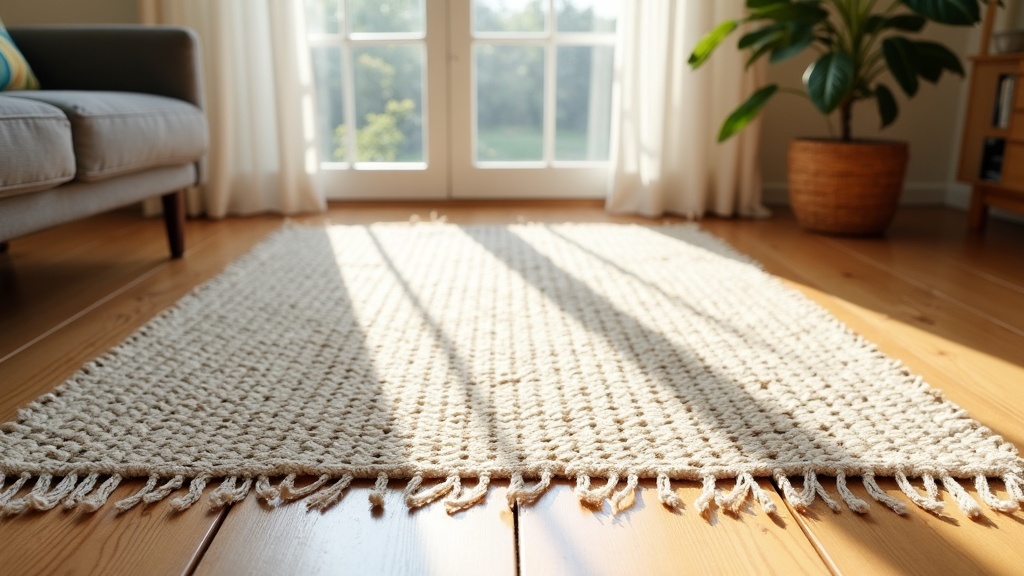
A hand-loomed flatweave is a rug made by hand on a loom without knots or pile — the pattern is created entirely by the weft threads interlacing with the warp, producing a flat, reversible surface with no raised nap. Kilims, dhurries, and many Navajo-style and Scandinavian rag rugs fall into this category. Because there’s no pile to anchor colour or hide construction flaws, the weave itself carries the entire design, which is part of why flatweaves look so graphic and tend to be lighter and more packable than pile rugs.
The phrase can be confusing because “hand-loomed” gets used loosely in rug marketing, sometimes to describe pile rugs too. If you want the fuller picture of what that term does and doesn’t guarantee, it’s worth reading what “hand-loomed” actually means before you shop. This article focuses specifically on the flatweave category — how it’s built, how to tell one from a machine-made lookalike, and how to live with and care for one without damaging it.
How a flatweave is actually constructed
Every woven rug starts with a warp — the vertical threads stretched under tension on a loom — and a weft, the horizontal threads that pass over and under it. In a pile rug, individual yarns are knotted around the warp and then cut to form a raised surface. A flatweave skips that step entirely. The weft itself is the pattern: colored weft threads are packed tightly against the warp, and the weaver switches colours block by block to build up shapes, stripes, and motifs directly in the structure of the cloth. If you’re unfamiliar with these terms, the anatomy of warp, weft and pile is worth understanding on its own, since it explains almost everything about how a rug behaves underfoot and over decades.
There are a few common flatweave techniques, and they’re not interchangeable:
- Plain weave / tapestry weave (kilim-style): weft threads are packed down firmly enough to fully cover the warp, with colour changes creating slits or interlocked joins at pattern edges.
- Soumak: a wrapping technique where the weft is looped around the warp in a chaining motion, producing a slightly raised, braid-like texture rather than a flat surface — technically a flatweave variant but visually distinct, and covered in more depth in our piece on what a soumak weave actually is.
- Dhurrie and rag weaves: simpler plain weaves, often in cotton, historically used for lighter domestic and seasonal use rather than heavy foot traffic.
All of these are traditionally worked on the same kinds of looms used for knotted pile rugs — horizontal ground looms, vertical village looms, or larger workshop frames — which is why “hand-loomed” and “hand-knotted” get conflated even though the resulting textiles are structurally very different. If the mechanics of loom tension and shedding interest you, how a rug loom works goes through the process in more detail, and the wider rug craft hub is a good starting point for weaving techniques generally.
How a hand-loomed flatweave differs from a hand-knotted pile rug
The most obvious difference is touch: a flatweave has no pile to sink into, so it feels thin and firm rather than plush. That’s not a flaw — it’s a different design decision, suited to different rooms and different climates historically. Flatweaves were often woven for warmer regions or seasonal use precisely because they don’t trap heat the way a thick pile does.
Structurally, a flatweave is also usually more flexible and reversible — flip it over and the pattern is essentially identical on both sides, since there’s no knot bulk on the back. A knotted pile rug will show knot nubs and foundation threads on the reverse. This reversibility is a genuinely useful diagnostic if you’re trying to work out what you’re looking at, alongside the general differences covered in our comparison of flatweave versus pile rugs.
What to look for in the weave itself
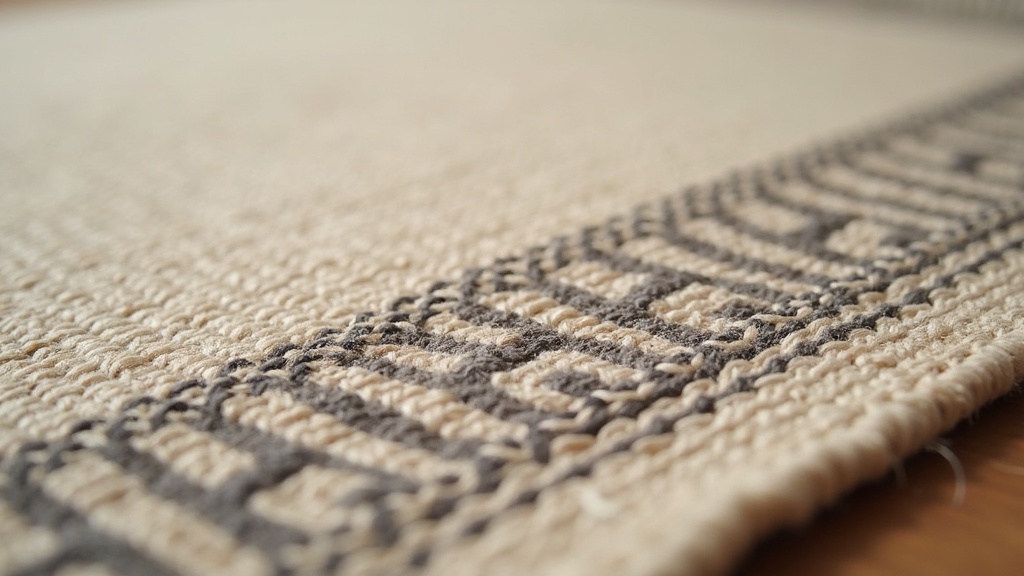
- Slit or interlocked joins where two colour blocks meet — genuine hand-woven kilims show small gaps or dovetailed joins at these boundaries; a printed or machine-woven imitation won’t have this structural feature at all.
- Slight irregularities in weft density row to row — human hands don’t pack weft with perfectly even tension, so a hand-loomed piece usually has faint, natural variation rather than machine-perfect uniformity.
- Selvedges (the woven edges) finished by hand, often with an extra reinforcing thread, rather than a straight machine-overlocked hem.
- Fringe that is a continuation of the actual warp threads, not a separate strip sewn on afterward.
What determines whether one is well made — and what determines its value
None of the visual cues above tell you age, origin, or worth on their own — those questions genuinely require an appraiser who can examine the piece in person, and we won’t pretend otherwise. What an appraiser typically looks at with a flatweave includes the fibre used for warp and weft (wool, cotton, or a mix), the tightness and evenness of the weft packing, the dye characteristics under magnification and UV light, wear patterns consistent with age and use, and the quality of the selvedge and fringe finishing. A rug with synthetic dye bleeding, a plastic-feeling warp, or a printed pattern rather than a woven one is generally read as a mass-produced or reproduction piece rather than a handmade textile. For a deeper look at how these factors interact, the value and authentication archive covers the subject in more detail, and if you’re weighing a specific purchase, getting a rug appraised explains what that process actually involves.
On price: a small machine-made flatweave-style rug might sit in the low hundreds, and a genuinely hand-loomed wool kilim of similar size considerably more — but this is only an illustrative range, not a market figure, because construction, fibre, size, age, and condition all move the number substantially. Two rugs that look nearly identical across a room can differ enormously in price for reasons that aren’t visible from a photo.
Caring for a hand-loomed flatweave
Because there’s no pile, flatweaves shed less and are generally easier to vacuum than knotted rugs — but the fringe is still warp, not decoration, so avoid a beater-bar vacuum head running directly over it; a suction-only setting or a hand attachment is safer for the edges. For routine dust, vacuuming both sides periodically helps, since grit works down into a flat weave just as it does into pile.
For spills, the fibre matters as much as the technique. A wool flatweave can generally tolerate blotting with cool water and a small amount of wool-safe detergent, applied to a cloth rather than poured onto the rug, and always tested on a hidden corner first in case dyes are unstable. A cotton dhurrie is often more washable, but check colourfastness the same way before committing to a wet clean, since natural and some early synthetic dyes can bleed and migrate once wet. Never use chlorine bleach on wool or silk flatweaves, and avoid combining household cleaning chemicals under any circumstances — mixing products like bleach and ammonia-based cleaners can produce dangerous fumes, and neither belongs on a textile you care about. Hot water and high-pH cleaners cause wool to felt, shrink, or yellow, so lukewarm water and mild, pH-neutral products are the safer default. Machine washing a hand-loomed rug of any real size or age is not recommended — the agitation and heat can distort the weave permanently, and this applies even to some rugs that look sturdy enough to survive it.
If the rug is old, valuable, unusually fine, or you’re simply not sure what it’s made of, the safest move is to stop and call a professional rug cleaner or conservator rather than experiment — cleaning damage to a handmade textile is almost always permanent, and a flatweave’s exposed, unpadded structure means stains and shrinkage show immediately and evenly across the surface. The rug care hub and the cleaning and stains archive go into specific stain scenarios and safe methods by fibre in more depth.
Frequently asked questions about hand-loomed flatweaves
Is a hand-loomed flatweave the same thing as a kilim?
A kilim is a specific type of flatweave, usually plain-woven wool, associated with regions like Anatolia, Persia, and the Caucasus. “Hand-loomed flatweave” is the broader category — kilims, dhurries, soumaks, and rag weaves all belong to it, but they’re not identical in structure or origin.
Are flatweaves less durable than pile rugs?
Not necessarily — a tightly woven wool flatweave can be very durable and is often more reversible-friendly, since flipping it evens out wear. It simply wears differently: there’s no pile to cushion foot traffic, so the weave itself takes the abrasion directly.
Can I clean a hand-loomed flatweave rug myself?
For minor spots on a wool or cotton flatweave, gentle blotting with cool water and a wool-safe detergent, tested on a hidden area first, is usually fine. For silk, antique, or unidentified pieces, or for any deep or set-in stain, professional cleaning is the safer route.
How can I tell if a flatweave rug is hand-loomed or machine-made?
Check for slight irregularities in the weave, hand-finished selvedges, fringe that’s a continuation of the warp, and slit or interlocked joins at colour changes. A perfectly uniform weave, a sewn-on fringe, or a printed rather than woven pattern usually points to machine production.
Do hand-loomed flatweaves need a rug pad?
Yes, generally — a pad reduces slipping, since flatweaves are thin and light, and it also cushions the weave against abrasion from the floor beneath, which helps it wear more evenly over time on hard flooring.
Rug Academy publishes general information about rugs and is not a dealer, appraiser, or cleaning service. Cleaning and repair methods depend entirely on fibre, dye and construction — test any treatment on a hidden corner first, and consult a professional rug cleaner or conservator before treating a hand-knotted, antique, silk, or valuable rug, as damage from cleaning is usually permanent. Any prices mentioned are illustrative examples only, and nothing here is an appraisal, an authentication, or a guarantee of a rug’s origin or value.