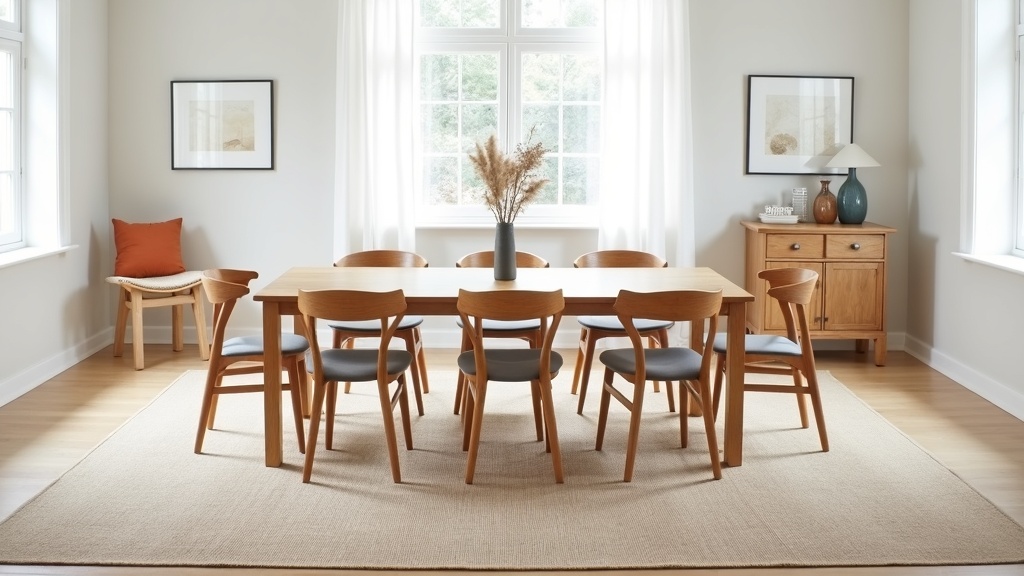
For a standard six-seat dining table, you generally want an 8×10 foot rug for tables around 60 to 72 inches long, or a 9×12 foot rug for larger or extendable tables. The rule that matters more than the exact size is clearance: the rug should extend at least 24 to 30 inches beyond the table edge on every side, so that all four legs of every chair stay on the rug even when someone pushes back from the table.
That clearance number is the whole game. Get it right and the room feels grounded and the chairs glide smoothly. Get it wrong and you end up with a chair leg constantly catching the rug’s edge, or a rug that looks like an afterthought floating under a table that’s too big for it. This guide covers how to work out the right footprint for your specific table, what shape decisions come into play, and how to choose and maintain a rug that can survive six years of dinner spills.
Why the 24 to 30 inch clearance rule exists
Dining chairs need to be pulled back roughly 20 to 24 inches from the table edge for a person to stand or sit comfortably. If the rug ends where the chair legs land mid-pull, the back legs slip off the rug and onto bare floor, creating an uneven, tippy feel and a visible seam where two different friction surfaces meet. Sizing the rug generously enough that all four chair legs remain on the textile at all times — seated and pushed back — is what makes a dining rug read as intentional rather than incidental. This is one of the more forgiving categories in the rug buying guides hub, because the margin for error is wide: a few extra inches in any direction rarely looks wrong, while a rug that’s too small always does.
Matching rug size to table dimensions
Start with your table’s actual footprint, including any leaves you use regularly, then add roughly 48 to 60 inches to both length and width (24 to 30 inches per side). The table below gives common starting points; treat them as a planning range rather than a fixed formula, since room size and furniture layout also factor in.
| Table shape and size | Seats | Suggested rug size |
|---|---|---|
| Rectangular, 60″ x 36″ | 6 | 8′ x 10′ |
| Rectangular, 72″ x 40″ | 6 | 9′ x 12′ |
| Rectangular with leaf extended, 84″+ | 6-8 | 9′ x 12′ or larger |
| Round, 54″ diameter | 6 | 8′ round |
| Round, 60″ diameter | 6 | 9′ round |
| Square, 48″ x 48″ | 6 (bench seating) | 8′ x 8′ or 9′ x 9′ |
If your table sits between two sizes, or your dining area is tight against a wall on one side, it’s reasonable to accept slightly less clearance on the constrained side as long as chair legs still land on the rug when seated. What you’re avoiding is a rug that’s smaller than the table’s own footprint plus chairs — that combination almost never works visually or functionally.
Round tables and other shapes
A round table generally wants a round rug, both for visual coherence and because a rectangular rug under a round table leaves oddly shaped corners of exposed floor that don’t correspond to any seating position. The same 24 to 30 inch clearance logic applies: measure the table’s diameter and add roughly 48 to 60 inches to land on the rug’s diameter. Oval tables can go either way — an oval rug if you want the shapes to echo each other, or a rectangular rug if you prefer a more architectural look against the room’s walls. There’s no objectively correct choice here; it comes down to the proportions of the room and personal preference, which is exactly the kind of decision covered in more depth in the sizes and placement archive.
Material and construction for a dining room floor
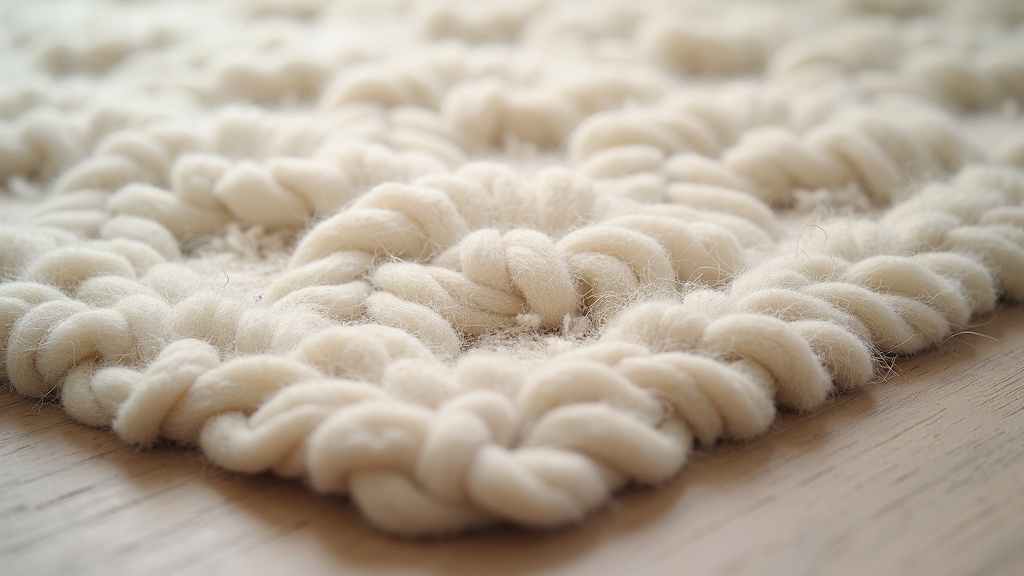
Dining rugs take more abuse than almost any other rug in the house — dropped forks, wine, crumbs, chair legs dragging across the pile several times a day. Construction matters as much as size. A tightly woven wool rug, whether hand-knotted or a well-made machine-made piece, tends to resist crushing under chair legs and hides soiling better than a very high-pile or loosely constructed rug. If you’re deciding between a handmade and machine-made option, the practical differences in durability, knot density, and how each is built are laid out in how to tell if a rug is handmade or machine-made, and the longer-term wear comparison is covered in wool vs synthetic rugs: which lasts longer. Natural fibre rugs like jute can look striking in a dining space but are more porous and harder to spot-clean after a spill — worth weighing against the practical downsides discussed in the site’s piece on jute rugs in living spaces, since the same porosity issues apply under a dining table.
A rug pad isn’t optional in this setting. Beyond cushioning and preventing slipping, a good pad keeps chair legs from grinding grit into the pile and helps the rug lie flat instead of rippling under repeated furniture movement — the reasoning is laid out fully in do you really need a rug pad.
Placement and orientation tips
- Center the rug under the table so clearance is roughly even on all sides, adjusting only if the room’s architecture (a doorway, a sideboard) forces an asymmetry.
- With a rectangular table, orient the rug’s longer dimension parallel to the table’s longer dimension rather than crosswise.
- Leave at least a few inches of bare floor visible between the rug’s edge and any adjacent furniture, like a buffet or china cabinet, so the rug reads as a defined zone rather than wall-to-wall carpet.
- If the dining area is open to a living space, the dining rug doesn’t need to match the living room rug’s shape or pile — see the parallel sizing logic in the living room rug size guide for how the two zones can coexist.
Living with spills: what the fibre allows
Because dining rugs get wine, sauce, and coffee spilled on them eventually, it’s worth knowing what your rug can safely tolerate before an accident happens, not after. Wool tolerates blotting with cool water and a small amount of wool-safe detergent reasonably well, but hot water or high-pH cleaners will cause wool fibres to felt, shrink, and yellow, so they should never be used. Silk rugs are damaged by water and by most detergents and should go to a professional rather than be treated at home. Chlorine bleach and ammonia should never be used on wool or silk, and never combined with any other cleaning product — mixing household chemicals can produce dangerous fumes as well as ruin the dye. Natural and some early synthetic dyes can bleed when wet, which is one more reason to always test any treatment on a hidden corner of the rug first. For a step-by-step spill response, the site’s guide on getting a red wine stain out of a rug walks through safe blotting order by fibre type, and the broader principles for wool specifically are in how to clean a wool rug without ruining it. If the rug is hand-knotted, antique, silk, or you’re simply not certain what it’s made of, the safest move is to stop and call a professional rug cleaner or conservator rather than experiment — cleaning damage to a good rug is almost always permanent, and the broader care principles live in the rug care hub.
Frequently asked questions about rug size for a 6-seat dining table
What size rug do I need for a 6-person rectangular dining table?
Most 60 to 72 inch rectangular tables that seat six work well with an 8×10 or 9×12 foot rug, sized so chairs remain on the rug even when pulled back roughly two feet from the table edge during use.
Can a rug be too big for a dining room?
Yes — if the rug runs all the way to the walls or under other furniture with no visible floor border, the dining area loses its sense of being a distinct zone; leaving a few inches of bare floor around the rug generally reads better.
Should I get a round or rectangular rug for a round dining table?
A round rug under a round table is the more common and visually coherent choice, since a rectangular rug leaves awkward exposed corners; add roughly four to five feet to the table’s diameter to find the rug size.
How far should a dining rug extend past the table?
Aim for 24 to 30 inches of rug beyond the table edge on every side, which accounts for the distance a chair typically needs to be pulled back for someone to sit down or stand up comfortably.
What rug material holds up best under a dining table?
Tightly woven wool, hand-knotted or well-made machine-made, generally resists crushing and hides soiling better than high-pile or loosely constructed rugs; a rug pad also reduces wear from chair legs and repeated movement.
Rug Academy publishes general information about rugs and is not a dealer, appraiser, or cleaning service. Cleaning and repair methods depend entirely on fibre, dye and construction — test any treatment on a hidden corner first, and consult a professional rug cleaner or conservator before treating a hand-knotted, antique, silk, or valuable rug, as damage from cleaning is usually permanent. Any prices mentioned are illustrative examples only, and nothing here is an appraisal, an authentication, or a guarantee of a rug’s origin or value.