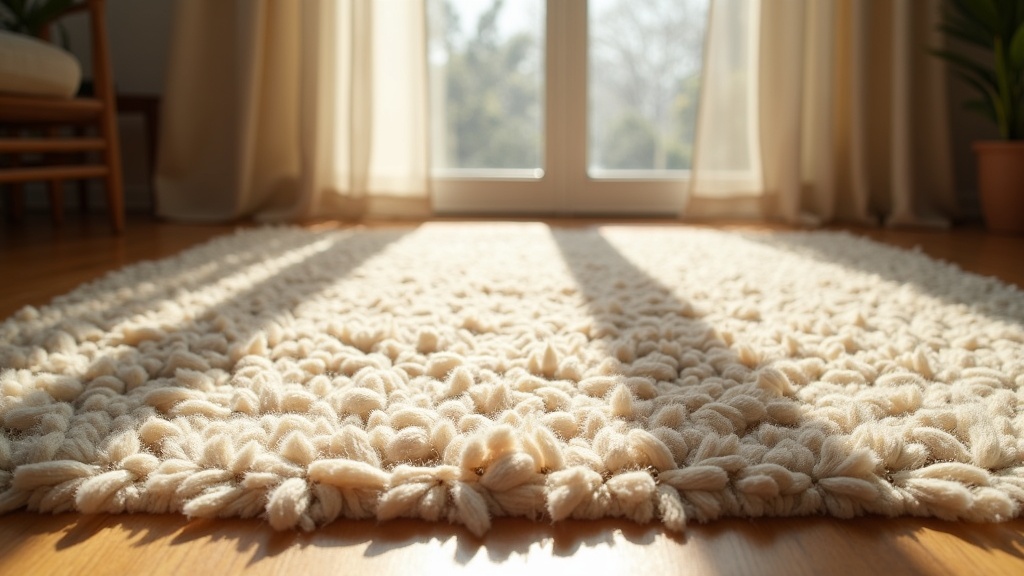
Sunlight and humidity are the two environmental forces most likely to shorten a rug’s life, and they work in different ways: light bleaches and embrittles dyes and fibres from the top down, while damp air and moisture encourage mould, odour, insect activity and foundation movement from within. Managing both means controlling how much direct UV a rug receives, keeping relative humidity in a moderate range, and letting air circulate underneath and around the piece rather than trapping it against a cold or damp floor.
What sunlight actually does to a rug
Ultraviolet light breaks down the chemical bonds in dye molecules and in the fibre itself. On a wool rug this shows up as gradual colour loss, usually strongest on the side facing the window, and over years it can leave a visibly two-toned rug — vivid under furniture, washed out where the sun hits daily. Natural dyes and early synthetic dyes vary a great deal in how they fade; some mellow attractively, others go patchy or shift hue unevenly, which is part of why comparing fibre and dye behaviour matters before you decide where a good rug lives in a room. Silk is more fragile still: the fibre itself weakens under prolonged UV exposure, becoming brittle and prone to splitting, quite apart from any colour change.
Heat from direct sun compounds the problem by drying fibres out, which makes wool less elastic and more prone to breaking under foot traffic, and can make the tips of pile yarns look scorched or straw-like. None of this is reversible by cleaning — a faded rug cannot be cleaned back to its original colour, and attempting to “brighten” a sun-damaged rug with stronger detergents or bleach will only damage it further and is never appropriate for wool or silk.
What humidity does, and why it’s sneakier
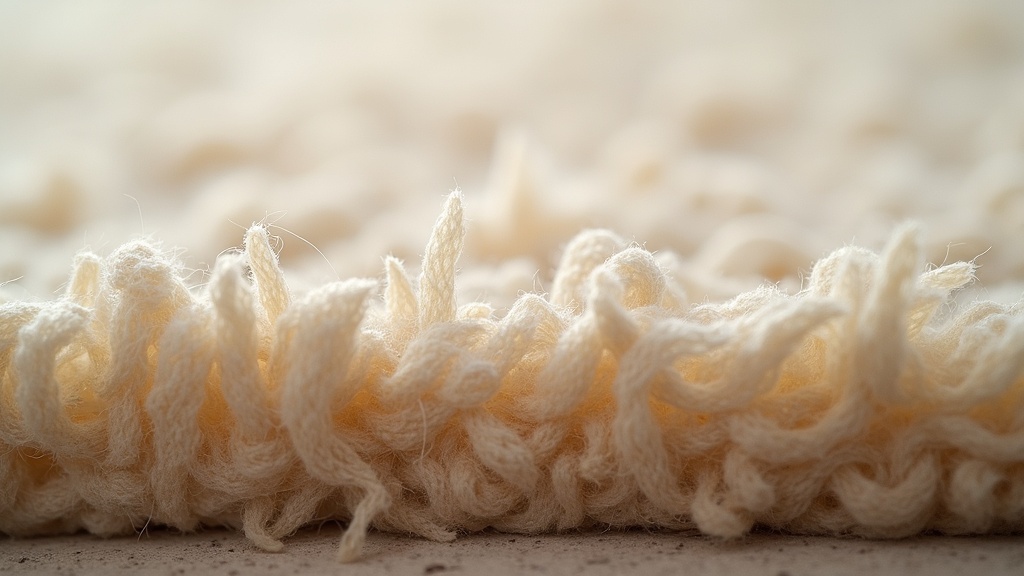
Rugs are hygroscopic — wool especially absorbs and releases moisture from the surrounding air. In consistently damp conditions (a below-grade room, a rug over a slab floor, a humid coastal climate) that moisture encourages mould and mildew growth in the pile and, more seriously, in the foundation, which can rot cotton or jute warps over time. It is also the single biggest contributor to the musty smell many older rugs develop, which comes from mildew or from moisture trapped against a rug pad rather than from the wool itself — a distinction worth understanding before assuming a rug is permanently “off”; see our piece on dealing with a musty-smelling rug for how to work through it safely.
Humidity swings also cause more subtle mechanical problems. A rug that absorbs moisture and then dries repeatedly can develop rippling or buckling as the foundation expands and contracts unevenly, particularly along edges where finishing is already under stress. And damp, still air is exactly what wool-eating moth larvae prefer — dark, undisturbed, slightly humid spots under furniture or in storage are classic locations for an infestation to take hold before anyone notices; our guide to preventing and treating moth damage covers the warning signs.
How different fibres respond
| Fibre / construction | Sun sensitivity | Humidity sensitivity |
|---|---|---|
| Wool, hand-knotted | Moderate — dyes fade gradually, some natural dyes fade gracefully | High — foundation can swell, mildew risk if kept damp |
| Silk | High — fibre weakens and can shatter with prolonged UV | Moderate, but water and humidity both risk dye bleed |
| Cotton foundation (no pile) | Moderate | High — cotton is prone to mildew and rot when damp |
| Synthetic pile (polypropylene, nylon) | Low to moderate depending on dye method | Low — fibre itself doesn’t absorb moisture |
| Jute or sisal backing/weave | Moderate — fibres can yellow and weaken | Very high — natural cellulose fibres are especially prone to mould |
This is a general pattern, not a guarantee for any individual rug — dye method, weave density and finishing all affect how a specific piece behaves, which is one reason a buying guide on materials and construction is worth reading before you choose a rug for a bright or humid room in the first place.
Practical steps that actually help
- Control direct light. UV-filtering window film, sheer curtains, or simply closing blinds during peak afternoon sun reduces cumulative exposure without blocking the room entirely. There’s no way to “reverse” fading afterwards, so prevention is the only real lever here.
- Rotate the rug. Turning a rug 180 degrees every six to twelve months evens out both sun exposure and foot-traffic wear, which is a simple habit covered in more detail in why rotating a rug matters and how often to do it.
- Keep indoor humidity moderate. Most textile conservators aim for roughly 40–55% relative humidity for household fibres; a basic hygrometer and a dehumidifier in damp rooms or seasons is inexpensive insurance for rugs and furniture alike.
- Let air move underneath. A breathable rug pad keeps a rug from sitting flush against a cold or damp floor, and the right pad differs by surface — our guide to rug pads by floor type explains why a pad suited to hardwood is not automatically right for tile or concrete.
- Watch entryways and porches. Rugs near doors take the most humidity swings from weather coming in, and covered outdoor spaces bring their own trade-offs, discussed in whether outdoor rugs are worth it for a covered porch.
- Address damp smells early. A musty smell after a humid spell is a signal to dry and air the rug out, not a reason to reach for bleach or ammonia-based cleaners — both attack wool and silk dyes and fibres, and combining chemicals of any kind on a rug is never advisable regardless of fibre.
If damage has already happened
Once a rug shows sun fading, mildew staining, or foundation rippling from humidity, cleaning cannot restore lost colour or repair weakened fibres — it can only stop active damage (like surface mould) from progressing. For a wool rug with a musty smell but no visible mould, airing it flat outdoors in shade, away from direct sun, and light vacuuming without a beater-bar attachment is usually safe; test any product on a hidden corner first. For anything hand-knotted, antique, silk, or where you’re not certain of the construction, this is exactly the situation to bring in a professional rather than experiment — the difference in approach and equipment is explained in what a rug conservator does that a cleaner doesn’t, and general guidance on care sits in the rug care hub. Foundation rippling from humidity sometimes settles once the environment stabilises, but persistent buckling in a valuable rug is a job for a conservator, not a DIY fix with water or heat.
Frequently asked questions about sun, humidity and rugs
Can a faded rug be restored to its original colour?
No. Fading from UV exposure is a chemical breakdown of the dye, not surface dirt, so cleaning cannot bring the colour back. Some rugs can be selectively redyed by a specialist, but that’s a restoration decision best made after a professional assessment, not a home remedy.
What humidity level is safest for rugs indoors?
Most textile conservators suggest keeping indoor relative humidity around 40–55%. Below that, wool can dry out and become brittle; above it, mould, mildew and insect activity all become more likely, especially in rooms with poor airflow.
Why does my rug smell musty after a humid summer?
A musty smell usually means moisture got trapped in the pile or against the pad long enough for mildew to develop, rather than damage to the wool itself. Airing the rug flat in shade and improving ventilation underneath it is the first step before assuming the smell is permanent.
Does direct sunlight affect synthetic rugs the same way as wool?
Synthetic pile fibres generally resist moisture damage better than wool, but they aren’t immune to UV fading — the degree depends heavily on the dye method used, which varies by manufacturer and construction rather than by fibre name alone.
Is it safe to leave a rug rolled up in a damp garage or basement?
Damp, poorly ventilated storage is one of the riskiest environments for a rug because it combines the humidity that encourages mildew with the still, dark conditions moths prefer. A dry, ventilated space with the rug protected from direct floor contact is a far safer choice.
Rug Academy publishes general information about rugs and is not a dealer, appraiser, or cleaning service. Cleaning and repair methods depend entirely on fibre, dye and construction — test any treatment on a hidden corner first, and consult a professional rug cleaner or conservator before treating a hand-knotted, antique, silk, or valuable rug, as damage from cleaning is usually permanent. Any prices mentioned are illustrative examples only, and nothing here is an appraisal, an authentication, or a guarantee of a rug’s origin or value.